
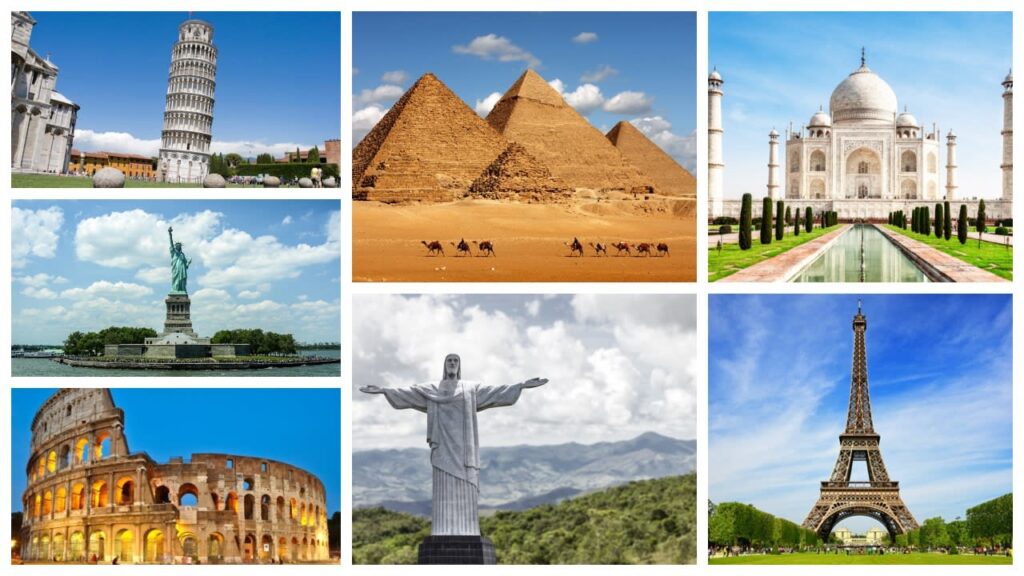
Seven Wonders of the World: A Complete Guide to Humanity’s Greatest Achievements
The Seven Wonders of the World are among the most remarkable and world-famous monuments ever created by human civilization, representing the highest achievements in architecture, engineering, art, culture, and historical innovation. These wonders are spread across different continents and reflect the diversity, creativity, intelligence, and determination of ancient and medieval societies that shaped human history. The concept of world wonders has fascinated historians, travelers, scholars, and explorers since ancient times, but the modern recognition of the New Seven Wonders of the World, officially announced in 2007, renewed global interest in these iconic historical landmarks. The list of the New Seven Wonders of the World includes the Great Wall of China, Petra in Jordan, Christ the Redeemer in Brazil, Machu Picchu in Peru, Chichén Itzá in Mexico, the Colosseum in Italy, and the Taj Mahal in India, each representing a unique civilization and historical era. These world-famous monuments were constructed centuries ago without modern machinery, advanced technology, or digital tools, yet they demonstrate extraordinary precision, planning, and craftsmanship that continue to amaze experts and visitors alike. The Great Wall of China, recognized as the longest man-made structure in the world, was built over several dynasties to protect the nation from invasions and now stands as a powerful symbol of strength, unity, endurance, and national pride while attracting millions of tourists every year. Petra, often called the Rose City because of its pink sandstone cliffs, is an ancient city carved directly into rock by the Nabataean civilization and is admired for its rock-cut architecture, artistic facades, and advanced water management system, making it one of the most breathtaking historical landmarks in the Middle East. Christ the Redeemer, standing tall on Mount Corcovado in Rio de Janeiro, is one of the largest Art Deco statues in the world and represents peace, hope, faith, and cultural unity while also serving as a major symbol of Brazil and a leading global tourism attraction. Machu Picchu, hidden high in the Andes Mountains of Peru, is an ancient Incan city that showcases remarkable stone engineering, agricultural terraces, spiritual centers, and astronomical alignment, and its mysterious history continues to attract researchers, historians, and travelers from around the world. Chichén Itzá, once a powerful city of the ancient Maya civilization, reflects advanced knowledge of astronomy, mathematics, and architecture, particularly through the pyramid of El Castillo, where precise design creates a shadow illusion during equinoxes that demonstrates scientific understanding far ahead of its time. The Colosseum in Rome is a massive ancient amphitheater that once hosted gladiator contests, public spectacles, and cultural events, reflecting the architectural brilliance, social structure, and political power of the Roman Empire while remaining one of the most visited tourist attractions in Europe. The Taj Mahal, a magnificent white marble mausoleum located in Agra, India, was built by Mughal Emperor Shah Jahan in memory of his wife and is universally admired as a symbol of eternal love, celebrated for its symmetry, intricate carvings, detailed craftsmanship, and breathtaking beauty. Together, the Seven Wonders of the World play a vital role in promoting global tourism, cultural exchange, and historical education, attracting millions of visitors each year and contributing significantly to national economies and international awareness. Many of these wonders are protected as UNESCO World Heritage Sites, ensuring their preservation and recognition as part of humanity’s shared cultural and historical heritage. These famous monuments provide valuable insight into ancient civilizations, their beliefs, traditions, social systems, religious practices, and technological advancements, helping modern society understand how early cultures influenced the development of the world. The Seven Wonders of the World are not merely physical structures made of stone, marble, or brick, but enduring symbols of human ambition, creativity, resilience, and innovation that have survived wars, natural disasters, environmental challenges, and the passage of time. Learning about these world-famous landmarks inspires curiosity, respect for history, appreciation for cultural diversity, and awareness of the importance of preserving historical sites for future generations. In a rapidly changing modern world, the Seven Wonders of the World serve as reminders of humanity’s ability to achieve greatness through vision, cooperation, skill, and perseverance, uniting people across countries, cultures, religions, and generations. Preserving these wonders is essential not only for tourism and education but also for maintaining a meaningful connection to the past, as they represent the greatest achievements of human civilization and stand as timeless testaments to the power of human imagination, dedication, and determination that continue to inspire the world today and will remain relevant for generations to come.
What Are the New Seven Wonders of the World?
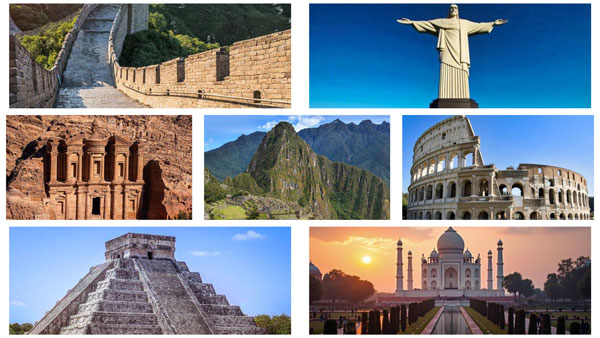
The New Seven Wonders of the World are a collection of extraordinary monuments that showcase the highest achievements of human civilization in architecture, engineering, and culture. While the idea of the Seven Wonders originated in ancient times, the modern list, known as the New Seven Wonders of the World, was officially announced in 2007 by the New7Wonders Foundation after a global voting campaign. These wonders were chosen based on their historical importance, architectural brilliance, cultural significance, and global recognition. The New Seven Wonders of the World include the Great Wall of China, Petra in Jordan, Christ the Redeemer in Brazil, Machu Picchu in Peru, Chichén Itzá in Mexico, the Colosseum in Italy, and the Taj Mahal in India. Each of these monuments is unique, reflecting the traditions, beliefs, and creativity of the civilization that built it. Unlike the ancient Seven Wonders, which were primarily located in the Mediterranean region and most of which no longer exist, the new wonders are spread across multiple continents and remain intact today, attracting millions of tourists from around the world. These wonders not only serve as major tourist attractions but also stand as symbols of human perseverance, innovation, and artistic mastery. By studying the New Seven Wonders of the World, people can gain insight into the history, culture, and technological advancements of ancient societies, making them invaluable for education, research, and global cultural understanding. In addition, the designation as “wonders” encourages preservation efforts and raises awareness about protecting these historical landmarks for future generations. The New Seven Wonders of the World continue to inspire awe and admiration, demonstrating that humanity’s ability to create beauty, durability, and innovation transcends time and geography, making these monuments timeless icons of our shared global heritage.
The New Seven Wonders of the World are:
Great Wall of China (China)
Petra (Jordan)
Christ the Redeemer (Brazil)
Machu Picchu (Peru)
Chichén Itzá (Mexico)
Colosseum (Italy)
Taj Mahal (India)
(1).🏯 Great Wall of China – The Longest Man-Made Structure
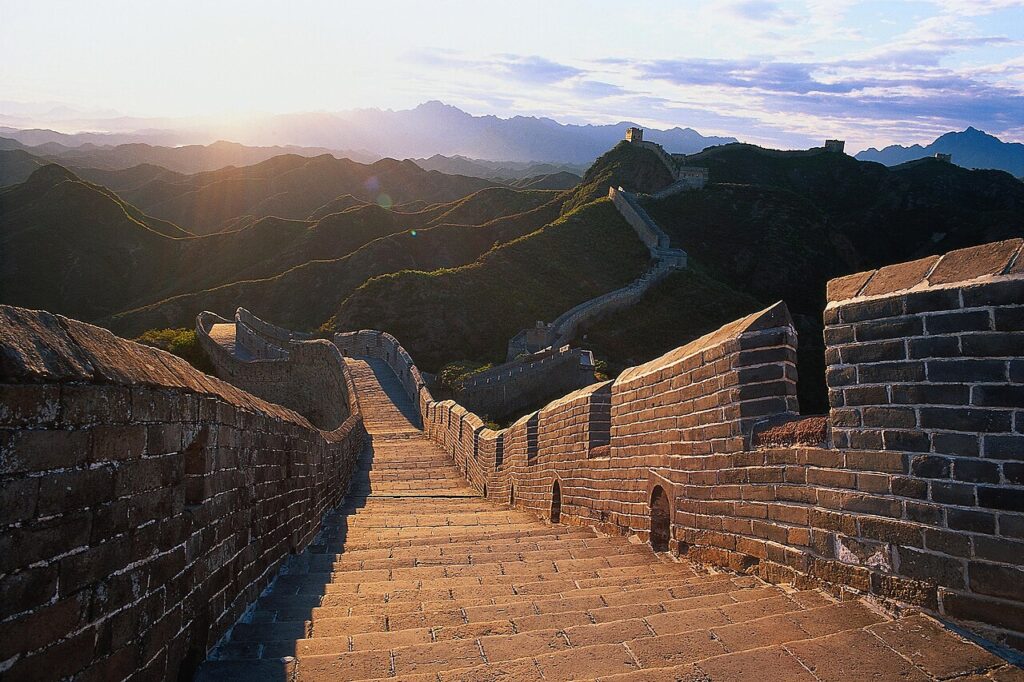
The Great Wall of China is one of the most famous landmarks in the world, recognized not only as the longest man-made structure but also as a symbol of human ingenuity, cultural pride, and historical achievement. Stretching over 21,000 kilometers, the wall winds through deserts, mountains, and valleys, showcasing the extraordinary engineering skills of ancient China. Built to protect Chinese states from invasions, the wall also served as a trade control system, facilitating regulation of the Silk Road, collection of duties, and border surveillance. Today, it stands as a UNESCO World Heritage Site, attracting millions of visitors annually who come to marvel at its architectural brilliance, historical importance, and scenic beauty.
🏯 History of the Great Wall of China
The history of the Great Wall of China spans more than two millennia, reflecting the ambitions, ingenuity, and resilience of ancient Chinese civilizations. Its construction was not a single project but a series of building phases carried out by various dynasties, each contributing to the monumental structure we see today. The earliest walls were constructed during the 7th century BCE by individual feudal states such as Qi, Yan, and Zhao to defend their territories against local invasions. These early walls were relatively short and made primarily of rammed earth, wood, and stones, designed to protect small regions from raids by neighboring states.
The most famous and continuous sections of the Great Wall, however, were built during the Qin Dynasty (221–206 BCE) under Emperor Qin Shi Huang, who unified China for the first time. To consolidate his rule and defend against northern nomadic tribes like the Xiongnu, Qin Shi Huang ordered the linking of pre-existing regional walls into a continuous fortification. This massive endeavor required hundreds of thousands of laborers, including soldiers, peasants, and prisoners. Many workers lost their lives due to harsh working conditions, difficult terrain, and extreme weather, making the wall a symbol of both human determination and sacrifice.
During the Han Dynasty (206 BCE–220 CE), the Great Wall was extended further westward to protect trade routes, including the Silk Road, which connected China with Central Asia and facilitated cultural and economic exchange. This period emphasized not only military defense but also the wall’s role in controlling trade, monitoring migration, and projecting imperial power. The Han Dynasty built fortresses, watchtowers, and signal stations along the wall, improving communication and allowing the rapid transmission of intelligence about enemy movements.
The Sui (581–618 CE) and Tang (618–907 CE) Dynasties maintained and repaired parts of the wall, but it was during the Ming Dynasty (1368–1644 CE) that the Great Wall reached its most recognizable and well-preserved form. After repeated invasions by Mongol and other northern tribes, the Ming rulers invested heavily in rebuilding, reinforcing, and expanding the wall, often using bricks and stone instead of rammed earth for greater durability. The Ming sections included elaborate watchtowers, signal towers, troop garrisons, and defensive trenches, creating a sophisticated defense system that allowed soldiers to respond quickly to threats. Many of the sections seen today, such as Badaling, Mutianyu, and Jinshanling, were constructed during the Ming era.
The Great Wall was more than just a military fortification; it also played an essential role in shaping Chinese national identity and cultural heritage. Over centuries, it became a symbol of strength, unity, and perseverance, appearing in poetry, art, folklore, and historical chronicles. The wall’s strategic importance declined after the fall of the Ming Dynasty, but it continued to serve as a symbol of China’s enduring civilization. In 1987, the UNESCO World Heritage Committee recognized the Great Wall as a World Heritage Site, highlighting its global significance as a cultural and historical monument.
From the fragmented walls of ancient feudal states to the majestic stone fortifications of the Ming Dynasty, the Great Wall of China represents thousands of years of history, labor, and ingenuity. It stands as a testament to the vision of Chinese rulers, the skill of countless laborers, and the enduring spirit of a civilization that overcame natural and human challenges to create one of the most remarkable structures in human history. Walking along its paths today allows visitors to connect with the past, explore the ingenuity of ancient engineering, and witness firsthand the cultural legacy of one of the world’s greatest civilizations.
🧱 Architecture and Engineering Marvel of the Great Wall of China
The Great Wall of China is not just a long stretch of wall; it is an architectural and engineering marvel that showcases the ingenuity, creativity, and technical skill of ancient Chinese civilization. Spanning over 21,000 kilometers, the wall traverses diverse and often challenging terrains, including mountains, deserts, valleys, and plains, requiring innovative construction techniques to ensure its stability, durability, and defensive effectiveness. Its design combines functionality, aesthetics, and strategic military planning, making it one of the most impressive feats of engineering in human history.
The architecture of the Great Wall varies depending on the region and the era in which it was built. In the plains and flatlands, walls were often constructed using rammed earth, a method in which layers of earth were compressed to form solid walls. In mountainous regions, builders relied on local stones and rocks, which were more durable and easier to transport along rugged slopes. During the Ming Dynasty, bricks were extensively used, particularly for sections near Beijing, as they offered greater strength and resistance to weathering. These bricks were often carefully shaped and fitted together, demonstrating advanced masonry techniques.
The Great Wall is not a single continuous structure but a complex system of fortifications. It includes walls, watchtowers, signal towers, garrisons, and trenches, all designed to serve both defensive and communication purposes. Watchtowers were strategically placed at intervals to allow soldiers to monitor enemy movements, provide storage for weapons, and serve as living quarters. These towers were equipped with arrow slits and battlements, enabling archers to defend the wall efficiently. Signal towers, often located on high points, allowed for the rapid transmission of messages using smoke during the day and fire at night, creating an early-warning system that could cover vast distances in hours.
The wall’s engineering also reflects remarkable adaptation to difficult geographical conditions. Builders constructed ramps and steps on steep mountainsides, reinforced foundations on unstable slopes, and implemented drainage systems to prevent erosion. In areas prone to landslides or earthquakes, additional layers of stones and bricks were used to enhance stability. The width of the wall also varies: sections intended for troop movement were wide enough to allow soldiers, horses, and carts to pass, sometimes reaching 6 to 7 meters in width. The height of the wall ranges from 6 to 14 meters, depending on the terrain and strategic importance.
In addition to defense, the wall served as a transportation and communication corridor. Roads built along the top allowed soldiers and messengers to move quickly across vast distances, connecting military outposts and fortresses. Garrisons and supply depots were integrated into the wall’s design, ensuring that troops could be provisioned efficiently. This dual functionality highlights the advanced military planning and logistical sophistication of ancient China.
The architectural style of the wall also reflects regional influences and cultural artistry. Watchtowers were often decorated with engraved bricks, inscriptions, or symbolic motifs. Some fortresses included gates, barracks, and storage facilities, blending practicality with aesthetic design. Over centuries, the Great Wall became not only a military defense but also a cultural icon, inspiring literature, art, and folklore.
The durability of the Great Wall is a testament to its engineering excellence. Despite centuries of exposure to harsh weather, natural disasters, and human activity, many sections remain remarkably intact. Preservation efforts continue to protect these structures from erosion, tourism wear, and environmental threats. Archaeologists and engineers study the wall to understand ancient construction techniques, providing valuable insights into historical architecture, engineering practices, and the ingenuity of Chinese builders.
In conclusion, the 🧱 Great Wall of China is far more than a long defensive barrier; it is a masterpiece of architecture and engineering, combining strategic military design, innovative construction techniques, and cultural artistry. Its watchtowers, fortresses, and signal systems reflect sophisticated planning, while its adaptability to diverse terrains demonstrates unparalleled engineering skill. Walking along the wall today offers not only breathtaking views but also a deep appreciation for the human creativity, perseverance, and vision that made this world-renowned marvel possible. The Great Wall stands as a timeless symbol of innovation, endurance, and the extraordinary capabilities of ancient civilizations, inspiring awe in historians, architects, and travelers alike.
🌏 Cultural Significance
The Great Wall of China is far more than a remarkable feat of engineering; it is a profound cultural symbol that embodies the history, identity, and spirit of the Chinese civilization. Spanning over 21,000 kilometers and built across multiple dynasties, the Great Wall has served as a symbol of national strength, perseverance, and unity, reflecting the values, beliefs, and resilience of the Chinese people over thousands of years. Its cultural significance extends beyond its original military function, influencing literature, art, folklore, architecture, and modern tourism, making it a cornerstone of China’s cultural heritage.
Historically, the wall represented the power and authority of the emperor, particularly during the Qin Dynasty, when Emperor Qin Shi Huang unified China and ordered the linking of regional walls to form a continuous barrier. The wall symbolized the centralized control of the empire and the determination of a civilization to defend its people, land, and resources against external threats such as the nomadic tribes from the north. Beyond military defense, the Great Wall also regulated trade, migration, and cultural exchange, especially along the Silk Road, reinforcing its role as a cultural and economic boundary.
In Chinese literature and art, the Great Wall has been immortalized as a metaphor for human resilience and the struggle against adversity. Poets and writers throughout history have described the wall as “a dragon of stone” stretching across mountains and deserts, symbolizing the enduring spirit of the nation. Artists have depicted it in paintings, scrolls, and woodblock prints, often emphasizing its grandeur, strategic importance, and the harmonious relationship between man-made structures and nature. The wall is frequently mentioned in Chinese folklore, with stories highlighting both the monumental effort of its construction and the sacrifices of the workers who built it, making it a symbol of collective labor and national pride.
The Great Wall’s cultural influence is also evident in its role in shaping Chinese identity. It represents not only physical defense but also the conceptual idea of boundaries—defining “inside” and “outside,” civilization and wilderness, stability and chaos. It has been celebrated as a symbol of endurance, discipline, and ingenuity, inspiring generations to recognize the importance of cooperation, strategic thinking, and perseverance. These values are deeply ingrained in Chinese culture and are often referenced in education, historical studies, and civic pride initiatives.
In modern times, the Great Wall has become a global cultural icon. It was designated as a UNESCO World Heritage Site in 1987, recognizing its historical, architectural, and cultural significance. Millions of visitors from around the world travel to famous sections like Badaling, Mutianyu, and Jinshanling to experience its scale, beauty, and historical importance firsthand. It is frequently featured in documentaries, films, literature, and travel media, symbolizing not only Chinese heritage but also humanity’s collective achievement in art, architecture, and endurance.
Moreover, the wall serves as a platform for cultural preservation and education. Efforts to restore and maintain its structure help to convey historical knowledge, architectural techniques, and the stories of the people who built and defended it. Cultural festivals, guided tours, and exhibitions along the wall further highlight its role as a living monument, connecting the past with the present and fostering a sense of shared human heritage.
In conclusion, the 🌏 Great Wall of China is much more than a defensive fortification; it is a timeless cultural emblem that reflects the strength, unity, and creativity of the Chinese people. From its historical significance and literary presence to its artistic inspiration and role in modern tourism, the Great Wall embodies the spirit of human perseverance and national pride. Its enduring presence continues to inspire, educate, and captivate people worldwide, making it a true symbol of China’s cultural legacy and one of the most remarkable monuments in human history.
🌄 Tourism and Scenic Views of the Great Wall of China
The Great Wall of China is not only a historical and cultural marvel but also one of the most popular tourist destinations in the world, attracting millions of visitors each year. Its breathtaking scenic views, accessibility, and unique architectural features make it a must-see attraction for travelers seeking both natural beauty and historical significance. The wall winds through diverse landscapes, including mountain ranges, deserts, valleys, and plateaus, offering a combination of stunning vistas and a tangible connection to ancient Chinese civilization. Tourists from all over the world come to walk its paths, climb its watchtowers, and experience the grandeur of one of the most impressive engineering feats ever constructed.
Some of the most famous and frequently visited sections include Badaling, Mutianyu, Jinshanling, Simatai, and Jiankou. Each section has its own distinct characteristics. Badaling, located near Beijing, is the most restored and easily accessible, making it ideal for first-time visitors and families. It features wide, paved pathways and restored watchtowers, allowing visitors to appreciate the wall’s scale and strategic design. Mutianyu, known for its dense forests and less crowded environment, offers picturesque views and a combination of restored and original wall sections. Its cable car and toboggan rides provide fun options for tourists while giving them panoramic perspectives of the surrounding mountains. Jinshanling and Simatai are preferred by adventure seekers and hikers, as these sections are more rugged and less restored, offering a challenging trek along original parts of the wall with steep inclines and dramatic scenery. Jiankou, famous for its wild and unrestored sections, appeals to photographers and thrill-seekers, showcasing the wall’s raw, untamed beauty.
The scenic views along the Great Wall are among its most captivating aspects. The wall snakes across mountain ridges, rising and falling with the natural terrain, creating dramatic silhouettes against the sky. Tourists can see endless stretches of stone and brick, watchtowers perched strategically on high peaks, and the vast landscapes of northern China stretching into the horizon. Seasonal changes enhance the visual appeal: in spring, cherry blossoms and fresh greenery add vibrant color; in autumn, golden foliage contrasts beautifully with the stone structure; in winter, snow-covered mountains and frost-covered walls create a serene, almost magical atmosphere. The combination of history and nature makes each visit a truly immersive experience.
Beyond the scenic beauty, the Great Wall also provides opportunities for educational tourism. Guided tours, museums, and cultural exhibitions along the wall offer insights into its history, construction techniques, military strategies, and cultural significance. Visitors can learn about the dynasties that contributed to its construction, the soldiers who defended it, and the laborers who sacrificed their lives building it. Interpretive signs and visitor centers help contextualize the wall, making the journey along its pathways an enriching and informative experience.
For adventure and photography enthusiasts, hiking the wall is a unique way to experience its scale and grandeur. Many sections, especially Jinshanling and Simatai, allow tourists to hike long distances, capturing panoramic photographs of the wall against dramatic mountain landscapes. Sunrise and sunset views are particularly spectacular, casting long shadows and illuminating the stone battlements in golden light, creating memories that last a lifetime.
In addition to walking and hiking, some sections offer modern amenities such as cable cars, toboggan slides, and well-maintained resting areas, balancing accessibility with preservation. Tourists are encouraged to respect the wall’s fragile sections, avoid littering, and follow guidelines to protect this UNESCO World Heritage Site for future generations.
In conclusion, the 🌄 Great Wall of China offers a perfect blend of history, culture, and natural beauty, making it one of the world’s most iconic tourist destinations. From the restored pathways of Badaling to the rugged hiking trails of Jiankou, every section provides a unique perspective of this monumental structure. Its breathtaking scenic views, educational opportunities, and cultural significance ensure that visiting the Great Wall is not only a journey through history but also an unforgettable adventure that connects travelers to the ingenuity, perseverance, and spirit of ancient China.
🏛️ Fun Facts About the Great Wall
The Great Wall of China 🏯🧱 is one of the most iconic structures in human history, and beyond its historical and architectural significance, it is filled with fascinating fun facts that captivate tourists, historians, and culture enthusiasts alike. These intriguing details not only highlight the wall’s remarkable scale and engineering but also reveal the stories of the people, legends, and natural environment surrounding it.
The Wall’s Enormous Length: The total length of the Great Wall, including all its branches and trenches, stretches over 21,000 kilometers (13,000 miles), making it the longest man-made structure on Earth. To put this in perspective, the wall could circle the Earth halfway at the equator! Its construction spanned more than 2,000 years, involving multiple dynasties, each adding new sections or rebuilding older ones.
Built by Millions of People: Construction required an estimated millions of workers, including soldiers, peasants, and prisoners. Many lost their lives due to harsh working conditions, extreme climates, and dangerous terrains, earning the wall the nickname “the longest cemetery on Earth” in some historical accounts.
Visible From Space? A popular myth claims that the Great Wall is visible from the moon. While this is not true, it is visible from low Earth orbit under certain conditions, demonstrating its sheer scale and significance.
Diverse Materials: Builders used locally sourced materials depending on the region. In the plains, tamped earth was common, while in mountainous areas, stones were used, and in key sections like those near Beijing during the Ming Dynasty, bricks were the primary material. This adaptability shows the engineering ingenuity of ancient Chinese builders.
Watchtowers and Signal Towers: The wall includes over 25,000 watchtowers, spaced strategically for surveillance and communication. Signal towers allowed messages to travel long distances quickly using smoke by day and fire by night, enabling armies to respond rapidly to enemy movements.
Cultural Symbolism: Beyond defense, the wall has been a symbol of China’s perseverance, unity, and strength for centuries. It appears in literature, folklore, and paintings as a metaphor for human resilience and ambition, inspiring generations of Chinese citizens and people worldwide.
The Wall Crosses Extreme Terrains: From the deserts of Inner Mongolia to the mountains of Hebei and Beijing, the wall traverses some of the most rugged and remote landscapes on Earth. Hikers and tourists can experience sections like Jinshanling and Jiankou, which remain unrestored and showcase the wall’s wild, natural beauty.
Economic and Trade Functions: The wall also played a role in controlling trade, particularly along the Silk Road, collecting taxes and duties, and regulating migration, making it not only a military structure but also an economic and administrative tool.
Wildlife Sanctuary: Interestingly, the Great Wall and its surrounding areas are home to rare species of birds, plants, and other wildlife, highlighting its role as an ecological haven in addition to a historical monument.
Tourist Attraction: Today, millions of tourists visit the wall each year. Popular sections like Badaling and Mutianyu have cable cars, toboggan rides, and well-maintained pathways, allowing visitors to experience the wall’s grandeur safely while preserving its fragile structure.
Engineering Feats: The wall’s construction demonstrates advanced engineering skills, including erosion prevention, stability on steep slopes, and durable fortifications that have survived over two millennia.
Legends and Myths: Many legends are associated with the Great Wall, including tales of hidden tunnels, secret passages, and the heroism of workers and soldiers who defended the empire.
In conclusion, the 🏛️ Great Wall of China is not only a historical and architectural marvel but also a source of endless fascination due to its fun facts, legends, and human stories. From its colossal length to the millions who built it, from the ingenious use of local materials to its ecological and cultural significance, the Great Wall continues to capture the imagination of the world. Every stone, watchtower, and pathway tells a story of perseverance, innovation, and the indomitable spirit of a civilization, making it a timeless wonder and one of the most iconic symbols of human achievement.
🌟 Why the Great Wall of China Is a Wonder
The Great Wall of China 🏯🧱 is universally recognized as one of the most extraordinary human achievements and is often listed among the New Seven Wonders of the World. Its designation as a wonder is not only because of its immense scale and engineering brilliance but also due to its historical, cultural, and symbolic significance. Stretching over 21,000 kilometers, the wall embodies the vision, perseverance, and ingenuity of ancient Chinese civilizations, making it a timeless symbol of human capability and determination.
One of the primary reasons the Great Wall is considered a wonder is its sheer size and construction complexity. Built over more than two millennia, the wall traverses mountains, deserts, plateaus, and valleys, connecting regions that are geographically challenging even today. Its construction required millions of workers, including soldiers, peasants, and prisoners, who transported massive quantities of stone, bricks, and earth over rough terrain. The wall’s width, height, and the addition of watchtowers, signal towers, and garrisons reflect the sophisticated engineering and military planning of the ancient Chinese. The ability to construct a durable, functional, and strategically effective structure over such distances and through diverse terrain is a testament to the remarkable skill and determination of its builders.
The historical significance of the Great Wall also contributes to its status as a wonder. Originally constructed to defend China from northern invaders such as the Xiongnu and Mongols, the wall became a symbol of national protection, unity, and power. It also served as a border control system, facilitating trade regulation along the Silk Road, collection of duties, and monitoring migration. Over centuries, it has witnessed the rise and fall of dynasties, the movement of armies, and countless human stories, giving it a deep historical resonance that extends far beyond its physical presence.
Culturally, the wall is a powerful emblem of Chinese identity and perseverance. It appears in poetry, literature, folklore, paintings, and films, representing human resilience, creativity, and determination. The Great Wall inspires not only the Chinese people but also the world, symbolizing the capacity of humanity to overcome immense challenges through cooperation, vision, and hard work. Its artistic and cultural legacy is as significant as its physical presence, connecting people to centuries of history, tradition, and national pride.
From a tourism perspective, the Great Wall is a once-in-a-lifetime experience for millions of visitors each year. Sections such as Badaling, Mutianyu, Jinshanling, and Simatai allow tourists to explore restored and original areas, climb watchtowers, hike rugged trails, and witness panoramic views of mountains, valleys, and forests. The wall’s visual grandeur, combined with the historical and cultural stories associated with it, creates a multi-dimensional experience that few other monuments in the world can match.
The Great Wall is also an engineering marvel that has withstood the test of time. Its design incorporates strategic defense features, erosion prevention measures, durable construction materials, and adaptability to diverse terrains. The fact that large sections of the wall still stand after centuries of weathering, natural disasters, and human activity is a testament to its ingenious construction and resilience, reinforcing its status as a wonder of human achievement.
Finally, the Great Wall of China is a global symbol of human perseverance and cultural legacy. It reflects the extraordinary human effort, creativity, and determination required to construct such a monumental structure. It inspires awe and admiration not only for its scale and beauty but also for what it represents: the universal potential of humanity to build, protect, and endure. From its historical significance and cultural symbolism to its architectural brilliance and breathtaking scenic views, the Great Wall continues to captivate, educate, and inspire millions, solidifying its position as one of the true wonders of the modern world.
In conclusion, the 🌟 Great Wall of China is much more than stone and earth; it is a timeless marvel of human achievement, blending history, culture, engineering, and natural beauty into one of the most iconic monuments on Earth. Its enduring legacy ensures that it will continue to inspire generations, making it a wonder not only of China but of the entire world.
🏗️ Preservation Efforts
The Great Wall of China 🏯🧱 is one of the most iconic landmarks in human history, but despite its sturdy construction and historical significance, centuries of natural erosion, human activity, and environmental challenges have threatened its integrity. Preservation and restoration efforts have become a global priority to protect this cultural treasure, ensuring that future generations can continue to experience its historical, architectural, and cultural significance.
One of the main challenges in preserving the Great Wall is its vast size and geographic diversity. Stretching over 21,000 kilometers, the wall crosses mountains, deserts, and remote regions, making access difficult and restoration complex. Many sections, particularly in northern and western China, remain unrestored and vulnerable to natural erosion, landslides, and extreme weather conditions. In addition, centuries of human activity, including construction, tourism, and vandalism, have damaged parts of the wall. Some areas have been dismantled over time to use the bricks and stones for local construction, further highlighting the need for systematic preservation efforts.
The Chinese government has implemented extensive measures to safeguard the Great Wall. Restoration projects focus on key tourist-accessible sections, such as Badaling, Mutianyu, and Jinshanling, where pathways, watchtowers, and battlements have been repaired using traditional materials and techniques that maintain historical authenticity. These restored sections are carefully monitored to prevent further damage while providing safe access for millions of visitors each year. The government has also established regulations that prohibit vandalism, illegal construction, and unsupervised activities along the wall.
In addition to physical restoration, there is a strong emphasis on educational and cultural preservation. Museums, visitor centers, and interpretive signage along the wall help inform tourists about its history, architecture, and cultural importance. Programs and guided tours educate visitors on responsible tourism practices, emphasizing the importance of protecting fragile sections and respecting the wall as a UNESCO World Heritage Site. These educational initiatives ensure that the Great Wall is not only preserved physically but also valued as a living monument of human heritage.
Modern technology also plays a crucial role in preservation. Drones, satellite imaging, and 3D modeling are used to survey the wall, identify areas at risk, and plan restoration projects accurately. Advanced engineering techniques allow preservation teams to stabilize crumbling sections, reinforce foundations, and prevent further erosion while maintaining historical authenticity. In addition, research in materials science ensures that bricks, mortar, and earth used in restoration are compatible with the original structure, preventing long-term damage.
Community involvement and international cooperation are also essential. Local communities participate in monitoring and protecting nearby wall sections, while UNESCO and other organizations provide guidance, funding, and technical support for large-scale conservation projects. These combined efforts help balance the needs of tourism, cultural preservation, and environmental protection.
Despite these efforts, challenges remain. Remote sections of the wall are still vulnerable, and climate change poses new threats, such as more frequent floods, landslides, and desertification. Continuous monitoring, research, and public awareness are critical to ensure that the Great Wall, a symbol of human ingenuity and cultural heritage, endures for future generations.
In conclusion, the 🏗️ preservation of the Great Wall of China is a complex, ongoing process that combines restoration, education, technology, and community engagement. Protecting this monumental structure ensures that the world can continue to appreciate its historical, architectural, and cultural significance, preserving not only stone and earth but also the legacy of human perseverance and ingenuity that it represents. The Great Wall remains a living testament to what civilizations can achieve and the importance of safeguarding our shared cultural heritage.
🏁 Overall Conclusion: The Great Wall of China
The Great Wall of China 🏯🧱 stands as one of humanity’s most extraordinary achievements, combining history, culture, architecture, engineering, and natural beauty into a single monumental structure. Spanning over 21,000 kilometers across mountains, deserts, and valleys, it is recognized as the longest man-made structure in the world, reflecting centuries of labor, innovation, and strategic vision. Built over multiple dynasties, from the early regional walls of the 7th century BCE to the magnificent fortifications of the Ming Dynasty, the Great Wall symbolizes China’s perseverance, unity, and enduring cultural identity.
Historically, the wall was much more than a defensive barrier. It served as a military fortification, a border control system, and a mechanism to regulate trade, collect taxes, and monitor migration, particularly along the Silk Road. The ingenuity of its construction, incorporating watchtowers, signal towers, garrisons, and strategic fortresses, reflects advanced engineering and planning, while its adaptability to diverse and often harsh terrains demonstrates the skill and determination of the millions of workers who built it.
The cultural significance 🌏 of the Great Wall extends far beyond its physical structure. It has inspired countless poems, stories, paintings, and folklore, serving as a symbol of human endurance, resilience, and creativity. The wall’s presence in modern China, along with its designation as a UNESCO World Heritage Site, continues to foster national pride and global appreciation. It also serves as a bridge between the past and present, educating people about ancient civilizations and the extraordinary effort required to construct such a monumental work.
From a tourism perspective 🌄, the Great Wall offers breathtaking scenic views, adventure opportunities, and educational experiences. Visitors can explore restored sections like Badaling and Mutianyu or hike rugged, unrestored sections such as Jinshanling and Jiankou, experiencing both the engineering genius and the natural beauty of the surrounding landscapes. Seasonal changes—from spring blossoms to winter snow—add to its allure, making each visit a unique and unforgettable experience.
Preservation efforts 🏗️ are vital to ensure that this iconic monument continues to endure. The Chinese government, supported by international organizations, has implemented measures including restoration projects, modern technological surveys, community engagement, and visitor education, all aimed at maintaining the wall’s structural integrity and historical authenticity. These efforts safeguard not only the physical structure but also the rich cultural and historical legacy embedded in every stone, brick, and watchtower.
Finally, the Great Wall of China is a true wonder of the world 🌟. Its grandeur, scale, and engineering brilliance inspire awe, while its historical and cultural significance connects humanity to the ingenuity, vision, and perseverance of ancient civilizations. It stands as a timeless testament to what humans can achieve when vision, determination, and cooperation converge. The Great Wall is more than stone and mortar—it is a symbol of enduring human spirit, cultural pride, and shared heritage, reminding us that even across centuries, monumental achievements can continue to inspire and educate the world.
In essence, the 🏯 Great Wall of China is not only a monument of the past but also a living legacy for the future, embodying the extraordinary accomplishments of human civilization and remaining an enduring symbol of the strength, creativity, and unity of humankind.
(2). 🏛️ Petra: The Rose City of Jordan
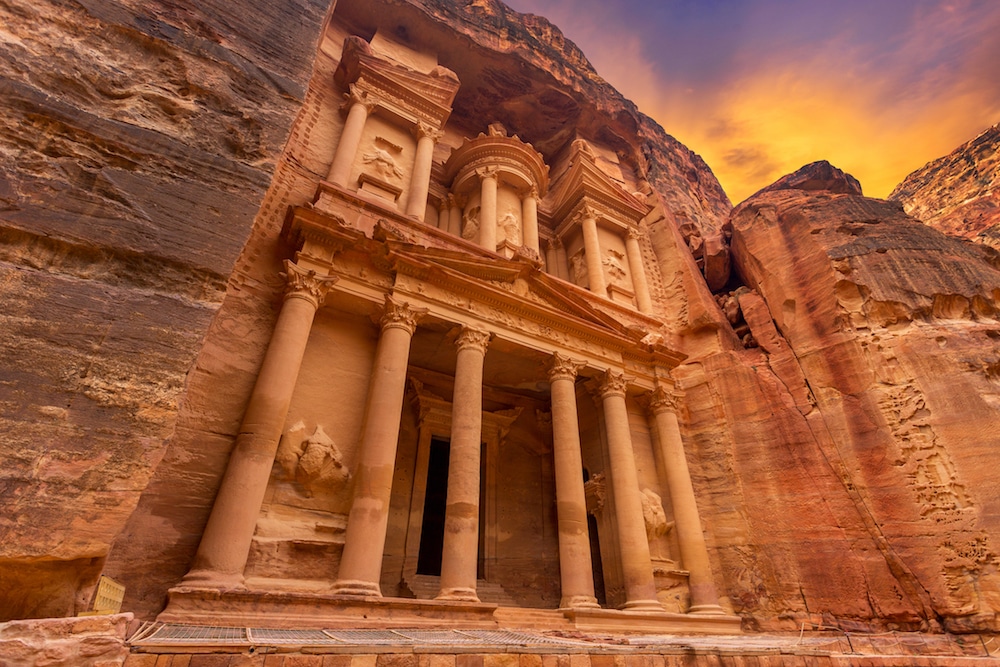
Petra 🏜️, famously known as the Rose City, is one of the most remarkable archaeological and historical sites in the world. Located in southern Jordan, Petra served as the capital of the Nabataean Kingdom around the 4th century BCE and became a major hub for commerce, culture, and innovation. The city is carved directly into pink-hued sandstone cliffs, giving it its iconic “rose” color and a dramatic, otherworldly beauty that continues to captivate millions of visitors every year.
Petra’s historical significance goes far beyond its stunning appearance. Strategically positioned along the ancient trade routes connecting Arabia, Egypt, and the Mediterranean, the city became a center for trade in spices, incense, silk, and other valuable commodities. The Nabataeans, who inhabited Petra, were masterful engineers and architects. They carved monumental structures such as Al-Khazneh (The Treasury), Ad-Deir (The Monastery), the Royal Tombs, and countless temples and facades directly into the cliffs, blending architectural ingenuity with the natural landscape.
One of Petra’s most impressive features is its advanced water management system. The Nabataeans built an intricate network of dams, cisterns, and aqueducts to collect and store water in the arid desert environment. This system allowed the city to thrive despite harsh climatic conditions, providing water for residential areas, gardens, livestock, and ritual sites. Their ability to engineer a sustainable urban center in such a dry region demonstrates extraordinary foresight and innovation.
Culturally, Petra represents a fusion of civilizations. Its architecture reflects influences from Nabataean, Greek, Roman, and Egyptian styles, symbolizing the cosmopolitan nature of the city as a crossroads of ancient trade and ideas. Petra also holds deep spiritual and ceremonial significance, with many structures serving as temples, tombs, and gathering spaces for social and religious activities.
Discovered by the outside world in 1812 by Swiss explorer Johann Ludwig Burckhardt, Petra has since become a UNESCO World Heritage Site and one of the New Seven Wonders of the World 🌟. Today, visitors can explore its narrow canyon entrance, the Siq, and marvel at monumental structures like The Treasury, hike to the Monastery, and experience the city’s breathtaking scenery. Petra offers not only a glimpse into the life of the Nabataeans but also a profound experience of human creativity, resilience, and harmony with nature.
Petra’s unique combination of history, architecture, cultural significance, and natural beauty makes it one of the most awe-inspiring archaeological sites on Earth. Its timeless legacy continues to attract scholars, adventurers, and tourists from around the world, establishing Petra as a symbol of ancient human achievement and ingenuity.
🏺 History of Petra
The history of Petra 🏛️🏜️, often referred to as the Rose City, spans more than 2,000 years, reflecting the rise and fall of one of the most remarkable civilizations of the ancient world—the Nabataeans. Nestled in the rugged desert of southern Jordan, Petra’s strategic location along the ancient trade routes connecting Arabia, Egypt, and the Mediterranean allowed it to become a thriving commercial hub, facilitating the trade of spices, incense, precious metals, textiles, and other luxury goods. The Nabataeans were not only skilled traders but also ingenious architects and engineers, adapting the harsh desert landscape into a flourishing urban center.
Petra’s origins can be traced back to around 312 BCE, when the Nabataeans established it as their capital. The city was intentionally built within a series of narrow canyons and cliffs, providing natural protection from invaders while also creating a visually stunning environment. The Nabataeans carved their monumental architecture directly into the rose-colored sandstone cliffs, including tombs, temples, residential structures, and elaborate water systems. These architectural feats, combined with their sophisticated urban planning, allowed Petra to thrive in an otherwise arid and challenging environment.
During the 1st century BCE to the 1st century CE, Petra reached the height of its prosperity. This period saw the construction of some of its most iconic monuments, including Al-Khazneh (The Treasury) and the Royal Tombs, reflecting a blend of Nabataean, Hellenistic, and Roman influences. The Nabataeans’ ability to incorporate foreign architectural styles into their own unique aesthetic demonstrates the city’s cosmopolitan character. Petra’s wealth and influence attracted merchants, artisans, and visitors from across the ancient world, turning it into a bustling and culturally rich metropolis.
In 106 CE, Petra became part of the Roman Empire, which led to further development, including Roman-style theaters, colonnaded streets, and temples. Despite Roman annexation, the city retained much of its Nabataean identity, with continued trade and cultural activity. Over time, however, Petra’s importance began to decline. Shifts in trade routes, combined with earthquakes, political instability, and changing economic conditions, gradually reduced the city’s prosperity. By the 7th century CE, Petra was largely abandoned, and its existence faded from the broader historical record.
For centuries, Petra remained hidden from the world, preserved by its remote desert location and natural rock formations. It was rediscovered in 1812 by Swiss explorer Johann Ludwig Burckhardt, who documented its monuments and brought international attention to the ancient city. Since then, Petra has been recognized as a UNESCO World Heritage Site and is celebrated as one of the New Seven Wonders of the World 🌟, attracting scholars, archaeologists, and tourists from around the globe.
Petra’s history is not only a story of commerce and architecture but also a testament to the resilience, ingenuity, and vision of the Nabataean civilization. From its strategic location and flourishing trade to its monumental rock-cut façades and advanced water systems, Petra remains a timeless symbol of human achievement, bridging the ancient and modern worlds and inspiring awe in all who visit.
🏛️ Architecture and Engineering of Petra
The architecture and engineering of Petra 🏜️🏺 are among the most remarkable achievements of the ancient world, showcasing the creativity, skill, and ingenuity of the Nabataeans. Carved directly into the rose-colored sandstone cliffs, Petra’s monumental façades, tombs, temples, and public buildings reflect a masterful combination of natural landscape, architectural design, and engineering innovation. Unlike most ancient cities, which were built above ground, Petra’s structures were integrated into the cliffs themselves, allowing the city to blend seamlessly with its environment while providing natural protection against invaders.
One of Petra’s most iconic structures is Al-Khazneh (The Treasury) 🏺, a 40-meter-high façade carved into a sandstone cliff. Its intricate Hellenistic design, featuring columns, statues, and decorative friezes, demonstrates a fusion of Nabataean craftsmanship with Greek and Roman architectural influences. Al-Khazneh is not only visually stunning but also serves as a symbol of Petra’s wealth and sophistication. Another remarkable structure is Ad-Deir (The Monastery) ⛰️, which is significantly larger than the Treasury and perched atop a plateau. Reaching it requires climbing over 800 steps, but visitors are rewarded with breathtaking views of the surrounding desert and mountains.
The Royal Tombs 🏛️, carved into the cliffs, are a series of monumental tombs with elaborate façades, reflecting the Nabataeans’ emphasis on ritual, prestige, and afterlife beliefs. Other notable structures include the Great Temple, the Qasr al-Bint Temple, and the Roman-style theater 🎭, which could seat thousands of spectators. The theater, cut into rock and later modified by the Romans, illustrates the blend of Nabataean and Roman engineering techniques.
Petra’s engineering brilliance is most evident in its water management system 💧. In an arid desert environment, the Nabataeans designed dams, cisterns, channels, and aqueducts to collect, store, and distribute water throughout the city. This allowed Petra to support a large population, maintain gardens and agricultural areas, and sustain trade and daily life. Their innovative system included flash-flood control, using terraces and channels to prevent erosion and water damage, proving the Nabataeans’ advanced understanding of hydraulics and urban planning.
The layout of Petra is also notable. The city was carefully planned to include residential quarters, marketplaces, religious spaces, and burial areas, all connected by roads carved into rock or paved with stone. Narrow canyons, such as the Siq 🌄, served both as dramatic entrances and as natural defense mechanisms. These architectural choices highlight Petra’s strategic, aesthetic, and functional design, making it not only a city of beauty but also of practicality and security.
In conclusion, Petra’s architecture and engineering are a testament to the Nabataean civilization’s ingenuity, artistry, and mastery of their environment. By carving monumental structures into cliffs, integrating water management systems, and blending cultural influences, Petra became a thriving urban center and a masterpiece of ancient engineering. Even today, its combination of natural beauty, technical skill, and artistic vision continues to inspire awe, making Petra one of the most iconic archaeological sites in the world.
🌏 Cultural Significance of Petra
Petra 🏛️🏜️, often called the Rose City, is far more than an archaeological wonder; it holds immense cultural, historical, and spiritual significance. As the former capital of the Nabataean Kingdom, Petra was a thriving center of commerce, art, and religion, reflecting the rich cultural heritage of the ancient world. Its location along key trade routes connecting Arabia, Egypt, and the Mediterranean made it a melting pot of civilizations, where ideas, architectural styles, and religious practices from different regions converged.
The art and architecture of Petra highlight the cultural fusion of the Nabataeans. Structures such as Al-Khazneh (The Treasury) 🏺, Ad-Deir (The Monastery) ⛰️, and the Royal Tombs 🏛️ combine Nabataean ingenuity with Hellenistic, Roman, and Egyptian influences. This architectural blend is evidence of Petra’s cosmopolitan character, showing how the Nabataeans adopted and adapted foreign styles to create a unique cultural identity. Even the city’s layout, with its residential quarters, marketplaces, temples, and burial sites, reflects an advanced understanding of urban planning and social organization.
Religion played a central role in Petra’s cultural life. The city housed numerous temples, altars, and sacred sites, where Nabataeans worshipped deities such as Dushara and Al-Uzza. These religious structures were often carved directly into rock, merging spiritual function with architectural beauty. Rituals, ceremonies, and festivals helped strengthen social cohesion and maintained Petra’s status as a cultural hub.
Petra’s significance extends to modern times as well. It is a symbol of Jordanian national pride and a testament to human creativity, adaptability, and resilience. As a UNESCO World Heritage Site, Petra educates the world about ancient Nabataean culture, engineering brilliance, and historical trade networks. Its preservation allows scholars, tourists, and local communities to connect with a civilization that thrived in one of the harshest environments on Earth.
The city also inspires modern arts, literature, and film. Petra’s unique rock-cut architecture has been featured in numerous movies, documentaries, and photography projects, reinforcing its status as a global cultural icon 🌟. Festivals and cultural events in the region celebrate Petra’s heritage, keeping the traditions and history of the Nabataeans alive.
In essence, Petra’s cultural significance lies in its ability to bridge past and present, offering insights into ancient life while inspiring admiration and creativity today. It is a living monument to human ingenuity, artistic expression, and intercultural exchange, demonstrating how one civilization could leave a legacy that continues to captivate the world over two millennia later.
.
🌄 Tourism and Scenic Highlights of Petra
Petra 🏛️🏜️, the legendary Rose City, is not only a historical and cultural treasure but also one of the most captivating tourist destinations in the world. Visitors from across the globe come to experience its stunning rock-cut architecture, natural landscapes, and rich historical legacy. The city offers a combination of adventure, education, and breathtaking scenery, making it a must-visit site for history enthusiasts, hikers, photographers, and cultural travelers alike.
One of the most iconic aspects of Petra tourism is the Siq 🌄, a narrow, winding canyon that serves as the dramatic entrance to the city. Stretching over 1.2 kilometers, the Siq’s towering sandstone cliffs guide visitors toward the world-famous Al-Khazneh (The Treasury) 🏺. As travelers walk through the Siq, the anticipation builds, culminating in the awe-inspiring reveal of the Treasury’s monumental façade, carved directly into the rose-colored cliffs. This experience is often described as life-changing, combining both natural beauty and architectural wonder.
Beyond the Treasury, visitors can explore Ad-Deir (The Monastery) ⛰️, a massive rock-cut structure perched high on a plateau. Reaching the Monastery requires climbing over 800 steps, but the panoramic views of Petra’s surrounding mountains, valleys, and desert landscapes make the effort well worth it. Other highlights include the Royal Tombs 🏛️, Qasr al-Bint Temple, the Roman Theater 🎭, and numerous smaller temples, altars, and cave dwellings. Each site offers unique insights into the Nabataean way of life and architectural brilliance.
For those seeking adventure, Petra offers hiking trails of varying difficulty, from easy walks along the Siq to challenging treks up steep cliffs to hidden viewpoints. Some trails lead to lesser-known structures, allowing visitors to experience Petra in a more private and authentic way. Camel and donkey rides are also popular, providing alternative ways to explore the city and its rugged terrain.
The natural scenery around Petra enhances its allure. The rose-hued cliffs, dramatic canyons, and desert landscapes create perfect photographic opportunities, especially during sunrise and sunset, when the light accentuates the city’s colors and textures. Seasonal variations—spring wildflowers, autumn shades, and even occasional desert rains—add unique beauty to every visit.
Petra also supports cultural tourism, offering opportunities to engage with local Bedouin communities. Visitors can experience traditional hospitality, crafts, cuisine, and storytelling, gaining a deeper appreciation of the region’s living heritage. Guided tours provide historical context, uncovering the stories of the Nabataeans, their trade networks, and the city’s significance in ancient times.
Overall, Petra’s combination of historical monuments, natural beauty, adventure, and cultural experiences makes it one of the most unforgettable travel destinations on Earth 🌟. Whether it’s marveling at the Treasury, hiking to the Monastery, or wandering through ancient tombs, every visitor is immersed in a world where history, art, and nature converge in perfect harmony.
🏛️ Fun Facts About Petra
Petra 🏜️🏛️, the iconic Rose City, is full of fascinating facts that highlight its historical, architectural, and cultural significance. Here are some of the most intriguing details that make Petra a true wonder of the world:
The Meaning of Petra 🏜️ – The name “Petra” comes from the Greek word for “rock”, referencing the city’s stunning rock-cut architecture and its integration with natural cliffs. Its nickname, the Rose City, comes from the pinkish-red hue of the sandstone cliffs.
Hidden for Centuries 🕰️ – After the city’s decline in the 7th century CE due to earthquakes and changing trade routes, Petra remained largely forgotten by the outside world until its rediscovery in 1812 by Swiss explorer Johann Ludwig Burckhardt.
Al-Khazneh (The Treasury) 🏺 – The Treasury is one of Petra’s most famous monuments. Legend has it that it hid treasures from pharaohs, though it was actually a royal tomb. Its façade is approximately 40 meters high, showcasing intricate Hellenistic-style carvings.
The Monastery (Ad-Deir) ⛰️ – This massive structure is even larger than the Treasury and requires climbing over 800 steps to reach it. From the top, visitors can enjoy panoramic views of Petra’s vast landscape.
Advanced Water System 💧 – Petra’s Nabataean inhabitants engineered an elaborate system of dams, cisterns, and channels, enabling the city to thrive in an arid desert. They also controlled flash floods and stored enough water for agriculture and daily life.
Cosmopolitan Architecture 🏛️ – Petra’s structures reflect a blend of Nabataean, Greek, Roman, and Egyptian architectural styles, highlighting the city’s status as a trade and cultural hub.
Roman Influence 🎭 – The city has a Roman-style theater carved into rock, which could hold over 8,500 spectators, indicating the scale of Petra’s urban planning and social life.
Film Star Fame 🎬 – Petra has appeared in several movies, most famously in “Indiana Jones and the Last Crusade”, further cementing its status as a cultural icon.
Wildlife and Flora 🌿 – The area around Petra is home to desert plants, rare shrubs, and unique wildlife, making it not only a historical site but also a natural wonder.
Size and Scale 📏 – Petra covers over 264 square kilometers, with hundreds of monuments, tombs, and hidden caves scattered throughout the landscape, making exploration an adventure in itself.
World Heritage Recognition 🌟 – In 1985, Petra was designated a UNESCO World Heritage Site, and in 2007 it was named one of the New Seven Wonders of the World, recognizing its global significance.
These fun facts demonstrate that Petra is much more than a collection of monuments; it is a living testament to human ingenuity, architectural mastery, and cultural richness. From its hidden treasures and monumental façades to its advanced engineering and global fame, Petra continues to inspire awe, curiosity, and admiration among visitors from all corners of the world.
🏗️ Preservation Efforts of Petra
Petra 🏛️🏜️, the breathtaking Rose City, is not only an archaeological and cultural treasure but also a fragile heritage site that faces numerous challenges due to natural erosion, human activity, and environmental changes. Preserving Petra is crucial to maintaining its historical integrity, architectural beauty, and cultural significance for future generations.
One of the primary threats to Petra is natural erosion. The sandstone cliffs, which give the city its iconic rose color, are highly susceptible to wind, rain, and flash floods, gradually wearing away the intricate carvings and structures. Earthquakes in the region have also caused damage to some of the rock-cut façades and ancient infrastructure. To combat these threats, geologists and conservation experts regularly monitor Petra’s cliffs and structures, using modern technology such as 3D scanning and laser mapping to assess erosion patterns and structural stability.
Tourism, while essential for Jordan’s economy, poses another challenge. With over a million visitors annually, foot traffic, climbing, and environmental impact can accelerate wear and tear on the monuments and pathways. To address this, local authorities and UNESCO have implemented tourist management strategies, including designated walking routes, guided tours, and restricted access to fragile areas. These measures help balance visitor access with site protection.
Water management is also a focus of preservation. Petra’s original Nabataean water channels and cisterns are still functional in some areas but require maintenance to prevent collapse and erosion. Conservation teams work to restore and reinforce these systems, ensuring the city’s ancient hydraulic engineering is preserved as part of its cultural heritage.
Community involvement is another critical component of Petra’s preservation. Local Bedouin communities, who have lived in and around Petra for centuries, are actively engaged in cultural preservation, tourism management, and educational programs. By empowering the local population, Petra’s conservation efforts gain sustainable support, combining heritage protection with economic development.
International organizations, including UNESCO and global archaeological teams, also collaborate with Jordanian authorities to implement scientific research, restoration projects, and heritage education initiatives. These efforts aim to protect Petra from both natural decay and human impact while promoting global awareness of its historical and cultural value.
In addition to structural preservation, environmental initiatives focus on reducing pollution, managing waste, and controlling vegetation growth that may damage rock-cut monuments. Long-term planning includes emergency response measures for potential floods or earthquakes, ensuring Petra’s survival as a cultural and historical landmark.
In summary, the preservation of Petra 🏛️🌟 is a complex, ongoing effort that involves scientific research, modern engineering, sustainable tourism, and community participation. Protecting Petra ensures that this ancient wonder, the Rose City, and a symbol of human ingenuity and artistic achievement continues to inspire awe, educate visitors, and retain its rightful place as one of the New Seven Wonders of the World.
🌟 Why Petra Is a Wonder
Petra 🏛️🏜️, famously known as the Rose City, is widely recognized as one of the New Seven Wonders of the World 🌟 due to its unique combination of natural beauty, architectural genius, historical significance, and cultural heritage. Unlike any other ancient city, Petra demonstrates how human creativity can harmoniously blend with nature to create a living masterpiece that has endured for over two millennia.
One of the primary reasons Petra is considered a wonder is its extraordinary rock-cut architecture 🏺. The city’s monumental façades, such as Al-Khazneh (The Treasury) and Ad-Deir (The Monastery), are carved directly into rose-colored sandstone cliffs, creating structures that are both visually stunning and architecturally complex. These façades display a fusion of Nabataean, Greek, Roman, and Egyptian influences, reflecting Petra’s status as a cosmopolitan trade hub. The scale, precision, and artistry of these carvings are unmatched, making Petra a unique testament to human ingenuity.
Another reason Petra stands out is its ingenious engineering 💧. The Nabataeans developed a sophisticated water management system, including dams, cisterns, channels, and aqueducts, to collect, store, and distribute water in a harsh desert environment. This innovation allowed Petra to thrive as a city in one of the most arid regions on Earth, demonstrating advanced knowledge of hydraulics, urban planning, and sustainable living long before modern technology.
Petra’s historical and cultural significance 🌏 further cements its status as a wonder. As the capital of the Nabataean Kingdom, Petra was a bustling center of trade, religion, and culture. Its temples, tombs, and public spaces reveal a rich spiritual and social life, while its blending of architectural styles showcases cultural exchange across civilizations. The city’s long and fascinating history—from its Nabataean origins to Roman influence and eventual rediscovery—offers a window into the achievements of an ancient civilization that adapted and thrived in a challenging environment.
The natural beauty 🌄 surrounding Petra enhances its wonder. Towering sandstone cliffs, dramatic canyons like the Siq, and panoramic desert landscapes create a visually stunning backdrop for the city’s monuments. The interplay of light and shadow, especially during sunrise and sunset, adds to the city’s mystique, making every visit a sensory and emotional experience.
Finally, Petra’s global recognition and continued influence contribute to its status as a wonder. Designated a UNESCO World Heritage Site in 1985 and later named one of the New Seven Wonders of the World in 2007, Petra is celebrated internationally for its historical importance, architectural mastery, and timeless beauty. Its ability to inspire awe, attract millions of visitors, and maintain cultural relevance for over two thousand years makes it a truly unparalleled human achievement 🌟.
In summary, Petra’s rock-cut architecture, innovative engineering, cultural richness, historical significance, and breathtaking natural scenery combine to make it one of the most remarkable wonders of the world. It is not only a city carved in stone but also a living testament to human creativity, resilience, and ingenuity, securing its place as a New Seven Wonders of the World and a symbol of enduring human achievement.
🏁 Overall Conclusion of Petra
Petra 🏛️🏜️, the legendary Rose City of Jordan, stands as one of the most remarkable and awe-inspiring archaeological sites in the world. From its ancient Nabataean origins to its recognition as a UNESCO World Heritage Site and a New Seven Wonders of the World 🌟, Petra represents the pinnacle of human ingenuity, creativity, and resilience. Carved into the rose-colored sandstone cliffs, the city is a breathtaking blend of natural beauty, architectural mastery, and cultural significance, offering visitors an unparalleled glimpse into the achievements of an ancient civilization.
The history of Petra reveals a thriving center of trade, culture, and innovation, where the Nabataeans skillfully leveraged their strategic location along ancient trade routes to build a prosperous city. Their architectural and engineering brilliance is evident in monumental structures such as Al-Khazneh (The Treasury) 🏺, Ad-Deir (The Monastery) ⛰️, the Royal Tombs 🏛️, and an advanced water management system 💧 that allowed Petra to flourish in a harsh desert environment. These achievements highlight the Nabataeans’ vision, ingenuity, and ability to harmonize human design with the natural landscape.
Petra’s cultural significance 🌏 extends far beyond its physical structures. The city reflects a unique fusion of Nabataean, Greek, Roman, and Egyptian influences, demonstrating how different civilizations interacted, exchanged ideas, and created something timeless. Its temples, tombs, and public spaces offer insight into the spiritual, social, and economic life of an ancient society, while modern tourism and cultural events keep Petra’s heritage alive today.
The city’s tourism and scenic highlights 🌄 make it one of the world’s most visited archaeological sites. Visitors experience the dramatic approach through the Siq, the grandeur of Al-Khazneh, the panoramic views from the Monastery, and countless hidden tombs and monuments throughout the city. Petra’s natural landscape, including towering cliffs, canyons, and desert vistas, enhances its magical appeal, making it a destination that inspires wonder, photography, and adventure.
Preservation efforts 🏗️ play a critical role in maintaining Petra’s legacy. Experts, local communities, and international organizations collaborate to protect its rock-cut structures, water systems, and fragile cliffs from erosion, environmental threats, and the impact of tourism. These efforts ensure that Petra will continue to be admired, studied, and cherished for generations to come.
In essence, Petra is more than an ancient city—it is a living symbol of human achievement, creativity, and resilience 🌟. Its stunning architecture, rich history, cultural depth, and breathtaking scenery combine to make it one of the most extraordinary wonders of the world. Visiting Petra is not just a journey through a desert canyon; it is a journey through time, history, and human ingenuity, leaving a lasting impression that transcends centuries. Petra’s enduring beauty and significance ensure that it will remain a treasured wonder, inspiring awe and admiration for generations to come.
(3). ✝️ Christ the Redeemer: The Iconic Symbol of Faith, Peace, and Brazil
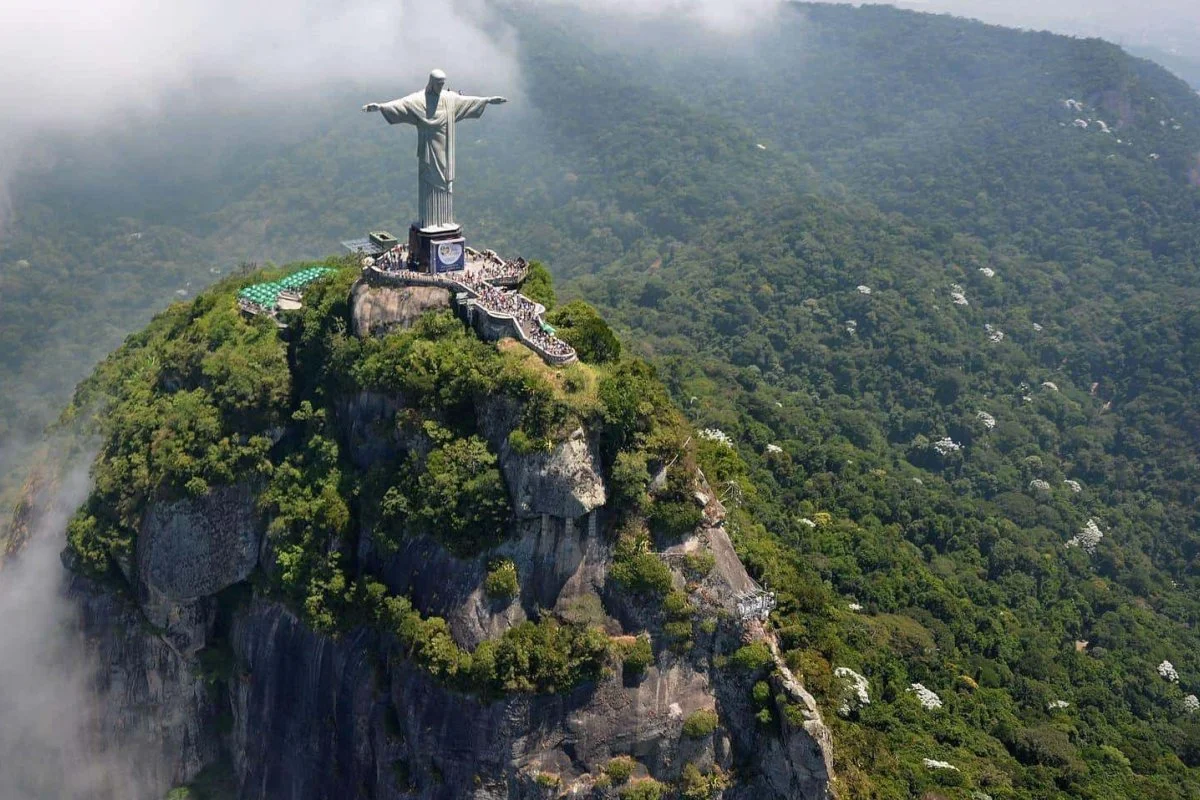
🏺 History of Christ the Redeemer
The history of Christ the Redeemer ✝️ is deeply connected to Brazil’s religious heritage, national identity, and artistic ambition. The idea of placing a Christian monument atop Mount Corcovado in Rio de Janeiro dates back to the mid-19th century, when Catholic priest Pedro Maria Boss first proposed a religious statue to honor Princess Isabel of Brazil. Although the proposal was not approved at the time, the vision of a monumental religious symbol overlooking the city remained alive in the hearts of Brazil’s Christian community.
The project gained renewed momentum in the early 20th century, particularly in 1921, when Brazil prepared to celebrate the 100th anniversary of its independence. The Catholic Circle of Rio de Janeiro launched a campaign called “Semana do Monumento” (Monument Week) to gather public support and donations for the construction of a large statue of Jesus Christ. The goal was not only religious but also cultural—to create a symbol that represented faith, unity, and peace during a period of social and political change in Brazil.
Construction officially began in 1922, with Brazilian engineer Heitor da Silva Costa selected as the chief designer. French sculptor Paul Landowski was responsible for shaping the statue’s head and hands, while French engineer Albert Caquot designed the internal structure. Because Brazil lacked the technology to sculpt such massive components at the time, many parts were crafted in France and shipped to Brazil, then transported up Mount Corcovado by train.
The location of Mount Corcovado, standing more than 700 meters above sea level, was carefully chosen. Its height ensured that the statue would be visible from nearly every part of Rio de Janeiro, symbolizing spiritual protection over the city. Despite the logistical challenges of building at such an elevation, construction continued for nine years, using reinforced concrete for strength and soapstone for the outer surface due to its durability and resistance to weathering.
In 1931, Christ the Redeemer was officially completed and inaugurated in a grand ceremony attended by religious leaders, government officials, and citizens. At the time, it was one of the largest Art Deco statues in the world. The statue’s iconic pose—with arms outstretched—was intentionally chosen to represent welcome, compassion, forgiveness, and unity, making it a universal symbol rather than a strictly religious one.
Over the decades, Christ the Redeemer grew in global recognition. Advances in transportation and tourism transformed it into an international landmark, drawing visitors from around the world. In 1980, the statue received special recognition when Pope John Paul II visited the site, reinforcing its importance to the global Christian community. In 2007, Christ the Redeemer was officially named one of the New Seven Wonders of the World 🌍, cementing its place among humanity’s greatest achievements.
Throughout its history, the statue has endured lightning strikes, storms, and environmental challenges, yet continuous restoration and preservation efforts have ensured its survival. Today, Christ the Redeemer stands not only as a monument of stone and concrete but as a living symbol of faith, peace, national pride, and artistic excellence. Its history reflects Brazil’s devotion, perseverance, and desire to share a message of hope with the world.
🏗️ Architecture and Engineering Marvel
The architecture and engineering of Christ the Redeemer ✝️ stand as one of the most impressive achievements of early 20th-century monumental construction. Designed in the Art Deco architectural style, the statue combines simplicity, strength, and symbolism, creating a structure that is both visually striking and structurally resilient. Rising 30 meters (98 feet) above its pedestal and reaching a total height of 38 meters (125 feet), Christ the Redeemer dominates the skyline of Rio de Janeiro, making it visible from nearly every corner of the city.
One of the most remarkable engineering aspects of the statue is its reinforced concrete core 🧱. At the time of construction, reinforced concrete was a relatively modern material, chosen for its ability to withstand immense weight, strong winds, and long-term exposure to harsh weather conditions. The statue weighs more than 600 tons, and its internal framework was carefully engineered to distribute this weight evenly, ensuring stability at an elevation of over 700 meters above sea level on Mount Corcovado.
The statue’s exterior is covered with soapstone tiles, a material selected for its durability, resistance to erosion, and smooth texture. Thousands of small, triangular soapstone pieces were hand-cut and individually placed, forming a protective outer layer that also enhances the statue’s soft, luminous appearance. Soapstone’s natural resistance to temperature changes and moisture makes it ideal for the tropical climate of Rio de Janeiro.
The outstretched arms, spanning 28 meters (92 feet), are both an architectural and engineering triumph. Structurally, they required precise calculations to ensure balance and resistance to wind pressure. Symbolically, the arms represent peace, welcome, and protection, reinforcing the statue’s universal message. Special internal supports were built into the arms to prevent stress fractures and maintain structural integrity over time.
Building the statue posed significant logistical challenges 🚧. Many of the sculpted components, including the head and hands, were created in France and transported to Brazil by ship. From there, they were carried up Mount Corcovado using the historic cogwheel railway, which had been operating since the late 19th century. Construction workers faced difficult terrain, strong winds, and limited space, making the project an extraordinary feat of coordination and precision.
Another critical engineering feature is the statue’s lightning protection system 🌩️. Due to its height and exposed position, Christ the Redeemer is frequently struck by lightning. Engineers incorporated lightning rods and grounding systems to safely disperse electrical energy, minimizing damage to the structure. Continuous upgrades ensure modern safety standards are met without altering the statue’s original design.
Overall, Christ the Redeemer is a masterpiece of architecture and engineering, blending artistic vision with technical excellence. Its enduring strength, elegant design, and ability to withstand decades of environmental challenges demonstrate how innovation, craftsmanship, and symbolism came together to create one of the most iconic monuments in human history. The statue is not only a symbol of faith but also a lasting testament to human engineering brilliance 🌟.
🌏 Cultural Significance of Christ the Redeemer
The cultural significance of Christ the Redeemer ✝️ extends far beyond its role as a religious monument, making it one of the most powerful cultural symbols in the world. For Brazil, the statue represents faith, national identity, unity, and hope, while globally it stands as a universal message of peace, compassion, and acceptance. Positioned high above Rio de Janeiro with open arms, Christ the Redeemer visually communicates welcome and protection, resonating with people of all religions and backgrounds.
Rooted deeply in Brazilian Christian heritage, the statue reflects the country’s historical connection to Christianity, which has shaped its traditions, values, and social life for centuries. However, its symbolism goes beyond religion. The open-armed posture has transformed Christ the Redeemer into a humanitarian icon, often associated with messages of solidarity, forgiveness, and harmony in times of global crisis or celebration. This universal appeal is one of the reasons the statue is admired worldwide.
Culturally, Christ the Redeemer has become the ultimate emblem of Rio de Janeiro 🇧🇷. It is inseparable from the city’s identity, appearing in postcards, tourism campaigns, international sporting events, and global media coverage. Whether during Carnival celebrations, the Olympic Games, or World Cup broadcasts, the statue serves as a visual anchor representing Brazil on the world stage.
The monument also plays an important role in art, film, and popular culture 🎬. It has been featured in countless movies, documentaries, music videos, and photographs, reinforcing its status as one of the most recognizable landmarks on Earth. Artists and photographers from around the world draw inspiration from its dramatic setting, blending spirituality with Rio’s natural beauty.
Christ the Redeemer is also a symbol of cultural unity and resilience. Over the years, the statue has been illuminated in different colors to honor global causes, raise awareness, and show solidarity during international events. These gestures highlight how the monument continues to evolve as a cultural voice, adapting to modern times while preserving its original meaning.
As part of the UNESCO-protected Tijuca National Park, Christ the Redeemer also represents the harmonious relationship between culture and nature 🌿. The monument’s presence within one of the world’s largest urban rainforests reinforces Brazil’s commitment to preserving both its cultural and natural heritage.
In essence, the cultural significance of Christ the Redeemer lies in its ability to transcend borders, beliefs, and generations. It is not just a statue, but a living symbol of Brazilian pride, global unity, spiritual strength, and artistic excellence, making it one of the most meaningful cultural landmarks in human history.
🌄 Tourism & Scenic Views of Christ the Redeemer
Christ the Redeemer ✝️ is one of the most visited and admired tourist attractions in the world, drawing millions of visitors every year to Rio de Janeiro. Situated atop Mount Corcovado at an elevation of over 700 meters (2,300 feet), the statue offers a truly unforgettable travel experience that combines spiritual significance, breathtaking scenery, and natural beauty. Tourism at Christ the Redeemer plays a vital role in Brazil’s cultural identity and economy, making it one of the country’s most important landmarks.
The journey to Christ the Redeemer is itself a memorable adventure. Visitors can reach the summit using the historic Corcovado cogwheel train 🚆, which travels through the lush Tijuca National Park, the largest urban rainforest in the world. This scenic ride allows tourists to enjoy dense greenery, exotic wildlife, and panoramic views as they ascend the mountain. Alternatively, visitors may access the site by road or hiking trails, offering different perspectives of the surrounding landscape.
Once at the summit, visitors are welcomed by spectacular 360-degree panoramic views 🌍 of Rio de Janeiro. From the observation platform, tourists can see iconic landmarks such as Sugarloaf Mountain, Copacabana Beach, Ipanema Beach, Guanabara Bay, Maracanã Stadium, and the Atlantic Ocean. The contrast between the city’s modern skyline, golden beaches, and natural mountains creates one of the most stunning urban landscapes in the world.
The statue itself enhances the emotional impact of the visit. Standing beneath the outstretched arms of Christ evokes a sense of peace, awe, and reflection, making the experience meaningful for both religious and non-religious visitors. The atmosphere is especially magical during sunrise and sunset 🌅, when changing light casts dramatic shadows across the city and highlights the statue’s monumental scale. At night, the illuminated statue glows above Rio, creating a powerful and serene visual symbol visible from miles away.
Christ the Redeemer is also a major hub for photography and sightseeing 📸. Tourists from around the globe capture iconic images of the statue against the backdrop of Rio’s landscape. Professional guides and information displays help visitors understand the monument’s history, architecture, and symbolism, enriching the overall experience.
In addition to sightseeing, the area supports sustainable tourism practices, ensuring that visitor activity respects both the cultural monument and the surrounding rainforest. Managed pathways, visitor limits, and guided tours help protect the site while allowing people to experience one of the world’s greatest wonders.
Overall, the tourism and scenic appeal of Christ the Redeemer lies in its ability to combine natural beauty, cultural heritage, and spiritual symbolism into a single unforgettable destination. Whether admired from afar or experienced up close, Christ the Redeemer offers a journey that leaves visitors inspired, humbled, and deeply connected to the beauty of Brazil.
🏛️ Fun Facts About Christ the Redeemer
Christ the Redeemer ✝️ is filled with fascinating details that make it even more extraordinary. One of the most impressive facts is its sheer scale—the statue weighs over 600 tons, making it one of the largest Art Deco statues in the world. Despite its massive size, the design maintains a calm and gentle appearance, which adds to its emotional impact.
The statue is covered with thousands of small soapstone tiles, all hand-cut and placed individually. Many of these tiles were applied by women, some of whom wrote personal messages and prayers on the back before installation, adding a deeply human and spiritual layer to the monument.
Due to its height and exposed position, Christ the Redeemer is frequently struck by lightning 🌩️, sometimes several times a year. In one notable incident, lightning damaged parts of the fingers and head, which were later carefully restored.
Another fun fact is that parts of the statue, including the head and hands, were sculpted in France and shipped to Brazil, then transported up Mount Corcovado using the historic railway. The statue is also one of the most photographed landmarks in the world, appearing in movies, documentaries, advertisements, and international broadcasts.
In 2007, Christ the Redeemer was officially named one of the New Seven Wonders of the World, solidifying its status as a global icon admired by millions.
🏗️ Preservation Efforts
Preserving Christ the Redeemer is a continuous and carefully planned process due to its exposure to tropical weather, strong winds, pollution, and lightning strikes. Located at a high altitude, the statue faces constant environmental stress, making conservation essential to protect its structure and appearance.
Regular inspection and maintenance programs are carried out by engineers, conservation experts, and restoration teams. These include cleaning the soapstone surface, repairing cracks, replacing damaged tiles with identical materials, and reinforcing internal structures when necessary.
Advanced lightning protection systems have been installed to safely channel electrical energy into the ground, reducing damage during storms. Modern monitoring technology is also used to track structural stability and environmental impact over time.
Preservation efforts aim not only to protect the monument but also to maintain its historical authenticity and artistic integrity. Collaboration between government agencies, cultural institutions, and religious organizations ensures that Christ the Redeemer remains safe while continuing to inspire visitors from around the world. These efforts help preserve the statue as a global heritage treasure for future generations.
🌟 Why Christ the Redeemer Is a Wonder of the World
Christ the Redeemer earned its place among the New Seven Wonders of the World 🌍 because it perfectly combines architectural brilliance, engineering excellence, cultural depth, spiritual symbolism, and natural beauty. Few monuments in human history deliver such a powerful message while also standing in such a breathtaking setting.
Architecturally, the statue represents an extraordinary achievement of Art Deco design, built using advanced engineering techniques for its time. Culturally, it symbolizes Brazilian identity, unity, and faith, while spiritually it conveys a universal message of peace, love, and compassion that transcends borders and beliefs.
Its location atop Mount Corcovado adds to its wonder, offering sweeping panoramic views and creating a dramatic connection between human creativity and the natural world 🌄. The statue’s open arms are instantly recognizable, making it one of the most emotionally resonant landmarks on Earth.
Ultimately, Christ the Redeemer is a wonder because it is timeless. It continues to inspire awe, reflection, and admiration decades after its construction. More than stone and concrete, it is a symbol of hope, unity, and human achievement, standing as a reminder that great monuments can carry messages that speak to all of humanity.
🏁 Overall Conclusion
In conclusion, Christ the Redeemer ✝️ stands as one of the most powerful and enduring symbols in the world, representing a perfect harmony of faith, architecture, engineering, culture, and natural beauty. Rising majestically above Rio de Janeiro from the summit of Mount Corcovado, this iconic monument is far more than a statue—it is a global emblem of peace, hope, and unity that continues to inspire millions of people across generations.
From its visionary origins and remarkable Art Deco design to its advanced engineering and durable construction, Christ the Redeemer reflects the brilliance of human creativity and innovation. Its outstretched arms convey a universal message of compassion, welcome, and protection, transcending religious and cultural boundaries. The statue’s deep cultural significance has made it an inseparable part of Brazil’s national identity, while its breathtaking location offers some of the most stunning panoramic views in the world.
As one of the New Seven Wonders of the World 🌍, Christ the Redeemer has earned global recognition for its architectural excellence, symbolic power, and emotional impact. Ongoing preservation efforts ensure that this monumental achievement remains protected against environmental challenges, allowing future generations to admire its beauty and meaning.
Ultimately, Christ the Redeemer is a timeless reminder that monuments can carry messages far greater than their physical form. It stands as a testament to human faith, unity, resilience, and artistic excellence, continuing to watch over Rio de Janeiro and the world with open arms—inviting reflection, inspiring hope, and celebrating the shared spirit of humanity.
(4). Taj Mahal: A Timeless Masterpiece of Love and Craftsmanship
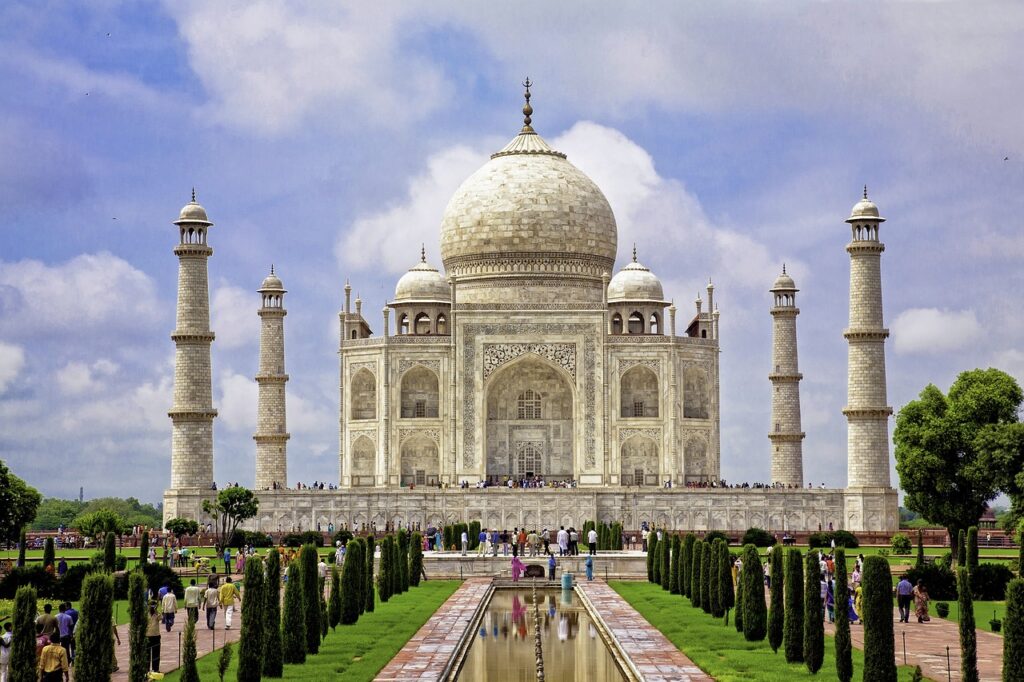
🏺 History of the Taj Mahal
The Taj Mahal, located in Agra, India, is not only a UNESCO World Heritage Site but also one of the most iconic monuments in the world, symbolizing love, artistry, and the grandeur of the Mughal Empire. Its history is closely intertwined with the personal life of Emperor Shah Jahan, who commissioned this magnificent mausoleum in memory of his beloved wife, Mumtaz Mahal, after her death in 1631 during childbirth. The construction of the Taj Mahal began in 1632, reflecting both Shah Jahan’s immense grief and his desire to immortalize Mumtaz Mahal’s memory. It is estimated that over 20,000–30,000 artisans, craftsmen, laborers, and architects contributed to the project, working tirelessly for more than 21 years, with the main structure completed around 1648 and additional structures and gardens finished by 1653.
The Taj Mahal’s historical significance extends beyond personal devotion; it is a reflection of the Mughal Empire’s wealth, power, and cultural sophistication during the 17th century. Shah Jahan sought to leave a legacy that would rival any monument in the world, combining Persian, Islamic, and Indian architectural traditions into a single, cohesive masterpiece. The selection of materials highlights the empire’s reach and resources: white marble from Makrana in Rajasthan, red sandstone from Fatehpur Sikri, and semi-precious stones such as jade, turquoise, lapis lazuli, and carnelian transported from distant regions, including Central Asia and Persia. The use of these materials not only showcased imperial power but also reinforced the Taj Mahal as a symbol of eternal beauty and luxury, a tangible representation of the Mughal commitment to art and architecture.
The project was overseen by Ustad Ahmad Lahauri, the chief architect, along with a team of designers, calligraphers, stonecutters, and engineers from India, Persia, and the Ottoman Empire. The Mughal emphasis on symmetry, geometry, and proportion is evident throughout the Taj Mahal, from the central dome to the minarets and gardens. The monument also reflects the spiritual and philosophical ideals of the era. Islamic beliefs about paradise, the afterlife, and divine order influenced its design, particularly the Charbagh (four-part) gardens, representing the Quranic concept of paradise, and the inscriptions of Quranic verses throughout the structure, which symbolize eternal life and divine blessing.
Historically, the Taj Mahal also represents the culmination of Mughal architectural evolution. Earlier Mughal tombs, such as Humayun’s Tomb in Delhi and Akbar’s Tomb in Sikandra, influenced its design, but the Taj Mahal surpassed them in scale, elegance, and intricacy. Shah Jahan’s era marked the peak of Mughal artistic achievement, blending cultural motifs and engineering excellence in a monument that was both deeply personal and politically symbolic. It was not merely a tomb but also a statement of imperial legitimacy, demonstrating that the Mughal emperor could command resources, artisans, and innovation on a scale unmatched in contemporary architecture.
The Taj Mahal’s history is also intertwined with tragedy and political upheaval. After Shah Jahan’s death, his son Aurangzeb imprisoned him in the Agra Fort, from where he could reportedly see the Taj Mahal until his death. Despite political instability, the Taj Mahal remained protected and revered, a testament to its enduring significance as a symbol of love, culture, and Mughal heritage. Over centuries, the monument has survived natural wear, changing rulers, and environmental challenges, retaining its grandeur and symbolic power, which cements its place as one of the most historically significant architectural marvels in human history.
🏗️ Architecture and Engineering Marvel
The Taj Mahal is not only a historical masterpiece but also an unparalleled architectural and engineering achievement. Its design reflects a perfect balance of aesthetics, symbolism, and structural ingenuity, making it one of the greatest monuments in the world. At the heart of the Taj Mahal complex is the mausoleum, constructed primarily from pristine white marble that appears to change color depending on the sunlight or moonlight, creating an ethereal visual experience. The central dome, rising approximately 73 meters (240 feet), is flanked by four smaller domes and four elegant minarets that lean slightly outward—an engineering precaution to ensure that in the event of collapse, they would fall away from the tomb itself.
The layout of the Taj Mahal reflects Mughal architectural principles, which emphasize symmetry, proportion, and harmony. The main structure sits at the northern end of a charbagh garden, a quadrilateral layout inspired by Persian paradise gardens, with reflecting pools that mirror the mausoleum, creating a sense of visual continuity. The careful alignment of pathways, fountains, and landscaping enhances the monument’s grandeur while also symbolizing spiritual ideals, such as the order of the cosmos and paradise on Earth.
The Taj Mahal’s intricate ornamental work is a testament to the skill of Mughal artisans and engineers. Its walls are adorned with pietra dura, a technique in which semi-precious stones are inlaid into marble to form elaborate floral motifs, arabesques, and geometric patterns. These designs required precise measurements and innovative engineering to ensure durability and aesthetic perfection. Additionally, the calligraphy of Quranic verses is executed in black marble, with letters proportionally adjusted to appear uniform from the viewer’s perspective, demonstrating advanced understanding of optical principles and visual perception.
From an engineering perspective, the Taj Mahal is equally remarkable. Its foundation is built on the banks of the Yamuna River, using a system of deep wells filled with rubble and sand to stabilize the structure on the alluvial soil. This innovative method ensures that the tomb remains level and secure despite fluctuations in the river’s water level. The massive dome, weighing thousands of tons, is supported by a complex system of arches and vaults, distributing weight evenly and providing structural stability for centuries. Engineers also incorporated drainage systems and ventilation to preserve the marble and maintain the internal environment, showcasing an extraordinary understanding of materials science and environmental adaptation.
The minarets, apart from their aesthetic role, serve as structural safeguards. Slightly tilted outward, they demonstrate foresight in engineering design, ensuring that any collapse would occur away from the central tomb. The mosque and guesthouse flanking the tomb are constructed from red sandstone, providing a visual contrast to the white marble and contributing to the overall harmony of the complex. The integration of multiple materials, intricate design, and structural innovation exemplifies the Taj Mahal’s status as both an architectural and engineering marvel.
Furthermore, the Taj Mahal incorporates advanced optical and visual techniques. Its proportions create a sense of monumental scale, while the reflective pools and carefully aligned pathways enhance perspective and symmetry. The use of light, shadow, and reflection demonstrates a sophisticated understanding of visual perception, making the Taj Mahal not only structurally sound but also visually enchanting from every angle.
In essence, the Taj Mahal exemplifies the zenith of Mughal architecture and engineering, combining technical innovation with unparalleled artistic creativity. It stands as a monument that is both structurally resilient and aesthetically transcendent, inspiring admiration across centuries and cultures. Its ability to harmonize design, symbolism, and engineering perfection solidifies its reputation as one of the world’s greatest architectural masterpieces.
🌏 Cultural Significance of the Taj Mahal
The Taj Mahal stands not only as one of the most iconic monuments in the world but also as a profound symbol of cultural and emotional depth. Commissioned in 1632 by the Mughal Emperor Shah Jahan in memory of his beloved wife Mumtaz Mahal, the Taj Mahal represents an extraordinary convergence of love, artistic mastery, and the cultural ethos of the Mughal Empire. Its significance transcends mere architectural achievement; it embodies the intertwining of human emotion, religious sensibilities, and imperial grandeur. To understand the cultural significance of the Taj Mahal, it is essential to examine its historical context, the philosophical and spiritual ideals it represents, its role in Mughal identity, and its lasting impact on global cultural consciousness.
The Mughal Empire, under which the Taj Mahal was constructed, was a period marked by extraordinary developments in arts, literature, and architecture. The empire, spanning the Indian subcontinent, had its foundations in Persian, Central Asian, and Indian cultural traditions, creating a synthesis of styles that came to define Mughal aesthetics. This amalgamation is profoundly evident in the Taj Mahal. Its architecture reflects Persian influences in the use of large domes and gardens, Indian influences in its ornamental inlay work and use of local materials, and Islamic influences through calligraphy, geometric patterns, and the Charbagh garden layout, which symbolizes paradise as described in the Quran. The Taj Mahal’s design, therefore, is not merely an artistic choice but a deliberate cultural statement, reflecting the cosmopolitan nature of Mughal rule and the empire’s embrace of diverse artistic traditions.
The symbolic dimension of the Taj Mahal is rooted in its purpose as a mausoleum. While tombs were common in Islamic architecture, the Taj Mahal represents a unique fusion of personal grief and public grandeur. Shah Jahan’s decision to commission such an elaborate structure to commemorate his wife demonstrates how deeply personal narratives could shape monumental architecture. The Taj Mahal, therefore, serves as a cultural artifact that communicates the values and priorities of the Mughal elite: devotion, love, remembrance, and the assertion of imperial authority through visual magnificence. Its construction illustrates how cultural expressions were intertwined with personal and political motives, reflecting a society in which art, architecture, and power were inseparable.
Furthermore, the Taj Mahal holds profound religious and spiritual significance. Islamic principles are woven into every aspect of its design, from the Quranic inscriptions etched into the marble to the symmetry that reflects the Islamic emphasis on balance, order, and the eternal nature of divine creation. The Charbagh garden layout, dividing the grounds into four parts, is symbolic of paradise as described in the Quran, where flowing water represents the rivers of paradise. The Taj Mahal, in this sense, is both a funerary monument and a representation of spiritual ideals, blending earthly beauty with celestial symbolism. Visitors are not merely observing a tomb; they are encountering a space imbued with metaphysical meaning, reflecting a cultural worldview in which beauty, spirituality, and memory coexist harmoniously.
In addition to its religious and aesthetic dimensions, the Taj Mahal has played a pivotal role in shaping cultural identity and heritage in India and beyond. As a UNESCO World Heritage Site, it is celebrated as a pinnacle of Mughal cultural achievement and has become a symbol of national pride. Its image permeates global consciousness, appearing in literature, films, art, and tourism promotions worldwide. The Taj Mahal’s cultural significance is thus multi-layered: it represents historical memory, artistic excellence, and the enduring power of human emotion, all of which contribute to its status as a cultural icon. The monument’s appeal is universal, transcending geographical and linguistic boundaries, which is a testament to its profound cultural resonance.
Moreover, the Taj Mahal’s influence extends beyond the Indian subcontinent. Its aesthetic principles, architectural innovations, and symbolic import have inspired buildings, gardens, and artistic works across the world. From the replication of its design elements in Southeast Asia to its influence on European neoclassical architecture, the Taj Mahal has become a global reference point for beauty, harmony, and monumentality. This transnational significance underscores the Taj Mahal’s role not only as a national or regional symbol but also as a world heritage icon, demonstrating the ability of cultural monuments to transcend their immediate historical and geographical contexts.
The monument also plays a crucial role in storytelling and the transmission of cultural values. Countless poems, songs, and literary works celebrate its beauty and the love story that inspired its creation. This narrative dimension enhances its cultural significance, allowing successive generations to engage with the Taj Mahal not merely as an architectural artifact but as a living symbol of human emotion and artistic aspiration. The cultural practices surrounding the Taj Mahal, including tourism, photography, and scholarly study, further reinforce its role as a site of continuous cultural engagement, ensuring that it remains a dynamic rather than static symbol.
In sum, the cultural significance of the Taj Mahal lies in its ability to encapsulate the ideals, emotions, and artistic sensibilities of the Mughal era while resonating across time and geography. It is a testament to the power of architecture to convey meaning, to immortalize human emotions, and to communicate cultural values. Its intricate design, spiritual symbolism, and historical context all contribute to its enduring status as a cultural icon. The Taj Mahal exemplifies the synthesis of personal devotion, imperial ambition, and artistic genius, making it one of the most culturally significant monuments in human history. Its continued preservation and celebration ensure that it remains a source of inspiration, a symbol of love, and a touchstone of cultural identity for people around the world.
🌄 Tourism & Scenic Views of the Taj Mahal
The Taj Mahal is not only an architectural and historical marvel but also one of the most iconic tourist destinations in the world, drawing millions of visitors every year. Its status as a UNESCO World Heritage Site, coupled with its reputation as a symbol of eternal love, makes it a must-visit location for both domestic and international travelers. Tourism at the Taj Mahal is an experience that extends beyond mere sightseeing; it is a journey into history, artistry, and natural beauty, where the monument’s magnificence is complemented by the carefully designed gardens, reflecting pools, and surrounding landscape.
Visitors from across the globe flock to Agra to witness the Taj Mahal’s unparalleled beauty. The monument’s scenic views are best experienced at different times of the day, each offering a unique perspective. In the early morning, as the sun rises over the Yamuna River, the white marble of the mausoleum takes on a soft pinkish hue, creating a serene and romantic ambiance. During the afternoon, the bright sunlight illuminates the intricate marble inlay work and the Quranic inscriptions, making the structure appear almost luminous against the clear blue sky. On full moon nights, the monument glows with a silvery golden sheen, casting delicate reflections in the water of the gardens and pools, producing a mystical and almost otherworldly experience. These variations in color and mood enhance the aesthetic appeal of the Taj Mahal and underscore its dynamic relationship with natural light and its surroundings.
The charbagh gardens, which surround the mausoleum, play a crucial role in the Taj Mahal’s scenic beauty and tourism appeal. Designed in the traditional Persian-style quadrilateral layout, the gardens are divided into four parts by walkways and water channels, representing the four rivers of paradise. Lush greenery, flowering plants, and towering cypress trees create a peaceful and harmonious environment, offering visitors a sense of tranquility as they walk along the pathways. The reflecting pools, which mirror the mausoleum and its domes, further enhance the visual spectacle, allowing photographers and tourists alike to capture breathtaking images from various angles. This careful integration of architecture with nature demonstrates the Mughals’ vision of a paradise on Earth and continues to captivate the imagination of modern visitors.
Tourism at the Taj Mahal is not limited to visual beauty alone; it is also a cultural experience. Visitors often explore the surrounding red sandstone mosque and guesthouse, which frame the mausoleum and add depth to the complex’s symmetry. These structures, along with the minarets and entrance gates, create a sense of grandeur that reflects the monument’s historical and religious significance. The surrounding area, including the banks of the Yamuna River, provides additional scenic vistas, allowing visitors to appreciate the Taj Mahal from multiple viewpoints, whether standing directly in front of it or observing it from the riverbank, where the reflection of the monument in the water adds an extra layer of beauty.
The Taj Mahal is also a center for tourism infrastructure, with guided tours, interpretive signage, and visitor amenities enhancing the experience. Tourists are encouraged to explore the complex during different times of the day to fully appreciate its changing colors, lighting, and ambiance. Sunrise and sunset tours are particularly popular, as they offer unique photographic opportunities and a more intimate experience with the monument, often before the large crowds arrive. Cultural programs, heritage walks, and storytelling sessions further enrich the visit, providing insight into the history, architecture, and symbolism of the Taj Mahal.
Moreover, the Taj Mahal’s tourism appeal has had a significant economic and cultural impact on the city of Agra. The monument drives local businesses, from hotels and restaurants to artisans selling handicrafts and souvenirs, creating a vibrant tourism ecosystem. Its global fame attracts not only tourists but also scholars, photographers, and filmmakers, all of whom contribute to preserving and promoting the cultural heritage associated with the monument. The scenic views and accessibility of the Taj Mahal ensure that it remains a magnet for visitors seeking both beauty and a connection to India’s rich historical and cultural legacy.
In conclusion, tourism and scenic views at the Taj Mahal combine to create an immersive and unforgettable experience. The interplay of natural light, landscaped gardens, reflective pools, and the surrounding Yamuna River enhances the monument’s visual appeal, while cultural and historical elements provide depth and context for every visitor. Whether viewed at sunrise, under the midday sun, or by the glow of moonlight, the Taj Mahal offers a dynamic and multi-sensory experience that continues to enchant millions of tourists each year. Its blend of natural beauty, architectural precision, and cultural richness makes it not only a prime tourist destination but also an enduring symbol of the aesthetic and spiritual ideals of the Mughal era.
🏛️ Fun Facts About the Taj Mahal
The Taj Mahal, often hailed as the “Crown of Palaces,” is not only a monument of unparalleled beauty but also a treasure trove of fascinating facts and stories that reflect its historical, architectural, and cultural richness. One of the most striking aspects of the Taj Mahal is its color-changing marble, which subtly shifts hues depending on the time of day and atmospheric conditions. In the morning, the white marble appears to glow with a soft pinkish hue, giving the mausoleum a delicate and serene appearance. As the sun rises and reaches its peak, the marble shines a brilliant milky white, highlighting the intricate pietra dura inlay work and the carefully carved Quranic inscriptions. Under the moonlight, the marble takes on a golden, almost ethereal glow, creating a magical and romantic atmosphere. This interplay of light and stone, which seems almost intentional, adds a dynamic visual quality to the monument and has captivated visitors and photographers for centuries.
Another intriguing fact is the legend of the “Black Taj Mahal,” a story that has fascinated historians and tourists alike. According to local lore, Shah Jahan allegedly planned to construct a black marble mausoleum directly across the Yamuna River as his own tomb, to mirror the white Taj Mahal of Mumtaz Mahal. While there is no definitive historical evidence to confirm the existence of such a plan, the story has added an aura of mystery and romance to the monument, further cementing its place in popular imagination. Additionally, the Taj Mahal is sometimes referred to as “a poem in marble” due to the exquisite pietra dura work, delicate floral motifs, and symmetrical design that reflect the Mughal emphasis on aesthetics, harmony, and intricate detail.
The precision and symmetry of the Taj Mahal are among its most astonishing features. Each of the four minarets, which frame the central mausoleum, is designed to lean slightly outward, a subtle engineering choice intended to prevent them from falling onto the main structure in case of collapse or earthquake. The central dome, rising approximately 73 meters high, is perfectly proportioned with four smaller domes surrounding it, creating a balanced and harmonious visual effect. The reflecting pools in the charbagh gardens mirror the central structure so accurately that it appears as if the Taj Mahal is floating on water. This meticulous attention to visual symmetry extends to the inlaid gemstones, marble lattice screens, and calligraphic inscriptions, making the Taj Mahal a masterpiece of both art and science.
The Taj Mahal also represents an incredible achievement in logistics and material transport, considering the 17th-century context in which it was built. Materials were sourced from across India and beyond: white marble was brought from Makrana in Rajasthan, precious and semi-precious stones from as far as Persia, Tibet, and Sri Lanka, and red sandstone from nearby Fatehpur Sikri. Elephants, carts, and boats were employed to transport these materials over long distances, demonstrating the extraordinary organizational skills of the Mughal administration. The monument’s construction involved over 20,000 artisans, including stonecutters, inlay craftsmen, calligraphers, masons, and laborers from India, Central Asia, and the Ottoman Empire, reflecting the global collaboration that contributed to this timeless masterpiece.
Among other fascinating aspects, the calligraphy on the Taj Mahal is not merely decorative but also optical in design. Quranic verses inscribed around the arches appear perfectly proportioned when viewed from the ground, an effect achieved through careful scaling of letters—a remarkable feat of design and perspective. The floral motifs and inlaid gemstones were selected not only for beauty but also for symbolic meaning, representing paradise, immortality, and eternal love. Even the surrounding charbagh gardens were meticulously planned, with waterways, fountains, and symmetrical flowerbeds symbolizing the Quranic vision of paradise, where flowing rivers, lush greenery, and order create a sense of harmony between the earthly and the divine.
Finally, the Taj Mahal has left a profound cultural impact, inspiring countless works of literature, art, music, and films. It has become a global symbol of love, romance, and aesthetic perfection. Despite centuries of political upheaval, natural wear, and environmental challenges, it continues to enthrall millions of visitors every year, serving as both a cultural icon and a living testament to human creativity, ingenuity, and devotion. The combination of romance, artistry, precision engineering, and historical richness makes the Taj Mahal far more than a tomb; it is a monument full of stories, mysteries, and facts that continue to fascinate and inspire people from around the world.
🏗️ Preservation Efforts of the Taj Mahal
The Taj Mahal, a symbol of eternal love and architectural brilliance, faces numerous challenges that threaten its structural integrity and aesthetic beauty. Despite being over 350 years old, the monument continues to draw millions of visitors annually, which places considerable strain on the delicate marble surfaces, surrounding gardens, and foundational structures. Preservation of the Taj Mahal is a complex task that requires a combination of traditional conservation techniques, modern technology, environmental management, and government oversight. The importance of maintaining this UNESCO World Heritage Site goes beyond cultural pride; it is about safeguarding a monument of global significance that represents human creativity, artistry, and history.
One of the most significant threats to the Taj Mahal is environmental pollution. Industrial emissions, vehicular traffic, and dust from nearby urban and manufacturing areas have caused yellowing of the pristine white marble and gradual deterioration of inlaid stones. Acid rain, resulting from sulfur dioxide and nitrogen oxide emissions, further contributes to chemical erosion of marble surfaces, weakening the intricate carvings and calligraphy. The Yamuna River, which forms the natural backdrop of the monument, has faced declining water levels, threatening the water table that supports the Taj Mahal’s foundation. Additionally, fluctuations in temperature and humidity contribute to expansion and contraction of materials, which can result in micro-cracks in marble and sandstone. These environmental and climatic pressures necessitate ongoing monitoring and innovative preservation strategies to maintain the monument’s structural and visual integrity.
In response to these threats, the Indian government, in coordination with UNESCO and various conservation experts, has implemented a range of protective measures. One of the earliest initiatives was the creation of the Taj Trapezium Zone (TTZ), a 10,400-square-kilometer area surrounding Agra where industrial activity is regulated to reduce air pollution. Factories that emit harmful gases were relocated or modified to comply with environmental standards, and the use of cleaner fuels has been promoted to limit harmful emissions. Vehicular access near the Taj Mahal is restricted, and battery-powered vehicles and pedestrian pathways are encouraged for tourists, reducing air and noise pollution directly around the monument. These measures have proven effective in significantly improving air quality and reducing the rate of marble discoloration.
Preservation efforts also involve restoration and cleaning of the marble surfaces. Traditional techniques, such as the use of Fuller’s earth clay packs, are employed to gently remove accumulated dust and yellowing stains without damaging the marble. This method, refined over decades, involves applying a clay mixture to affected surfaces, allowing it to absorb impurities, and then washing it away to restore the marble’s natural sheen. Additionally, careful attention is paid to the pietra dura inlay work, which involves replacing or reinforcing semi-precious stones that may have loosened or been damaged over time. These procedures are carried out meticulously, often requiring months of specialized craftsmanship to preserve the Taj Mahal’s intricate artistry.
Structural preservation is another critical component of maintaining the Taj Mahal. The foundation along the Yamuna River, designed to remain stable on alluvial soil, is monitored continuously to detect any signs of subsidence or water-table fluctuations. Engineers use modern surveying techniques, such as laser scanning and ground-penetrating radar, to assess the stability of the structure and identify areas needing reinforcement. Additionally, the minarets, which lean slightly outward by design, are regularly checked to ensure they maintain their intended orientation and do not compromise the central mausoleum’s safety. Drainage systems, ventilation, and pathways are also maintained to prevent waterlogging and excessive wear, ensuring that both the monument and its surrounding gardens remain preserved for future generations.
Cultural and legal measures also play a vital role in preservation. The Taj Mahal is protected under the Ancient Monuments and Archaeological Sites and Remains Act, which restricts construction or modifications in and around the monument. Public awareness campaigns educate both local residents and tourists about responsible behavior, including avoiding littering, touching delicate surfaces, or engaging in activities that could cause damage. UNESCO periodically evaluates the site, providing guidance on international best practices for heritage conservation. Collaboration with global conservation experts ensures that the Taj Mahal benefits from both traditional Indian craftsmanship and modern scientific methods, making it a model for heritage preservation worldwide.
The significance of preservation extends beyond aesthetics and structural integrity. The Taj Mahal is a cultural, historical, and spiritual icon, embodying centuries of Mughal artistry, craftsmanship, and symbolic meaning. By maintaining its beauty and stability, preservation efforts ensure that millions of visitors can continue to experience its architectural genius, serene gardens, and the emotional narrative of love and devotion that it represents. Protecting the Taj Mahal is not merely about conserving stone and marble; it is about safeguarding a shared human heritage, ensuring that this masterpiece continues to inspire awe, admiration, and cultural pride globally.
In conclusion, preservation of the Taj Mahal is a multi-faceted effort involving environmental management, structural engineering, traditional restoration techniques, legal protection, and global collaboration. Despite challenges posed by pollution, climate, and the passage of time, ongoing efforts have successfully maintained the monument’s grandeur, ensuring that it continues to shine as a symbol of India’s rich history, Mughal artistry, and the universal ideals of love and beauty. The Taj Mahal stands not only as a testament to the genius of its creators but also as a testament to humanity’s commitment to preserving cultural treasures for future generations.
🌟 Why the Taj Mahal Is a Wonder of the World
The Taj Mahal is universally recognized as one of the Seven Wonders of the World, and its inclusion on this list is not merely due to its aesthetic appeal, but because it represents a harmonious fusion of artistic genius, engineering innovation, cultural symbolism, and historical significance. Unlike many other wonders that may emphasize scale alone, the Taj Mahal’s extraordinary merit lies in its perfect blend of form, function, and emotion, which has captivated visitors, scholars, and architects for centuries. To understand why it is considered a wonder, one must examine its architectural brilliance, engineering innovations, cultural symbolism, artistic mastery, and enduring global influence.
At the heart of the Taj Mahal’s designation as a wonder is its architectural brilliance. The central mausoleum, constructed from pristine white marble, rises majestically with a bulbous dome flanked by four smaller domes and minarets, creating an unparalleled sense of symmetry and balance. Every element of the monument was carefully calculated to achieve proportional perfection. The precision in layout is astonishing: from the placement of the reflecting pools that mirror the central structure, to the alignment of pathways, gardens, and peripheral buildings, the entire complex demonstrates a meticulous understanding of geometry, perspective, and visual harmony. This architectural sophistication, coupled with the seamless integration of Persian, Islamic, and Indian design elements, creates a structure that is both universally beautiful and culturally unique, fulfilling the primary criteria of a world wonder.
The engineering innovations of the Taj Mahal further reinforce its status as a wonder. Constructed on the banks of the Yamuna River, the mausoleum rests on a carefully engineered foundation designed to withstand the shifting alluvial soil of the region. Deep wells filled with rubble and sand absorb pressure and maintain stability, ensuring the monument’s longevity. The minarets, deliberately designed to lean slightly outward, exemplify foresight in structural safety, while the massive central dome is supported by an intricate system of arches and vaults that evenly distribute weight. Even the selection and transportation of materials reflect engineering ingenuity: marble from Makrana, semi-precious stones from distant lands, and red sandstone from local quarries were all carefully transported and assembled with precision, demonstrating logistical and technological mastery in a pre-industrial era. The combination of aesthetic elegance and structural innovation makes the Taj Mahal a remarkable engineering feat unmatched in its time.
The Taj Mahal is also celebrated as a cultural and emotional wonder. Commissioned by Shah Jahan in memory of Mumtaz Mahal, it embodies themes of eternal love, devotion, and human emotion, which resonate across cultures and centuries. Its gardens, water channels, and reflecting pools follow the Charbagh layout, representing the Quranic vision of paradise, while inscriptions from the Quran imbue the site with spiritual significance. This melding of personal grief, imperial power, and religious symbolism makes the Taj Mahal not just a tomb, but a monument of universal human experience, allowing people from diverse backgrounds to connect emotionally with its story. Its cultural resonance has inspired literature, art, poetry, and music worldwide, establishing it as an enduring symbol of both love and artistic achievement.
The artistic mastery of the Taj Mahal is another key reason for its recognition as a wonder. The monument is adorned with pietra dura inlay work, where semi-precious stones form intricate floral and geometric designs, as well as calligraphic inscriptions that are visually proportional and aesthetically refined. The subtle gradations of marble color, which change with sunlight and moonlight, demonstrate an almost poetic attention to sensory experience. Even the smallest details, such as lattice screens, marble carvings, and the precise alignment of floral motifs, reflect an extraordinary level of craftsmanship. These artistic achievements, combined with the structural and logistical feats, create a monument that transcends functional architecture, elevating it into the realm of fine art, which is a hallmark of a world wonder.
Finally, the enduring global influence of the Taj Mahal reinforces its status as a wonder. Unlike many historical structures that remain confined to local or regional significance, the Taj Mahal has achieved international recognition. It is a UNESCO World Heritage Site, attracting millions of visitors annually, and is consistently featured in literature, film, photography, and global media as the quintessential symbol of beauty, love, and human creativity. Its impact extends beyond tourism: architects, engineers, and artists across the world study its design and construction techniques, drawing inspiration from its harmony, proportion, and decorative elements. The Taj Mahal is not just an Indian monument—it is a universal treasure, representing the pinnacle of human achievement in multiple domains, from emotional expression to technical ingenuity.
In conclusion, the Taj Mahal is a wonder of the world because it embodies perfect harmony between architecture, engineering, artistry, and human emotion. Its symmetrical design, intricate decoration, innovative engineering, cultural symbolism, and enduring global influence collectively place it in a league with the greatest monuments of humanity. Unlike monuments that may impress through sheer size, the Taj Mahal captivates through timeless elegance, precision, and universal resonance, ensuring that it remains not only a wonder of its era but a wonder for all time. Its combination of technical mastery, aesthetic sophistication, and emotional depth ensures that the Taj Mahal will continue to inspire admiration, scholarly study, and cultural reverence for generations to come.
🏁 Overall Conclusion
The Taj Mahal stands as one of the most extraordinary monuments in human history, embodying a unique combination of historical significance, architectural brilliance, engineering innovation, cultural symbolism, and emotional resonance. Commissioned by Emperor Shah Jahan in memory of his beloved wife Mumtaz Mahal, it is more than a mausoleum—it is a profound expression of love, grief, devotion, and artistic aspiration. Its construction in the 17th century represents the pinnacle of Mughal architecture, blending Persian, Indian, and Islamic design elements into a harmonious whole. The monument’s grandeur, symmetry, and intricate ornamentation reflect the sophisticated cultural and aesthetic ideals of the Mughal Empire, while also demonstrating remarkable technical ingenuity in engineering and material logistics. From its meticulously laid foundations along the Yamuna River to the ethereal play of light on its pristine white marble, the Taj Mahal is a testament to the human ability to transform emotion and vision into enduring art.
Throughout its history, the Taj Mahal has symbolized far more than personal or imperial ambition. It is a cultural icon, bridging centuries and continents, and offering a universal story of love, devotion, and artistic excellence. Its significance is reinforced by the countless fun facts, legends, and artistic details that make it both enchanting and intellectually fascinating. From the color-changing marble to the precise optical calligraphy and the lush Charbagh gardens reflecting a vision of paradise, every aspect of the monument has meaning and intent, making it a multi-dimensional marvel. Its inclusion among the Seven Wonders of the World is not merely a recognition of beauty or scale but an acknowledgment of its enduring influence on human culture, architecture, and imagination.
Tourism at the Taj Mahal further demonstrates its relevance and impact in the modern era. Millions of visitors from around the world come to witness its grandeur, experience its serenity, and immerse themselves in the rich history it embodies. Scenic views at sunrise, sunset, and moonlight highlight its dynamic beauty, while the surrounding gardens, reflecting pools, and riverscape create an immersive environment that seamlessly blends natural and human-made artistry. Tourism not only sustains the local economy but also fosters a global appreciation for cultural heritage, emphasizing the importance of preserving monuments like the Taj Mahal for future generations.
Preservation efforts are critical to maintaining the Taj Mahal’s splendor. Challenges such as air pollution, industrial emissions, river depletion, and the natural wear of centuries require constant vigilance and innovative solutions. From the creation of the Taj Trapezium Zone to modern restoration techniques using traditional methods like clay cleaning and pietra dura repair, these efforts exemplify a balance between heritage conservation and scientific ingenuity. Protecting the Taj Mahal ensures that it remains not only an architectural masterpiece but also a cultural and emotional touchstone for the world, reminding humanity of the values of creativity, dedication, and enduring beauty.
Ultimately, the Taj Mahal’s status as a wonder of the world is justified by its timeless elegance, technical mastery, artistic sophistication, and universal appeal. It continues to inspire architects, historians, artists, and travelers alike, standing as a symbol of love that transcends time, culture, and geography. Its harmonious proportions, intricate decoration, engineering innovation, and spiritual symbolism combine to make it a living monument that communicates the aspirations, values, and artistic achievements of an entire civilization. The Taj Mahal is more than a destination; it is a narrative of human emotion and genius rendered in stone, a marvel that continues to captivate the imagination of generations across the globe.
In conclusion, the Taj Mahal represents the culmination of Mughal vision, craftsmanship, and cultural expression, blending history, art, engineering, and emotion into a single, awe-inspiring structure. It stands as a reminder of humanity’s capacity to create beauty, convey meaning, and preserve memory through architecture. As a historical monument, a tourist destination, a cultural icon, and a symbol of love, the Taj Mahal remains unparalleled, securing its place as one of the greatest achievements of human civilization and a true wonder of the world. Its legacy is eternal, and its ability to inspire awe and admiration will endure for countless generations to come.
(5). Discovering Machu Picchu: Ancient Wonder of the World in the Andes
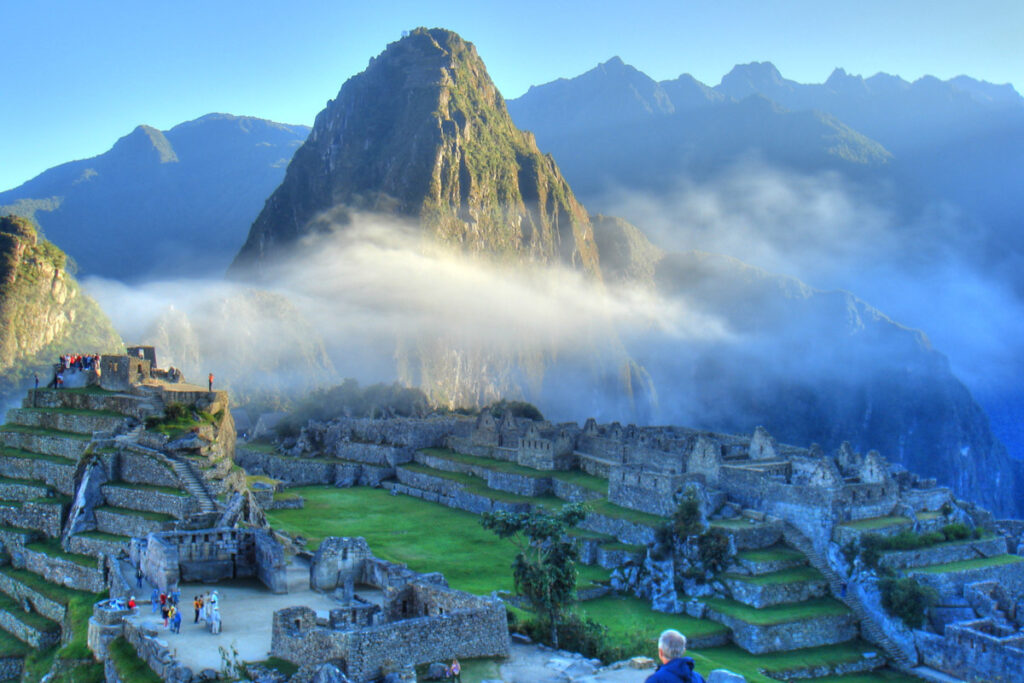
🏺 History of Machu Picchu
Machu Picchu, often referred to as the “Lost City of the Incas,” is one of the most iconic monuments of pre-Columbian civilization and a UNESCO World Heritage Site. Perched on a ridge 2,430 meters above sea level in the Andes Mountains of Peru, it was constructed during the reign of Emperor Pachacuti around the mid-15th century. Its exact purpose has long intrigued historians and archaeologists. Some suggest it served as a royal estate or retreat for the Inca emperor and his court, providing a luxurious sanctuary amid the rugged mountains. Others argue that Machu Picchu was a religious and ceremonial center, where rituals were performed to honor Inti, the Sun God, and other deities central to Inca cosmology. Despite these debates, the site’s design reflects careful planning, spiritual significance, and advanced engineering, indicating that its builders possessed exceptional skill and knowledge.
The city was abandoned less than a century later during the Spanish conquest of South America, though it is believed the Spanish never discovered Machu Picchu, which helped preserve the site remarkably well. It remained hidden and largely forgotten until Hiram Bingham, an American explorer and historian, brought it to international attention in 1911. His expeditions revealed a complex city with terraced agricultural fields, temples, palaces, and residential areas, providing unprecedented insight into the Inca civilization. Over time, Machu Picchu has come to symbolize the ingenuity, spiritual depth, and resilience of the Inca Empire, attracting scholars and tourists alike, and offering a glimpse into one of the most sophisticated societies of pre-Columbian America.
The location of Machu Picchu is itself historically significant. Situated between the Urubamba River and the peaks of the Andes, it provided natural defense while remaining in harmony with the environment. The Inca carefully selected this site to incorporate both strategic and spiritual benefits. Mountains such as Huayna Picchu and Machu Picchu Mountain were considered sacred, and their presence enhanced the site’s religious and cultural importance. The alignment of buildings and terraces with astronomical phenomena, such as solstices and equinoxes, indicates that the Inca integrated cosmological understanding into urban planning. Thus, the history of Machu Picchu is not merely a tale of construction but also one of spiritual and intellectual sophistication, demonstrating a civilization that combined artistry, astronomy, and environmental mastery.
Machu Picchu’s history also highlights the resilience of Inca architecture. Despite centuries of natural wear, seismic activity, and weathering in a mountainous environment prone to landslides and heavy rainfall, the city remains remarkably intact. The survival of stone walls, terraces, and ceremonial structures is a testament to the engineering genius of the Inca, who developed techniques such as ashlar masonry, advanced drainage systems, and terracing to ensure durability. Moreover, the site’s rediscovery in the 20th century sparked global interest, not only in tourism but also in the preservation of Indigenous knowledge, cultural heritage, and architectural expertise, ensuring that the history of Machu Picchu continues to educate and inspire the world.
🏗️ Architecture and Engineering Marvel
Machu Picchu is widely celebrated as a masterpiece of Inca architecture and engineering, a city built with meticulous planning, structural ingenuity, and aesthetic elegance. Its construction demonstrates the Inca’s mastery of stonework, urban design, and environmental adaptation. The city is divided into distinct sectors, including agricultural terraces, religious temples, residential areas, and ceremonial plazas, reflecting a well-organized urban plan. The Inca employed ashlar masonry, a technique in which granite blocks are cut with such precision that they fit together without mortar. This method not only provided structural stability, especially in an earthquake-prone region, but also contributed to the visual harmony and elegance of the city. Buildings such as the Temple of the Sun, Intihuatana stone, and royal residences exemplify the combination of functionality, artistry, and spiritual purpose in Inca construction.
The agricultural terraces of Machu Picchu are engineering marvels in themselves. Carved into the steep mountainsides, they prevented erosion, stabilized the slopes, and created fertile land for growing crops. These terraces were equipped with sophisticated drainage systems to channel rainwater efficiently, preventing flooding and landslides. The Inca also designed aqueducts and fountains to distribute fresh water to different sectors of the city, demonstrating advanced hydraulic engineering that integrated seamlessly with the natural environment. The terraces, walls, and foundations were carefully aligned with the contours of the mountains, reflecting a deep understanding of geology and sustainable urban planning that modern engineers continue to admire.
Machu Picchu’s religious and ceremonial architecture is another highlight of its engineering sophistication. The Temple of the Sun, built in a semicircular form atop a natural rock outcrop, is aligned with solstices, showcasing the Inca’s knowledge of astronomy. Similarly, the Intihuatana stone, a carved granite structure, is thought to function as a solar clock or ritual stone, reflecting a precise understanding of celestial movements. Residential areas, plazas, and temples are arranged in harmony with the landscape, allowing the city to maintain both spiritual significance and functional efficiency. The combination of astronomy, religion, and urban planning demonstrates that the architecture of Machu Picchu was far more than practical—it was intentionally symbolic, reflecting the Inca worldview and their connection to the natural and spiritual worlds.
The integration of Machu Picchu with its environment is arguably one of its most remarkable engineering feats. Unlike modern cities, the Inca designed their urban space to blend seamlessly with mountains, rivers, and valleys, minimizing environmental impact while maximizing visual and functional harmony. Stone buildings mirror the texture and color of surrounding rock, terraces follow natural slopes, and drainage systems align with natural water flows. This approach ensured durability, sustainability, and resilience in a challenging terrain. Modern architects and engineers continue to study Machu Picchu for lessons in sustainable design, disaster-resistant construction, and environmental integration, proving that the city’s engineering marvels are as relevant today as they were five centuries ago.
🌏 Cultural Significance of Machu Picchu
Machu Picchu holds profound cultural significance, not only for Peru but for the world, as a symbol of the ingenuity, spirituality, and resilience of the Inca civilization. As one of the few Inca cities that survived the Spanish conquest largely intact, it provides an extraordinary window into pre-Columbian life, offering insights into architecture, religion, urban planning, and agricultural practices. For the Inca, Machu Picchu was more than a settlement; it was a sacred space where spirituality, astronomy, and governance intersected. The city’s layout, with its temples, plazas, residential areas, and agricultural terraces, reflects the Inca belief in harmony between humans, nature, and the divine. Structures such as the Temple of the Sun, the Intihuatana stone, and ceremonial plazas highlight the integration of cosmology and ritual into everyday life, underscoring the cultural depth embedded within the city’s design.
Beyond its historical context, Machu Picchu serves as a cultural touchstone for modern Peruvians, representing national pride and heritage. It embodies the sophistication and resilience of indigenous Andean culture, which endured despite centuries of colonization and cultural suppression. The site has become a symbol of Peru’s identity, featured on currency, stamps, and global tourism campaigns, while inspiring music, literature, and art. Machu Picchu also plays a role in contemporary cultural practices, including indigenous ceremonies and celebrations, which seek to honor ancestral traditions and maintain spiritual continuity. Its enduring relevance as a living cultural symbol demonstrates how ancient civilizations continue to shape national identity and global awareness.
Machu Picchu’s global cultural impact is equally profound. Recognized as a UNESCO World Heritage Site, it draws millions of international visitors who are captivated by its beauty, mystery, and historical significance. Scholars, historians, and archaeologists study its construction, astronomical alignments, and urban planning, contributing to global understanding of the Inca Empire. Furthermore, Machu Picchu has influenced architects, designers, and artists worldwide, inspiring innovations in sustainable urban planning, eco-friendly construction, and the integration of built environments with natural landscapes. Its cultural significance, therefore, extends far beyond its original purpose, bridging past and present, local and global, spiritual and material worlds.
In essence, Machu Picchu is not merely a historical relic; it is a living testament to Inca civilization, a cultural emblem that continues to inspire, educate, and connect people across the globe. Its significance lies in its ability to convey the values, beliefs, and ingenuity of a remarkable civilization while serving as a bridge between ancient history and contemporary cultural consciousness.
🌄 Tourism & Scenic Views of Machu Picchu
Machu Picchu is one of the most sought-after tourist destinations in the world, attracting millions of visitors annually who come to witness its breathtaking scenery, architectural marvels, and cultural richness. Perched atop a rugged mountain ridge in the Andes, the site offers panoramic views of lush valleys, towering peaks, and the winding Urubamba River below, creating a visual experience that is both dramatic and serene. Sunrise and sunset are particularly magical, as the mountains are often shrouded in mist, giving the city an ethereal, almost mystical appearance. Visitors often describe the experience as entering a “lost world,” where nature and human ingenuity converge seamlessly, creating a landscape that feels both remote and timeless. The visual harmony of stone structures set against verdant terraces and dramatic cliffs is a photographer’s paradise and a bucket-list experience for travelers worldwide.
Tourism at Machu Picchu is carefully managed to balance visitor access with preservation. Most tourists arrive via the Inca Trail, a multi-day trek that follows ancient paths used by the Incas themselves. This journey through cloud forests, alpine landscapes, and archaeological sites enhances the overall experience, allowing visitors to connect physically and emotionally with the history and geography of the region. Alternatively, visitors can reach the site via train from Cusco to Aguas Calientes, followed by a short bus ride up the mountainside. Both approaches offer spectacular scenic views and opportunities to appreciate the grandeur of the surrounding Andes, which heightens the sense of discovery upon entering the citadel itself.
Within the city, terraces, plazas, and temples offer multiple vantage points for observing both architectural details and sweeping landscapes. The terraces, for example, are not only functional for agriculture but also provide natural viewing platforms where visitors can admire the scale and symmetry of the city against the dramatic mountain backdrop. Iconic locations such as the Sun Gate (Inti Punku) and Huayna Picchu peak offer elevated perspectives, rewarding visitors with panoramic views of Machu Picchu and the surrounding valley below. These vistas highlight the remarkable ingenuity of the Inca, who constructed a city that harmonizes perfectly with its natural environment while offering visual grandeur at every angle.
Beyond natural beauty, the tourism experience at Machu Picchu is enriched by cultural and historical interpretation. Guided tours provide in-depth explanations of the city’s architectural features, astronomical alignments, and social organization, helping visitors appreciate the sophistication of Inca engineering and urban planning. Museums and interpretive centers in nearby Aguas Calientes further enhance understanding, displaying artifacts, historical records, and multimedia presentations that contextualize the citadel within the broader scope of Inca civilization. This combination of scenic wonder, architectural brilliance, and historical storytelling creates a holistic travel experience, making Machu Picchu not just a site to see but a destination to understand, explore, and connect with on multiple levels.
Finally, Machu Picchu’s tourism appeal is heightened by its seasonal and atmospheric variations. The wet season brings dramatic clouds, cascading waterfalls, and mist-laden landscapes, while the dry season offers clear skies and vibrant sunlight that illuminate the stonework and terraces. These seasonal shifts create unique photographic opportunities and ensure that every visit offers a slightly different perspective, encouraging repeat visits and extended exploration. The site’s combination of awe-inspiring vistas, immersive trekking experiences, and historical richness ensures that Machu Picchu remains a premier destination for both adventure travelers and cultural enthusiasts, providing a once-in-a-lifetime experience that blends natural beauty with human achievement.
🏛️ Fun Facts About Machu Picchu
Machu Picchu is not only a breathtaking archaeological site but also a treasure trove of fascinating facts that reveal the ingenuity, culture, and mysteries of the Inca civilization. One of the most intriguing aspects of Machu Picchu is its remarkable preservation despite centuries of exposure to harsh mountainous weather. Unlike many other ancient cities, it was never discovered or looted by the Spanish conquistadors, allowing it to remain largely intact. This “lost city” aspect adds to its allure and mystique, making its rediscovery by Hiram Bingham in 1911 feel like uncovering a secret world frozen in time. Today, it remains one of the best-preserved remnants of Inca civilization, offering scholars and tourists a direct window into pre-Columbian life.
Another fascinating fact is the precision of Inca engineering and stonework. The city’s structures were built using ashlar masonry, in which large granite blocks are cut so precisely that they fit together without mortar. This technique not only creates stunning visual harmony but also allows the buildings to withstand earthquakes, a common occurrence in the region. Some stones weigh several tons, yet were transported and positioned without modern machinery—a feat that continues to baffle engineers and historians alike. The Inca also designed ingenious drainage systems, channels, and terraces to manage heavy rainfall, prevent erosion, and maximize agricultural output, demonstrating an advanced understanding of environmental engineering that still inspires modern architects and urban planners.
Machu Picchu is also full of astronomical and spiritual mysteries. The Intihuatana stone, often called the “Hitching Post of the Sun,” is believed to have been used by the Inca as an astronomical calendar, marking solstices and equinoxes to guide agricultural and ceremonial practices. The city’s layout aligns with key solar events, and the positioning of temples and plazas suggests a deep spiritual and cosmological understanding. Similarly, structures like the Temple of the Sun feature windows and niches perfectly aligned with sunrise or sunset on specific days of the year, indicating that the Inca integrated science, religion, and urban planning in ways that were remarkably sophisticated for their time.
Machu Picchu also boasts hidden terraces and secret pathways that served both agricultural and strategic purposes. The terraces not only allowed for the cultivation of crops on steep mountainsides but also functioned as defensive structures, reducing the risk of landslides or invasions. Some pathways connect to nearby peaks such as Huayna Picchu, which provided vantage points for both ceremonial observation and surveillance. The combination of utility, beauty, and strategic design reflects the Inca philosophy of harmony between nature, utility, and spiritual meaning, making every aspect of the city purposeful.
Another fun fact is that Machu Picchu is often surrounded by myth and mystery, fueling stories about how the Inca transported enormous stones, why the city was abandoned, and what rituals took place there. Some believe Machu Picchu was a spiritual retreat for Inca royalty, while others argue it served as a major trade or ceremonial hub. The ambiguity of its original purpose only adds to the fascination and invites countless interpretations by historians, archaeologists, and visitors.
Finally, Machu Picchu has a profound cultural impact in modern times, inspiring countless books, documentaries, and artistic works worldwide. It is considered a global symbol of human ingenuity and resilience, reflecting the height of Inca civilization while serving as a source of national pride for Peru. Its combination of historical importance, architectural genius, astronomical sophistication, and natural beauty ensures that Machu Picchu is more than just a tourist attraction—it is a living testament to human creativity, engineering, and spiritual depth that continues to captivate and inspire people around the world.
🏗️ Preservation Efforts of Machu Picchu
Machu Picchu is not only a cultural and historical treasure but also a fragile site vulnerable to natural and human-induced threats, making preservation efforts absolutely critical. Located in a high-altitude, seismic zone with heavy rainfall, the city is at risk of landslides, erosion, and structural instability. The steep terraces that stabilize the mountainsides can be damaged by excessive rainfall or uncontrolled tourism, while the ancient stone structures, though remarkably resilient, face gradual wear from environmental exposure. In addition, the growing influx of tourists—sometimes exceeding 5,000 visitors per day—has put pressure on footpaths, terraces, and fragile archaeological areas, creating a delicate balance between public access and conservation. To maintain the site’s integrity, the Peruvian government, UNESCO, and international conservation organizations have implemented a multi-faceted preservation strategy.
One of the primary preservation measures involves controlling visitor numbers and access routes. Authorities have introduced daily visitor limits, mandatory guided tours, and regulated entry times to reduce foot traffic in sensitive areas. The Inca Trail, which leads to Machu Picchu, is monitored and maintained to prevent erosion and environmental damage, while alternative trekking routes are promoted to disperse tourist flow. In addition, specific zones within the citadel are restricted or temporarily closed to allow natural recovery of the terrain and reduce human impact on the most fragile structures. These measures ensure that visitors can enjoy the site without compromising its structural or environmental integrity.
Environmental preservation is another key focus. Erosion control and stabilization of terraces are ongoing priorities, as heavy rainfall and landslides can threaten the foundations of the city. Engineers and archaeologists work together to reinforce walls, restore drainage channels, and monitor geological activity. The surrounding ecosystem, including cloud forests and river valleys, is protected to maintain the natural beauty and ecological balance that supports Machu Picchu’s unique environment. Reforestation programs and anti-deforestation policies help stabilize slopes and prevent landslides, demonstrating an integrated approach that combines heritage preservation with environmental stewardship.
Structural conservation also involves meticulous restoration of stonework and architectural features. Specialized teams repair walls, terraces, and temples using techniques that honor original Inca methods, such as dry-stone construction without mortar. Detailed surveys and 3D mapping technologies are employed to monitor cracks, shifts, and weaknesses in structures, allowing preventive interventions before serious damage occurs. In addition, preservation efforts extend to the urban planning and layout of Machu Picchu, ensuring that terraces, water channels, and plazas continue to function as originally intended while maintaining historical accuracy.
Public education and research are integral to long-term preservation. Local communities are trained to engage in sustainable tourism practices, while visitors are educated about the importance of respecting fragile sites and natural habitats. UNESCO collaborates with Peru to provide funding, technical expertise, and international guidance, ensuring that global best practices are applied in preserving this invaluable heritage. Archaeological research continues to uncover new insights into the city’s design and construction, informing conservation strategies and helping to prevent future deterioration.
In essence, preservation of Machu Picchu is a delicate balance between protection, research, and accessibility. It requires constant vigilance against environmental threats, human impact, and structural challenges, while maintaining the city’s cultural and spiritual significance. The combination of controlled tourism, environmental management, structural restoration, and community involvement ensures that Machu Picchu will remain not only a testament to Inca ingenuity but also a sustainable cultural treasure for future generations. This ongoing effort underscores the site’s value not just as a historical monument but as a living symbol of human achievement, ecological harmony, and cultural pride.
🌟 Why Machu Picchu Is a Wonder of the World
Machu Picchu is universally recognized as one of the New Seven Wonders of the World, and its inclusion is well deserved due to its combination of historical significance, architectural brilliance, engineering ingenuity, cultural depth, and natural beauty. Unlike many wonders that are celebrated solely for size or age, Machu Picchu captivates because it represents the pinnacle of Inca achievement, blending functionality, spirituality, and aesthetic excellence into a single, harmonious site. The city exemplifies how human creativity can coexist with challenging natural environments, transforming a steep mountain ridge into a thriving urban center that has endured for centuries, despite earthquakes, heavy rainfall, and environmental pressures.
One of the primary reasons Machu Picchu is considered a wonder is its architectural sophistication. The city features an intricate arrangement of temples, palaces, plazas, and residential areas, all connected by carefully planned pathways and staircases. The stone structures demonstrate ashlar masonry, where large granite blocks fit perfectly without mortar, providing both earthquake resistance and visual perfection. The urban layout is a masterpiece of symmetry and functionality, with agricultural terraces and drainage systems seamlessly integrated into the mountainous terrain. Every aspect of the city was designed with precision, from the alignment of buildings with celestial events to the flow of water through channels and fountains, reflecting a profound understanding of both engineering and environmental sustainability.
Machu Picchu’s engineering marvels also contribute to its wonder status. Constructing such a city on a steep, high-altitude ridge required innovative techniques to stabilize slopes, prevent landslides, and ensure long-term durability. The terraces were designed not only to cultivate crops but also to control erosion and maintain structural integrity. Complex drainage systems, aqueducts, and water channels managed rainfall and natural water sources efficiently, demonstrating the Incas’ advanced hydraulic engineering. The harmonious integration of these systems into the natural landscape shows a remarkable level of planning and foresight, highlighting why Machu Picchu continues to inspire engineers and architects worldwide.
Culturally and spiritually, Machu Picchu embodies the Inca worldview, connecting humans, nature, and the cosmos. Temples such as the Temple of the Sun and ceremonial stones like the Intihuatana reveal an advanced knowledge of astronomy, enabling the Incas to align structures with solstices, equinoxes, and celestial patterns. The city’s positioning between sacred mountains and overlooking the Urubamba River illustrates the integration of geography and spirituality, turning the entire landscape into a living ceremonial space. This unique combination of practical urban planning, spiritual purpose, and symbolic meaning is a key factor in its designation as a wonder of the world.
Machu Picchu also has global significance, transcending its local origins. It has become a symbol of human ingenuity, resilience, and cultural achievement, attracting millions of visitors and researchers every year. Its preservation and study provide critical insight into pre-Columbian civilizations, while its breathtaking vistas and architectural beauty inspire admiration across cultures. The city’s ability to evoke a sense of awe and wonder, while simultaneously teaching us about history, engineering, and spirituality, underscores its universal value.
In conclusion, Machu Picchu is a wonder of the world because it exemplifies the highest achievements of human civilization, harmonizing nature, engineering, culture, and spirituality. Its architectural elegance, engineering innovation, astronomical alignment, and cultural depth make it far more than an ancient city—it is a living monument to human creativity and vision. The enduring mystery, aesthetic beauty, and historical importance of Machu Picchu ensure that it continues to capture the imagination of the world, maintaining its place as one of the most extraordinary wonders ever created.
🏁 Overall Conclusion
Machu Picchu stands as one of the most extraordinary monuments of human civilization, a symbol of ingenuity, resilience, and artistic vision. Perched high in the Andes Mountains, it is more than a city; it is a living testament to the Inca Empire’s architectural brilliance, engineering sophistication, and cultural depth. Built during the 15th century under Emperor Pachacuti, Machu Picchu reflects a harmonious integration of natural landscape, urban planning, spiritual symbolism, and technological innovation. Its construction demonstrates remarkable expertise in stone masonry, water management, and structural stability, allowing the city to withstand centuries of seismic activity, heavy rainfall, and environmental challenges. The terraces, temples, plazas, and aqueducts exemplify the Inca’s ability to merge practicality with beauty, creating a city that is functional, aesthetically stunning, and spiritually meaningful.
The cultural significance of Machu Picchu extends far beyond its historical context. It embodies the values, beliefs, and achievements of the Inca civilization, providing a unique window into pre-Columbian life and cosmology. Its religious and ceremonial structures, such as the Temple of the Sun and the Intihuatana stone, illustrate the Inca’s sophisticated understanding of astronomy and their connection to the natural and spiritual world. For modern Peruvians, Machu Picchu is a powerful symbol of national heritage and indigenous pride, while for the global community, it represents the enduring legacy of human creativity, innovation, and harmony with nature.
Tourism at Machu Picchu further underscores its importance, as millions of visitors from around the world come to witness its breathtaking scenic views, experience the thrill of trekking the Inca Trail, and immerse themselves in its rich history. The panoramic vistas of the Andes, the mist-covered valleys, and the dramatic interplay of sunlight and shadow over stone terraces create a profound sense of wonder and connection to both the past and the natural world. At the same time, controlled tourism and preservation measures ensure that this fragile site remains protected, balancing accessibility with sustainability.
Preservation efforts play a crucial role in maintaining Machu Picchu for future generations. From regulating visitor numbers and protecting natural surroundings to restoring and reinforcing ancient structures, these efforts highlight a global commitment to safeguarding one of humanity’s most precious cultural treasures. The integration of traditional Inca construction methods with modern conservation techniques demonstrates respect for both heritage and sustainability, ensuring that Machu Picchu continues to inspire awe while remaining structurally sound and environmentally protected.
Ultimately, Machu Picchu’s status as a Wonder of the World is fully justified. Its combination of architectural mastery, engineering innovation, cultural richness, natural beauty, and spiritual depth makes it a site unlike any other. It continues to inspire architects, historians, scientists, and travelers alike, serving as a timeless symbol of human potential and imagination. Machu Picchu is more than a destination; it is a story of a civilization that achieved extraordinary feats in harmony with its environment, leaving a legacy that endures across centuries. Its ability to captivate, educate, and inspire ensures that Machu Picchu will remain a living monument to human achievement, a beacon of cultural heritage, and a wonder that will enthrall generations to come.
(6). Ultimate Guide to Chichén Itzá: Fun Facts, Architecture, and Scenic Views
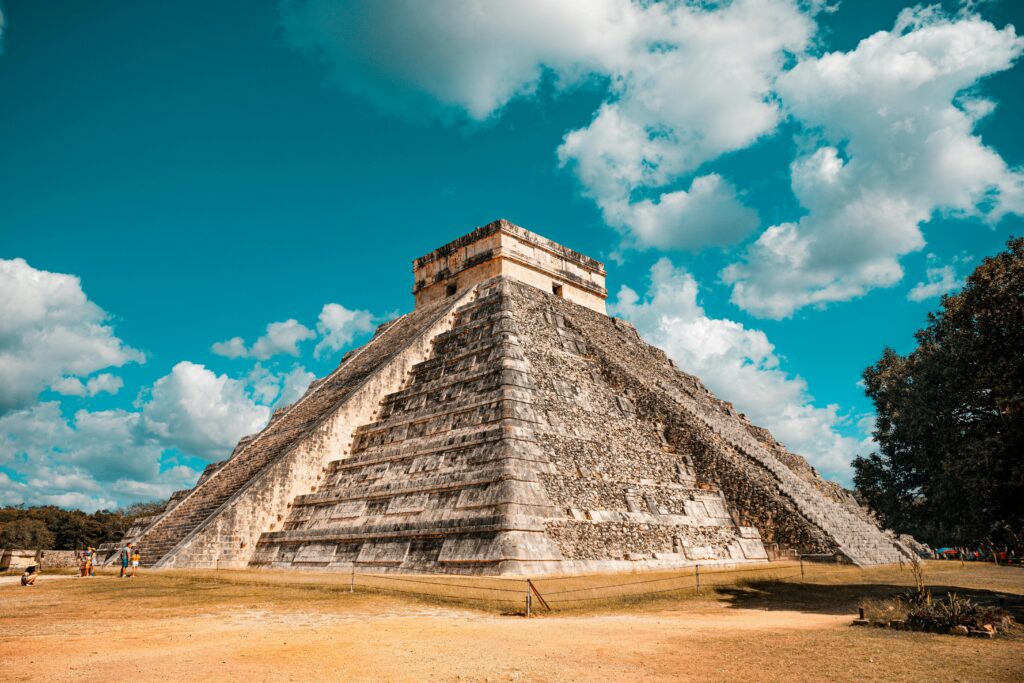
🏺 History of Chichén Itzá
Chichén Itzá, located in the northern region of Mexico’s Yucatán Peninsula, stands as one of the most remarkable and well-preserved cities of the ancient Maya civilization. Its history spans several centuries, reflecting the evolution, adaptation, and ingenuity of the Maya people as they built one of Mesoamerica’s most influential urban centers. The origins of Chichén Itzá can be traced to roughly 600 AD, during the Early Classic period of Maya civilization, when small settlements and regional centers began to emerge across the Yucatán. These early communities laid the groundwork for what would later develop into Chichén Itzá, a city that combined architectural sophistication, political power, and spiritual significance. While the exact origins of the city remain partly shrouded in mystery, archaeological evidence indicates that it was initially a modest ceremonial and administrative hub, likely serving as a center for local elite families and religious leaders.
By the Terminal Classic period (circa 800–1000 AD), Chichén Itzá had grown into a major political and religious capital. This period marked the city’s transformation from a regional settlement into a sprawling urban complex, strategically positioned to control trade routes, agricultural lands, and cenotes—the natural sinkholes that provided essential water sources in the otherwise dry region. The city’s location at the intersection of major trade routes allowed it to flourish economically, with goods such as jade, obsidian, cacao, textiles, and ceramics flowing in and out of the city. Its rise was not merely economic; Chichén Itzá became a religious and ceremonial powerhouse, hosting elaborate rituals, astronomical observances, and political gatherings. The city’s planners incorporated plazas, temples, pyramids, ball courts, and residential zones in a meticulously organized layout that reflected both practical needs and cosmological beliefs.
A defining aspect of Chichén Itzá’s history is its cultural fusion, particularly the influence of Toltec civilization. The Toltecs, originating from central Mexico, are believed to have either conquered or significantly influenced Chichén Itzá around the 10th century, resulting in a unique blending of architectural styles, iconography, and social organization. This fusion is most evident in structures like the Temple of the Warriors, where Toltec-style columns featuring warrior carvings coexist with traditional Maya design elements. Similarly, the famous El Castillo (Temple of Kukulcán) embodies the combination of Maya astronomical precision and Toltec militaristic symbolism, reflecting the city’s dual role as both a religious sanctuary and a demonstration of political power. This period of cultural synthesis elevated Chichén Itzá into a preeminent city-state, attracting scholars, traders, pilgrims, and artisans from across Mesoamerica.
Religious and ceremonial life was central to Chichén Itzá’s identity. The city’s inhabitants worshiped a pantheon of gods, most notably Kukulcán, the feathered serpent deity, and Chaac, the rain god. The presence of sacred cenotes, particularly the Sacred Cenote, highlights the importance of ritual offerings, which included precious objects and symbolic sacrifices intended to appease the gods and ensure agricultural fertility. These rituals were not merely spiritual; they were integral to social cohesion and political legitimacy. By controlling the ceremonies, the elite rulers reinforced their authority and linked themselves to divine power, ensuring that both the populace and visiting dignitaries recognized their central role in Maya cosmology and governance.
Chichén Itzá’s architecture itself is a historical record. The city contains El Caracol, an observatory believed to have been used for astronomical observations, and the Great Ball Court, the largest ball court in Mesoamerica, measuring approximately 168 meters in length. The ball game played here was not purely recreational; it had deep ritual significance, often symbolizing the struggle between life and death, day and night, or the movement of celestial bodies. The alignment of structures with celestial events such as solstices and equinoxes reflects the Maya’s sophisticated understanding of astronomy and their ability to integrate it into urban design. These features highlight how Chichén Itzá was not only a center of human habitation but also a cosmological stage, where the rhythms of the heavens and the duties of the living were harmoniously intertwined.
The city also demonstrates remarkable social and political organization. Chichén Itzá was governed by a hierarchical system in which religious leaders, military elites, and political authorities exercised overlapping control. Markets, residential complexes, and civic buildings suggest a complex urban planning system that facilitated both commerce and governance. Trade networks extended across the Yucatán Peninsula and beyond, linking Chichén Itzá to other important Maya cities such as Uxmal, Tulum, and Copán, as well as central Mexican centers. These networks contributed to the city’s wealth, diversity, and cultural dynamism, making it a vibrant hub of ideas, goods, and traditions.
Despite its prominence, Chichén Itzá eventually experienced a gradual decline. Historians and archaeologists attribute this to multiple factors, including internal conflict, environmental pressures such as droughts, and the shifting of trade routes. By the 13th century, the city had lost much of its political influence, though many of its monuments remained intact. Unlike other Maya cities that were abandoned and fell into ruin, Chichén Itzá’s structures continued to endure, preserved by the relative isolation of the northern Yucatán region and the durability of its construction. This preservation allowed modern explorers and archaeologists to study the city in remarkable detail, providing insights into Maya civilization that would otherwise have been lost.
The rediscovery of Chichén Itzá in the 19th and early 20th centuries brought global attention to this extraordinary city. Although local Maya populations were always aware of the site, it remained largely unknown to the outside world until explorers and archaeologists began detailed surveys and excavations. Early studies documented the architecture, carvings, and artifacts, revealing the city’s complexity and historical significance. Since then, Chichén Itzá has become a symbol of Mexico’s rich indigenous heritage and a center for cultural tourism, attracting millions of visitors annually who seek to connect with the achievements of the ancient Maya.
Modern research continues to uncover new layers of Chichén Itzá’s history. Excavations around the Sacred Cenote, for example, have revealed a wealth of artifacts, from jade and gold objects to ceramics and human remains, illuminating ritual practices and social hierarchies. The study of inscriptions, carvings, and architectural alignments has provided a deeper understanding of Maya astronomy, mathematics, and religious beliefs. These ongoing discoveries underscore Chichén Itzá’s status as a living historical laboratory, where the past informs contemporary understanding of ancient human ingenuity, cultural resilience, and spiritual life.
In conclusion, the history of Chichén Itzá is a testament to the ingenuity, adaptability, and vision of the Maya civilization. From its origins as a small settlement to its rise as a major political, religious, and economic center, the city reflects centuries of cultural evolution and synthesis. The integration of Toltec influences, the careful alignment of structures with celestial events, and the emphasis on ritual and social hierarchy highlight a society that was both sophisticated and deeply spiritual. Even in decline, Chichén Itzá’s monuments endured, preserving a legacy that continues to inspire awe, research, and admiration today. Its historical importance is not merely local or regional; it represents a global symbol of ancient human achievement, bridging the past and the present, and serving as a cornerstone for understanding the grandeur of Mesoamerican civilizations.
🏗️ Architecture & Engineering Marvel of Chichén Itzá
Chichén Itzá is widely regarded as one of the most extraordinary architectural and engineering achievements of the ancient Maya civilization. The city’s layout and monuments reflect an advanced understanding of urban planning, structural engineering, mathematics, astronomy, and religious symbolism, demonstrating the Maya’s ability to create a functional yet aesthetically stunning environment. Unlike other ancient cities that prioritized size or defensive structures, Chichén Itzá integrated cosmology, religious purpose, and practical urban management into its design, making it a unique model of pre-Columbian ingenuity. The city is organized around vast plazas, ceremonial centers, pyramids, temples, ball courts, and residential complexes, each serving a specific function while contributing to the overall harmony of the city.
Pyramids and Temples: Symbolism Meets Precision
The most iconic structure at Chichén Itzá is undoubtedly El Castillo, also known as the Temple of Kukulcán. This step pyramid is not merely an impressive monument; it is a mathematical and astronomical marvel. The pyramid rises approximately 30 meters above the plaza and has four staircases, each with 91 steps. Including the temple platform at the top, the total number of steps adds up to 365, mirroring the number of days in the solar year. This clever incorporation of calendrical knowledge into architecture exemplifies how the Maya seamlessly integrated science, ritual, and aesthetics. Twice a year, during the spring and autumn equinoxes, the play of sunlight and shadow creates the illusion of a serpent slithering down the pyramid’s steps—a representation of Kukulcán, the feathered serpent deity. This effect demonstrates the Maya’s sophisticated understanding of solar movement, geometric design, and symbolic storytelling through architecture.
Other temples at Chichén Itzá also showcase remarkable engineering prowess. The Temple of the Warriors features a massive platform surrounded by carved columns depicting armed warriors and mythical creatures. This structure demonstrates not only military symbolism but also the ability of Maya architects to support large roofed spaces using stone columns, without compromising structural integrity. Similarly, the Temple of the Jaguars and the Temple of the Skulls incorporate complex stone carvings and murals that serve both ceremonial and narrative purposes, illustrating mythological tales, ritual practices, and elite authority. These temples reflect the dual role of architecture in Chichén Itzá: functional for gatherings and ceremonies, while simultaneously symbolic and narrative in purpose.
Urban Planning and Functional Design
Chichén Itzá’s urban design demonstrates highly sophisticated planning principles that prioritized movement, visibility, and access to key religious and administrative centers. The city’s central plazas act as gathering points for ceremonies, markets, and political events, while major structures are aligned along precise cardinal directions, reflecting both astronomical knowledge and spatial organization. Residential zones, artisans’ workshops, and marketplaces were strategically located to optimize trade, communication, and daily life. The centralization of religious and political structures, combined with a clear hierarchical spatial layout, highlights the integration of governance, religion, and daily living in the city’s design.
One remarkable aspect of Chichén Itzá’s engineering is its adaptation to the local geography and natural resources. The city was constructed on relatively flat terrain interspersed with limestone bedrock and cenotes. Maya architects built terraces, platforms, and foundations to stabilize structures on uneven surfaces, demonstrating advanced knowledge of weight distribution and material durability. The use of locally sourced limestone, carefully cut and shaped without mortar, allowed structures to endure for centuries despite seismic activity and tropical rainfall. The careful planning of drainage systems ensured that water from heavy rains was directed away from plazas and buildings, preventing erosion and structural damage.
Ball Courts and Acoustics
The Great Ball Court at Chichén Itzá, the largest in Mesoamerica, is a testament to Maya engineering and acoustical ingenuity. Measuring 168 meters long and 70 meters wide, the court features parallel walls with sculpted rings, reliefs, and carvings depicting rituals associated with the ball game. Beyond its size, the ball court demonstrates advanced understanding of sound propagation: a whisper or clap at one end can be heard clearly across the length of the court, an impressive feat considering the scale. This acoustic feature likely enhanced ceremonial and spectator experiences during games, emphasizing the Maya ability to integrate human experience into urban design. The game itself had spiritual and political significance, symbolizing cosmic struggles between light and darkness, life and death, or the movement of celestial bodies, further reinforcing how architecture and engineering were intertwined with ideology and culture.
Astronomical Alignment and Observatories
Chichén Itzá is renowned for its integration of astronomical knowledge into architecture. Structures such as El Castillo, the Caracol Observatory, and other temples are aligned with celestial events, solstices, and equinoxes, allowing the Maya to track solar and lunar cycles with remarkable precision. The Caracol, or “snail” observatory, features circular walls and spiral staircases designed to observe the movement of planets and stars. This structure illustrates that the Maya were not only skilled architects but also sophisticated astronomers, capable of translating celestial knowledge into functional design. The combination of observatories and ceremonial architecture highlights the dual purpose of buildings in Chichén Itzá: practical for tracking astronomical phenomena and symbolic for reinforcing spiritual authority.
Water Management and Cenote Integration
Water management was a critical component of Chichén Itzá’s engineering. The city is located in a karstic region with few surface rivers, making cenotes (natural sinkholes) essential for water supply. The Sacred Cenote, in particular, served as a ceremonial site for offerings, but other cenotes and reservoirs provided potable water for daily life. Maya engineers developed techniques to channel and store water efficiently, ensuring that the city could sustain its population and agriculture despite seasonal droughts. The integration of natural water sources into urban planning demonstrates the Maya ability to harmonize human settlement with environmental conditions, a hallmark of sustainable engineering.
Symbolism and Art in Construction
Chichén Itzá’s architecture also communicates social, political, and religious symbolism. Columns, staircases, and reliefs depict gods, warriors, animals, and celestial phenomena, reinforcing the authority of rulers and the spiritual beliefs of society. For example, the serpentine shadow on El Castillo communicates the power of Kukulcán, while the jaguar and eagle motifs in other structures symbolize strength, fertility, and divine protection. Carvings, murals, and inscriptions function as both decorative elements and historical records, preserving the knowledge and ideology of the Maya civilization for future generations.
Durability and Construction Techniques
The engineering marvels of Chichén Itzá are also evident in the durability of its structures. The Maya used limestone blocks carefully cut and fitted without mortar, a technique that allowed buildings to withstand centuries of environmental stress. Roofs often incorporated wooden beams or corbelled stone ceilings, while terraces and platforms provided stability against ground shifts. Archaeological studies reveal that the Maya employed precise measurement and leveling techniques, ensuring that monumental structures remained aligned and proportionate. The combination of material science, geometric precision, and functional design underscores the advanced level of engineering achieved in Chichén Itzá.
Cultural Fusion Reflected in Architecture
Chichén Itzá’s architectural marvels are also a record of cultural fusion. The city combines traditional Maya elements, such as pyramids and ceremonial platforms, with Toltec influences, including warrior motifs, feathered serpent iconography, and columned halls. This blending of styles illustrates the city’s role as a crossroads of ideas, trade, and military power. It also reflects the Maya ability to adapt, innovate, and integrate external influences while maintaining cultural identity, making Chichén Itzá a unique testament to the dynamic nature of ancient civilizations.
Legacy and Influence
The architectural and engineering achievements of Chichén Itzá have had a profound impact on subsequent Mesoamerican civilizations. Its monumental pyramids, ball courts, and observatories inspired similar constructions in other Maya cities and beyond. Today, Chichén Itzá stands not only as a tourist attraction but also as a source of inspiration for architects, engineers, and scholars worldwide, demonstrating how ancient knowledge can inform modern design and urban planning.
🌏 Cultural Significance of Chichén Itzá
Chichén Itzá stands today not only as a monumental archaeological site but also as one of the most significant symbols of ancient Maya cultural identity, cosmology, and civilization. Its importance stems from its role for nearly a millennium as a political, religious, and social epicenter that helped shape the history of the northern Yucatán and, more broadly, Mesoamerica. Established likely as early as the 6th century AD, the city grew from a local stronghold near cenotes — natural sinkholes providing critical water sources — into a sprawling urban complex that integrated diverse influences and served multiple cultural purposes. Its name, often translated as “at the mouth of the well of the Itza,” reflects this connection between the natural environment and the Maya worldview, where water sources were seen not merely as practical necessities but also as spiritual conduits to the underworld and the gods.
The cultural significance of Chichén Itzá lies first in its embodiment of Maya cosmology and ritual life. The city’s major structures, including the pyramid of Kukulcán, the Great Ball Court, and ritual platforms, were not built solely for human use but were designed with an intrinsic connection to celestial events, seasonal cycles, and religious practices. The alignment of El Castillo with the equinoxes — during which light and shadow create the illusion of a serpent descending the pyramid steps — conveys a relationship between architectural space and celestial phenomena that was central to Maya religious ideology. This interplay of human construction and cosmic observation symbolizes the Maya belief in the interdependence of earth and sky, and the integration of religion into all aspects of life.
The city was also a fusion point of cultural traditions, particularly during its apogee between the 10th and 12th centuries. While originally a Maya center, Chichén Itzá saw influences from central Mexico — especially styles and iconography associated with the Toltec civilization — that were incorporated into its art, architecture, and mythology. This blending of Maya and Toltec elements is most clearly seen in the architectural forms and sculptural decorations across the site, such as the feathered serpent imagery linked to the deity Kukulcán, which follows traditions shared across broader Mesoamerican belief systems. Historical and archaeological evidence suggests this fusion was not simply decorative but reflected deep cultural exchange and adaptation, making Chichén Itzá a vivid example of how civilizations interact and evolve through contact and acculturation.
Beyond its religious and artistic importance, Chichén Itzá played a central role as a regional power center that influenced culture across the Yucatán and beyond. From its plazas and marketplaces to its ceremonial edifices, the city functioned as a hub of economic activity, governance, and social life. Its prominence is evidenced by its widespread architectural styles, which inspired buildings at other Maya sites and influenced regional artistic trends between the 10th and 15th centuries. Indeed, UNESCO notes that the monuments here “exerted an influence throughout the entire Yucatán cultural zone” during that era, marking Chichén Itzá as one of the most significant centers of cultural diffusion and innovation in pre‑Columbian Mesoamerica.
The city’s ceremonial functions were also deeply connected to the Maya understanding of time, life, death, and the cosmos. Rituals at Chichén Itzá were varied and complex, involving not only astronomical observations but also offerings, sacrifices, and public rites conducted at temples, plazas, and sacred cenotes. Archaeological discoveries — including skeletal remains and ceremonial artifacts found in the Sacred Cenote and other contexts — show that the Maya performed sacrificial rituals associated with honoring deities, ensuring agricultural fertility, and reinforcing social hierarchies. Such practices underline the profound spiritual dimensions of Maya life and demonstrate how Chichén Itzá served as a stage for expressing and reinforcing cultural values, beliefs, and cosmological understandings.
The city’s ceremonial functions were also deeply connected to the Maya understanding of time, life, death, and the cosmos. Rituals at Chichén Itzá were varied and complex, involving not only astronomical observations but also offerings, sacrifices, and public rites conducted at temples, plazas, and sacred cenotes. Archaeological discoveries — including skeletal remains and ceremonial artifacts found in the Sacred Cenote and other contexts — show that the Maya performed sacrificial rituals associated with honoring deities, ensuring agricultural fertility, and reinforcing social hierarchies. Such practices underline the profound spiritual dimensions of Maya life and demonstrate how Chichén Itzá served as a stage for expressing and reinforcing cultural values, beliefs, and cosmological understandings.
Chichén Itzá’s cultural reach also endured long after the city’s political decline. By the 13th century, the city lost much of its regional dominance, and when the Spanish arrived in the 16th century, it was largely abandoned as a major population center. Yet even in decline, it remained sacred to the local Maya people, who continued to recognize its ceremonial importance. The site was never completely lost to indigenous memory, even as it fell into jungle overgrowth, which helped preserve its monumental architecture for later discovery by explorers and archaeologists in the 19th and early 20th centuries. The continuity of Maya cultural memory — even through centuries of change and colonial disruption — highlights the deep and enduring spiritual and cultural significance of Chichén Itzá for Maya descendants and for Mexican identity more broadly.
In the modern era, Chichén Itzá has become a powerful symbol of Maya heritage and Mexican cultural pride. Its designation as a UNESCO World Heritage Site in 1988 reflects its Outstanding Universal Value as a site that illustrates human creativity and cultural interchange over long periods. UNESCO highlights that the city’s architectural and artistic achievements reveal the “vision of the world and the universe” held by both Maya and Toltec peoples — making Chichén Itzá an enduring cultural emblem not only for Mexico but for humanity at large.
Today, millions of visitors from around the world travel to Chichén Itzá seeking not only to see its towering pyramids and ceremonial complexes but also to engage with the cultural legacy of one of the most sophisticated ancient civilizations in the Americas. For many, the site represents a direct connection to profound intellectual achievements — in calendar systems, astronomical observation, urban management, architecture, and ritual life — that challenge modern assumptions about ancient societies. These achievements continue to inspire scholars, artists, and travelers, reinforcing the idea that Chichén Itzá’s cultural significance is both historically grounded and globally resonant.
In summary, the cultural significance of Chichén Itzá extends across time and space: it is a testament to Maya cosmological thought, a record of intercultural exchange and adaptation, a hub of political and spiritual activity, and a modern symbol of enduring heritage. Far more than an ancient ruin, Chichén Itzá embodies centuries of human creativity, belief, and cultural innovation, making it a cornerstone of our shared global history.
(7). Architectural Brilliance and Timeless Design of the Colosseum
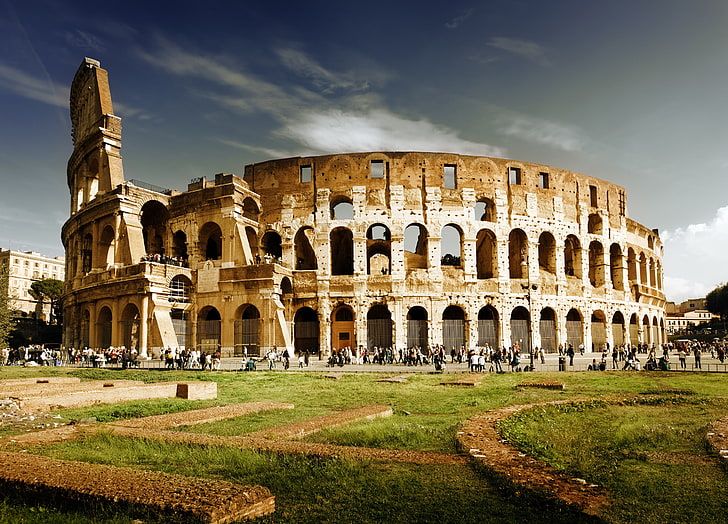
🏛️ The Colosseum: A Complete History, Architecture Guide, Gladiator Culture, and Legacy of Rome’s Greatest Monument
The Colosseum is one of the most extraordinary architectural and cultural achievements in human history. Standing proudly in the heart of Rome, Italy, this ancient amphitheater has survived nearly two millennia of wars, earthquakes, political changes, and natural decay. As a symbol of the Roman Empire, the Colosseum represents power, innovation, entertainment, and the complex social values of ancient civilization.
Today, the Colosseum is not just a tourist attraction—it is a global icon, a UNESCO World Heritage Site, and one of the New Seven Wonders of the World. Millions of visitors from around the globe come every year to witness the monument that once hosted some of the most dramatic spectacles ever seen.
📍 What Is the Colosseum?
The Colosseum, also known as the Flavian Amphitheatre, is a massive oval-shaped arena built for public entertainment in ancient Rome. It was constructed between 72 AD and 80 AD during the reign of the Flavian emperors.
Emperor Vespasian began construction
Emperor Titus officially inaugurated it
Emperor Domitian later made significant additions
The Colosseum could hold 50,000 to 65,000 spectators, making it the largest amphitheater ever built in the Roman Empire. It was designed to host large-scale public events that were free for Roman citizens.
🕰️ Historical Background of the Colosseum
The Colosseum was built during a time of political recovery. Before its construction, Emperor Nero had built a lavish palace known as the Golden House on the same site. The Flavian emperors wanted to return this land to the people, symbolizing a new era of leadership.
🏺 Key historical phases:
Flavian Dynasty (1st century AD): Construction and early games
Roman Empire peak: Frequent events and expansions
Late Antiquity: Decline of gladiator games
Middle Ages: Used as housing, workshops, and fortresses
Modern Era: Preservation and tourism
The Colosseum remained active for nearly 500 years, after which changing values and economic decline ended the games.
🏗️ Architecture & Design
The architecture and design of the Colosseum represent one of the greatest achievements of ancient Roman engineering. The structure was built in an oval shape to ensure maximum visibility for spectators from every angle, measuring approximately 189 meters in length, 156 meters in width, and rising nearly 48 meters high. Roman architects used a combination of travertine limestone, volcanic stone, brick, and concrete, materials that provided both strength and flexibility. The Colosseum features a sophisticated system of arches and vaults that evenly distributed weight, allowing it to support massive crowds. Its exterior displays three levels of arches, each decorated with a different classical column style—Doric, Ionic, and Corinthian—showcasing Roman mastery of architectural aesthetics. Inside, the carefully planned seating arrangement and multiple entrances allowed tens of thousands of people to enter and exit efficiently, a concept still used in modern stadium design.
🛠️ Preservation Efforts
Preservation efforts for the Colosseum have been ongoing for centuries, but modern restoration began in earnest in the 18th and 19th centuries when the monument was recognized as a valuable historical treasure. Today, Italian authorities and international organizations work together to protect the structure from pollution, weather damage, and the impact of mass tourism. Restoration projects focus on reinforcing weakened sections, cleaning stone surfaces, and stabilizing foundations to prevent further collapse. Advanced scientific techniques, such as laser scanning and structural monitoring, are now used to study the monument and guide conservation efforts. These preservation initiatives ensure that the Colosseum remains safe for visitors while maintaining its historical authenticity for future generations.
🤯 Fun Facts About the Colosseum
The Colosseum is full of fascinating details that highlight its historical importance and uniqueness. It is estimated that over 100 days of games were held during its grand opening, with thousands of gladiators and animals participating. The structure once featured a massive retractable awning known as the velarium, operated by sailors to protect spectators from the sun. Despite its ancient origin, the Colosseum’s crowd control system was so efficient that it could be emptied in just a few minutes. Another surprising fact is that parts of the Colosseum were used as a quarry during the Middle Ages, with stones repurposed to build churches and palaces throughout Rome. Even today, the monument continues to reveal new archaeological discoveries beneath its surface.
🌍 Tourism & Scientific View
From a tourism perspective, the Colosseum is one of the most visited monuments in the world, attracting millions of travelers every year. Visitors can explore different sections of the structure, including the arena floor, underground hypogeum, and upper levels, gaining insight into ancient Roman life. From a scientific and archaeological viewpoint, the Colosseum serves as an open-air laboratory for studying Roman construction techniques, materials, and urban planning. Researchers analyze the durability of Roman concrete, seismic resistance, and ancient engineering methods to better understand how the structure has survived for nearly two thousand years. This combination of tourism and scientific study makes the Colosseum both an educational site and a living piece of history.
🎭 Cultural Significance
The cultural significance of the Colosseum extends far beyond its physical structure. In ancient times, it symbolized the power of the Roman Empire and its ability to control both people and nature through spectacle. Over the centuries, the Colosseum has come to represent the complexities of human civilization, including creativity, ambition, cruelty, and social control. In modern times, it has transformed into a global symbol of heritage and remembrance. The monument is often illuminated to promote peace and human rights, particularly in campaigns against capital punishment. As a cultural icon, the Colosseum continues to inspire art, literature, film, and architecture across the world.
📝 Overall Conclusion
In conclusion, the Colosseum stands as one of the most remarkable monuments ever built, combining architectural brilliance, historical depth, and cultural meaning. Its innovative design influenced modern stadium construction, while ongoing preservation efforts ensure its survival for future generations. Beyond entertainment and tourism, the Colosseum offers valuable scientific insights into ancient engineering and construction techniques. Most importantly, it remains a powerful cultural symbol that connects the modern world with the legacy of ancient Rome. The enduring presence of the Colosseum reminds us of humanity’s ability to create structures that transcend time and continue to shape our understanding of history and civilization.