
Indian Places To Visit: 20 Best Places To Visit Across India
Indian Places To Visit: (1). Taj Mahal
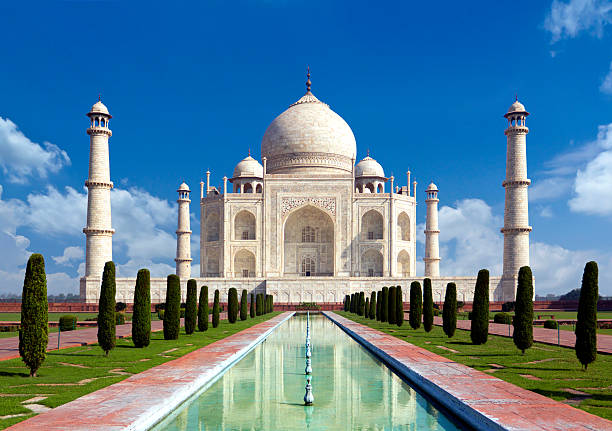
Indian Places To Visit: The Complete History of the Taj Mahal – Agra, Uttar Pradesh
The Taj Mahal’s tale starts with love and loss rather than marble and stone.
By 1631, the Mughal Empire had reached its zenith. Nearly all of India was ruled by Emperor Shah Jahan, who had a great romantic attachment to his queen, Mumtaz Mahal. She was not only his spouse, but also his closest confidante and counselor. They shared triumphs, aspirations, and the burden of leading a sizable enterprise.
However, tragedy happened in the city of Burhanpur with the delivery of their fourteenth child. The emperor was devastated to learn that Mumtaz Mahal had died during childbirth. The guy who built cities and led armies was suddenly helpless against sorrow.
Shah Jahan vowed throughout his grief to construct a tomb for her that would be so exquisite and flawless that the world would never forget their love. This was to be a “monument to love” that would endure beyond the passing of time, not merely a grave.
The Dream in Marble
Along the Yamuna River’s banks in Agra, construction got underway around 1632. The monument could be seen from miles away and mirrored in the quiet waters thanks to the site’s meticulous selection. The greatest artisans from all across the empire, including Persia, Central Asia, and even the Ottoman territories, were called in by the emperor.
Ustad Ahmad Lahauri, the principal architect, had an idea for a harmonious and symmetrical masterpiece. Day and night, more than 20,000 craftspeople carved, inlaid, and polished. They brought in rare stones, including lapis lazuli from Afghanistan, jade from China, sapphires from Sri Lanka, and white marble from Makrana in Rajasthan.Indian Places To Visit.
As the years went by, the vision became a reality: a magnificent tomb with a shining dome atop, four minarets protecting its corners, gardens arranged in flawless Persian symmetry, and Quranic calligraphy beautifully engraved in black marble.
The main building was finished by 1648, but it took an additional five years to construct the surrounding complex. In the 17th century, it cost roughly 32 million rupees, which is an enormous amount in today’s currency.
The Emperor’s Last Years
Shah Jahan would look at his handiwork for a moment, both proudly and sorrowfully, knowing that his queen lay within its walls. However, he was overthrown and put under house confinement at Agra Fort in 1658 by his own son, Aurangzeb.
The Taj Mahal, the last remembrance of his departed love, was seen across the Yamuna River from Shah Jahan’s window. Until his death in 1666, he saw it from a distance throughout his final years. His grave was the only element that disrupted the monument’s flawless symmetry as he was laid to rest inside the tomb next to Mumtaz Mahal in a subdued, almost lyrical, conclusion.
The Following Centuries
The Taj Mahal was neglected as the Mughal Empire waned over time. Some of its valuable stones were looted by foreign invaders. The formerly immaculate gardens had devolved into a wild place by the 18th century.
The original Persian design of the gardens was replaced with lawns when the British arrived, giving them a more “English” feel. The Taj did not regain much of its splendor until Lord Curzon, the British Viceroy of India, oversaw extensive repair in the early 1900s.
From the Past to the Present
Indian Places To Visit: The Taj Mahal, dubbed “the pearl of Muslim art in India,” was designated a World Heritage Site by UNESCO in 1983. Millions of people visit it annually now. It is protected from pollution by environmental regulations, and its romantic aura is maintained by special night viewings on full moon nights.
Nearly 400 years after its construction, the Taj Mahal remains a testament to unending love. A reminder that some emotions are so strong that they may take shape, endure for centuries, and touch people’s hearts all across the world, it is more than simply stone and marble. It is a love tale captured in architecture.
Taj Mahal Legends and Little-Known Stories
In addition to tourists, the Taj Mahal has attracted whispers over the ages—stories that have been passed down, part myth, half history, each adding to the monument’s enigma.
The legend of the Black Taj Mahal is one such tale. According to locals, Shah Jahan had a dream in his later years of constructing a second tomb across the Yamuna River that would be exactly like the Taj but made of black marble. This would be his own grave, which would be joined by a bridge to Mumtaz’s tomb. However, his son Aurangzeb took the throne and put him in prison before a single stone could be placed, thus shattering the dream. Even though many people think that the dark stone remains discovered by archaeologists across the river in Mehtab Bagh today were only white marbles that went black with time, the romance of the mythology endures.
Another story describes the Taj Mahal’s flawless symmetry, which is so precise that the calligraphy, gardens, and fountains all balance perfectly. The location of Shah Jahan’s tomb inside the main chamber is the only deviation. It disturbs the equilibrium by standing slightly off-center next to Mumtaz Mahal’s. Historians claim that this is because Mumtaz’s emperor never intended for her to share the space, and it was originally planned for her to be the only one to rest here. But fate had a different idea.
Indian Places To Visit: Some people believe the Taj is alive, that its beauty changes every day. It appears as though the monument reflects the moods of the sky and the feelings of those who look upon it, as the marble blushes pink at sunrise, gleams white at noon, and shimmers silver under a full moon.
There are secrets hidden behind the majesty. The Archaeological Survey of India is claimed to have locked away sealed chambers that are concealed within the foundations. Others claim they are merely structural areas intended to maintain the stability of the monument, while others assume they contain the ancient tombs of Mumtaz and Shah Jahan. The mystery is unabated, and their doors stay closed.
Precious stones, including sapphires, rubies, and emeralds, were once meticulously placed into the marble of the Taj Mahal to dazzle inside. Many of these riches were looted by invaders over the years, leaving behind the elaborate inlay work that is still visible today. Nevertheless, the monument continues to sparkle even after its gems are removed.
A mystery is also concealed in the calligraphy on its entrance: the letters, which are written in black marble, enlarge as they rise higher. This ingenious technique guarantees that they appear precisely level from the ground up, which is evidence of the architects’ brilliance.
Then there is the startling reality of its price. In addition to being a monument to love, the Taj Mahal is one of the most lavish gifts in history, having been constructed in the 17th century for about 32 million rupees, which was a fortune in those days and is now comparable to billions of dollars.
These tales, whether true or not, give the Taj Mahal a soul composed of romance, mystery, and the subdued enchantment of the past, giving it more than just marble walls and a domed top.
Ideal Time of Year to See the Taj Mahal
The greatest time to see the Taj Mahal is from October to March, when Agra experiences clearer skies and milder temperatures. The monsoon season (July–September) brings humidity but fewer tourists, whereas the summer months (April–June) can be hot, frequently reaching temperatures around 40°C. Visit at sunrise if you want to take enchanted pictures since the marble glows in the gentle morning light and there are fewer people there.
Hours of the Day Visit: Sunrise to Sunset (seasonally, around 6:00 AM to 6:30 PM)
Every Friday, it is closed save for the afternoon prayers in the mosque.
Night viewing is available from 8:30 PM to 12:30 AM only on full moon nights, two days prior to and two days following; a maximum of 50 persons per batch may watch for 30 minutes.
Indian citizens must pay ₹50 for admission (2025); the main mausoleum requires an additional ₹200.
₹1100 for foreign visitors (an extra ₹200 is needed to enter the main tomb).
Countries in SAARC/BIMSTEC: ₹540
Children under 15 enter free of charge.
Travel Advice:
Get there early. Right after sunrise, the Taj is at its most serene and picturesque.
Purchase Tickets Online:
Use the ASI or IRCTC websites to purchase tickets and avoid standing in line.
Wear light clothing and comfy shoes because you will be walking a lot.
Fridays are off-limits to tourists, and weekends are usually busier.
The main mausoleum is off-limits to photography, but most other places are open. Drones and tripods are not allowed.
Bag Check:
Only bring necessities like a phone, wallet, camera, and water bottle; large bags are not permitted inside.
Top Viewpoints: Indian Places To Visit
Especially around dusk, Mehtab Bagh, which is located across the river, provides a breathtaking, less crowded perspective of the Taj.Indian Places To Visit
(2). Indian Places To Visit: Varanasi - ( Uttar Pradesh )
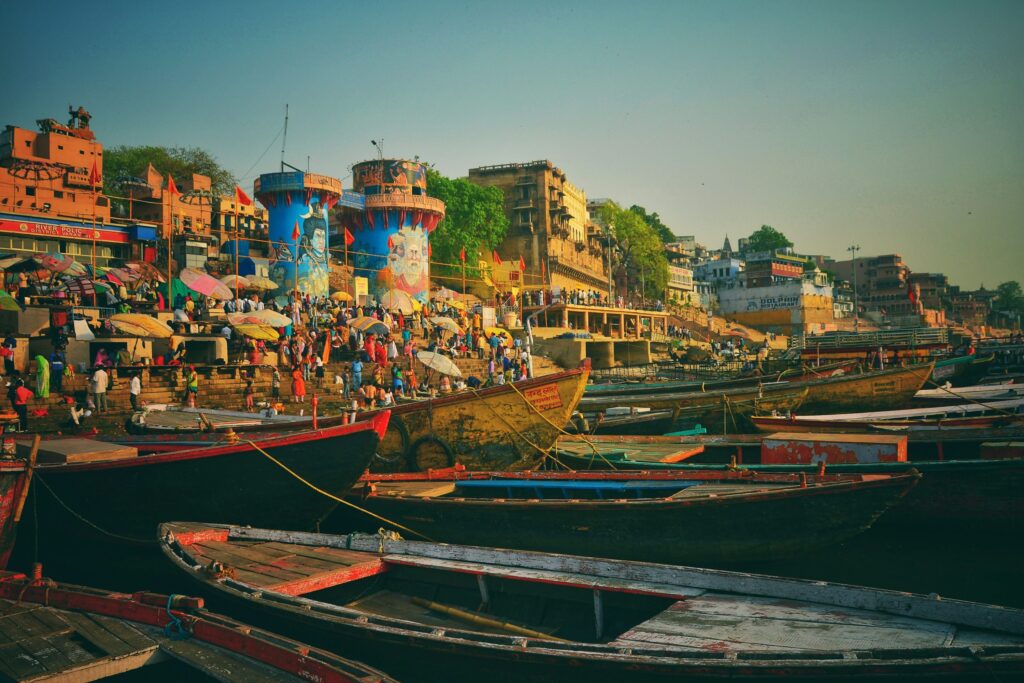
Long before Delhi’s skyline rose with minarets and Mumbai’s streets filled with cars, there was a city that measured time not in years, but in eternities. Varanasi—also called Kashi and Banaras—is believed to be over 3,000 years old, making it not just the spiritual capital of India but also one of the oldest continuously inhabited cities on the planet.
Here, the river Ganga is not just water—it’s a living goddess, a witness to countless births, deaths, and rebirths. This is a place where life and afterlife meet at the same stone steps and where a single dawn can feel like an entire lifetime’s journey.
The Birth of a Sacred City
Legends say Varanasi was founded by Lord Shiva himself. In Hindu mythology, when Shiva’s consort Parvati asked him for a perfect home, he chose this spot along the crescent-shaped bend of the Ganga. To devotees, Kashi is Avimukta—“the city never abandoned by Shiva.”
For millennia, kings, poets, saints, and seekers have walked its narrow lanes. Ancient scriptures mention it as a center of learning where scholars debated philosophy under banyan trees. The Buddha gave his first sermon just 10 km away in Sarnath, and Jainism also marks the city as sacred.
Indian Places To Visit: Varanasi Through the Ages
The city thrived under the Maurya and Gupta empires, becoming a hub for trade, textiles, and Sanskrit learning. In the medieval period, invasions and temple destructions scarred the city, yet it never lost its spiritual glow. During Mughal rule, Emperor Akbar rebuilt parts of Varanasi, including some temples, while the later Maratha rulers restored many others.
By the 18th and 19th centuries, Banaras had become a cultural powerhouse. Music flourished—Bismillah Khan’s shehnai and Ravi Shankar’s sitar would later carry its sounds to the world. Silk weaving became a signature craft, producing the famous Banarasi saree.
The Ghats—Heartbeats of the Ganga
Indian Places To Visit: Varanasi’s soul lives on its ghats—over 80 stone steps leading down to the river. Each has a story:
Dashashwamedh Ghat—The main ghat, said to be where Lord Brahma performed ten horse sacrifices. It’s also the site of the grand Ganga Aarti every evening.
Manikarnika Ghat—The city’s primary cremation ground, where pyres burn day and night. For Hindus, being cremated here is believed to ensure liberation from the cycle of rebirth.
Assi Ghat—Popular among students, artists, and foreign travelers, known for its early morning yoga sessions.
From sunrise to sunset, the ghats are alive with saffron-clad priests, boatmen, chai sellers, flower vendors, and pilgrims offering prayers. Dawn on the Ganga is magical—as the first rays of light turn the river gold, you realize why poets called it “liquid salvation.”
A City of Music, Food, and Faith
Indian Places To Visit Varanasi is not just about temples and rituals; it’s a sensory journey. The lanes smell of incense and fresh kachori-jalebi. Street musicians play ragas that blend with temple bells. Paan stalls offer the famous Banarasi paan, folded with silver leaf.
Festivals here are an explosion of devotion—Dev Deepawali, held fifteen days after Diwali, sees every ghat glowing with thousands of diyas. During Mahashivratri, the city becomes a river of pilgrims chanting “Har Har Mahadev.”
Best Time to Visit
October to March – Cool, pleasant weather. Perfect for sightseeing, boat rides, and festivals.
April to June—Very hot (often above 40°C). Only for those who can handle intense heat.
July to September—Monsoon adds a moody charm, but ghats can be slippery.
Special Pick: Dev Deepawali (November/December)—magical lights, cultural programs, and festive energy.
Key Timings
Sunrise Boat Rides: 5:30 AM – 7:00 AM (changes with season)
Morning Ganga Aarti at Assi Ghat: ~5:00 AM
Evening Ganga Aarti at Dashashwamedh Ghat:
Winter: ~6:30 PM
Summer: ~7:00 PM
Temples are usually open from 4:00 AM to 11:00 AM and 1:00 PM to 9:00 PM (varies by temple).
Entry Fee
The city and ghats are free to visit.
Boat rides: ₹150–₹300 per person (shared), ₹800–₹1,500 (private).
Some heritage buildings and museums (like Bharat Kala Bhavan) have a small fee.
Travel Tips
Indian Places To Visit. Stay Near the Ghats—Walking distance to the river lets you catch the early morning magic.
Respect Cremation Sites – At Manikarnika Ghat, avoid photography.
Hire a Licensed Guide – The city’s stories hide in its alleys.
Taste Local Food—Try malaiyyo in winter, lassi in clay cups, and street chaat.
Be Cautious with Crowds—Narrow lanes can get packed; keep belongings safe.
Take a Sunrise Boat Ride—it’s the single most unforgettable Varanasi experience.
Indian Places To Visit: Final Word
Varanasi is not just a destination; it’s a mirror. It reflects your beliefs, your fears, and your wonder. Here, you can see a child flying a kite on the same ghat where a family performs last rites. You can sip tea while listening to a saint recite verses written centuries ago. And you’ll realize that in this city, time doesn’t pass—it simply flows, like the Ganga.
(3). Indian Places To Visit: Jaipur – Rajasthan
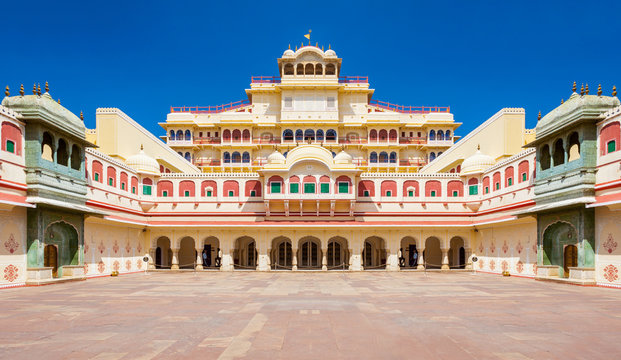
The desert sun was just beginning to paint the horizon gold when the first camel carts rolled through Jaipur’s gates. The air carried the sound of temple bells, the aroma of spiced chai, and the whispers of a city that was once a maharaja’s dream. Jaipur, famously called the Pink City, is a place where romance meets royalty, where palaces rise from the dust like jewels, and where every street corner hides a piece of history.
Indian Places To Visit: The Birth of a Royal Capital
In the early 18th century, Maharaja Sawai Jai Singh II, ruler of the kingdom of Amber, realized his city was growing too crowded and vulnerable to attack. Inspired by the principles of Vastu Shastra and Shilpa Shastra (ancient Indian architectural sciences), he decided to build a new capital.
In 1727, Jaipur was born—not as a chaotic sprawl, but as one of the first planned cities in India, with wide streets, grid-based layouts, and dedicated zones for trade, religion, and residence. The Maharaja was not just a warrior-king but also a passionate astronomer and mathematician, which explains why the city’s design feels both artistic and precise.
Indian Places To Visit: The Pink City’s Blush
Indian Places to Visit. Jaipur’s famous pink hue has its own romantic tale. In 1876, when the Prince of Wales (later King Edward VII) visited, the entire city was painted terracotta pink—the color of hospitality in Rajput culture. The tradition stuck, and to this day, Jaipur’s old city glows in this welcoming shade, especially at sunset.
Indian Places To Visit: Fortresses and Palaces
Every corner of Jaipur seems to tell a royal story:
Amber Fort—A majestic blend of Hindu and Mughal architecture, with mirrored halls (Sheesh Mahal) that glitter like starlight. Ride an elephant up the cobbled path or take a jeep for a faster ascent.
City Palace – Still home to the royal family, its courtyards and museums display regal costumes, ancient manuscripts, and ornate weapons.
Hawa Mahal—The “Palace of Winds” with 953 small windows, designed so royal women could watch street life without being seen.
Jaigarh Fort—Houses the world’s largest cannon on wheels (Jaivana) and offers panoramic desert views.
Nahargarh Fort—perfect for sunset, with its ramparts overlooking the Pink City.
Indian Places To Visit: The Jantar Mantar—A Stone Observatory
Maharaja Jai Singh II’s fascination with astronomy led him to build the Jantar Mantar, a UNESCO World Heritage site. The massive stone instruments here can still tell time to the accuracy of two seconds—proof that Jaipur was a city ahead of its time.
Bazaars and Beyond
The old city markets are a feast for the senses:
Johari Bazaar—Famous for gemstones and jewelry.
Bapu Bazaar – Colorful fabrics, block-printed textiles, and handicrafts.
Tripolia Bazaar – Brassware, lac bangles, and carpets.
Here, bargaining is an art form, and every purchase feels like taking home a piece of Rajasthan.
Indian Places to Visit: Cultural Plus Indian Places to Visit:
Jaipur comes alive during Teej (monsoon festival), Gangaur (women’s festival), and the famous Jaipur Literature Festival in January, which draws authors, thinkers, and travelers from around the globe. Folk dances, camel rides, and puppet shows bring the desert’s traditions to life every evening at Chokhi Dhani, a cultural village.
Indian Places To Visit: Best Time to Visit
October to March – Pleasant, sunny days and cool nights. Perfect for sightseeing and outdoor activities.
April to June—Extremely hot (40°C+); avoid unless you enjoy heat waves.
July to September—Monsoon adds greenery but limits some fort visits.
Key Timings
Amber Fort: 8:00 AM – 5:30 PM
City Palace: 9:30 AM – 5:00 PM (Museum till 4:30 PM)
Hawa Mahal: 9:00 AM – 4:30 PM
Jantar Mantar: 9:00 AM – 4:30 PM
(Closed on national holidays and special events)
Entry Fees (Approx.)
Amber Fort: ₹100 (Indians), ₹500 (Foreigners)
City Palace: ₹200 (Indians), ₹700 (Foreigners)
Hawa Mahal: ₹50 (Indians), ₹200 (Foreigners)
Jantar Mantar: ₹50 (Indians), ₹200 (Foreigners)
Composite tickets are available for multiple sites.
Indian Places To Visit: Travel Tips
Start Early—Beat the tourist rush at forts by arriving before 9 AM.
Dress for Comfort—Light cottons in summer, a shawl/jacket for winter evenings.
Hire a Local Guide—Stories of Jaipur’s kings and queens are worth hearing.
Try the Food—Don’t miss dal baati churma, pyaaz kachori, and ghewar.
Evening Views—Head to Nahargarh Fort or Jal Mahal Road for magical city lights.
Indian Places To Visit: Final Word
Jaipur isn’t just a city—it’s a living museum. It wears its history like a royal robe, embroidered with tales of love, power, and art. Walking through its pink streets, you’ll feel as if time slows down, inviting you to savor every detail—from the mirrored ceilings of Amber Fort to the scent of spices in its markets. Here, the desert doesn’t feel empty; it feels alive, crowned by palaces and warmed by the hospitality of its people.
(4). Haridwar - ( Uttarakhand )
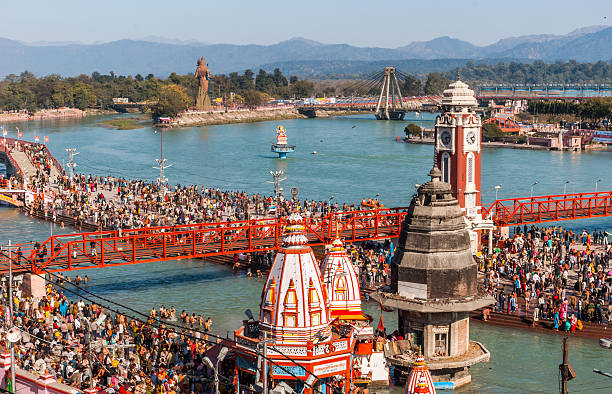
Indian Places To Visit: Haridwar – The Gateway to the Divine
As you step into Haridwar, you feel it immediately — an ancient pulse that seems to beat with the rhythm of the Ganga. The air smells faintly of incense and flowers, the river glistens under the sun, and the sound of conch shells rises like a call to the soul. Haridwar is not just a city; it is a doorway between the physical and the spiritual, a place where myth and reality mingle freely.
Legends and Ancient Roots
The name Haridwar comes from two Sanskrit words — Hari (a name for Lord Vishnu) and Dwar (gateway), meaning “Gateway to Lord Vishnu.” In Shaivite tradition, it is also called Hardwar — the gateway to Lord Shiva. Both beliefs coexist peacefully, and pilgrims from across India come here before proceeding to the Char Dham shrines in the Himalayas.
According to Hindu mythology, Haridwar is one of the four places where drops of amrit (nectar of immortality) fell from the pot carried by Garuda, the celestial bird. This cosmic event gave birth to the Kumbh Mela, which takes place here once every 12 years.
Haridwar’s roots stretch back thousands of years. Ancient texts mention it as Kapilasthana, and archaeologists have found terracotta artifacts from as early as 1700 BCE. Over centuries, saints, kings, and commoners have walked its ghats, seeking blessings or renouncing worldly life.
The Heart of Haridwar – Har Ki Pauri
The soul of Haridwar is Har Ki Pauri, a sacred ghat built by King Vikramaditya in memory of his brother Bharthari, who is believed to have meditated here. The name means “Steps of Lord Shiva/Vishnu,” depending on tradition. A small stone wall here marks the exact spot where Vishnu’s footprint is said to be imprinted.Indian Places To Visit.
Every evening, as the sun dips below the horizon, the Ganga Aarti begins. Priests in saffron robes hold massive brass lamps, their flames swaying in unison to chants and bells. Hundreds of devotees float tiny leaf boats filled with flowers and candles into the river — a mesmerizing sight that turns the water into a stream of flickering gold.
Temples and Sacred Sites
Beyond Har Ki Pauri, Haridwar is dotted with shrines, each with its own legend:
Mansa Devi Temple – Perched on the Bilwa Parvat hill, dedicated to the wish-fulfilling goddess.
Chandi Devi Temple – Associated with the goddess who slew the demon kings Shumbha and Nishumbha.
Daksha Mahadev Temple – Linked to the story of Goddess Sati and her father King Daksha.
These temples are not just architectural marvels but living repositories of myth and faith.
Festivals That Define Haridwar
Kumbh Mela – Held every 12 years, it attracts tens of millions of pilgrims. Saints, sadhus, and naga babas take ritual baths in the Ganga, believing it cleanses all sins.
Ardh Kumbh – Every 6 years, with equally vibrant celebrations.
Kanwar Mela – In Shravan (July–August), lakhs of devotees carry holy Ganga water to offer at Shiva temples.
Diwali & Kartik Purnima – The ghats glow with thousands of lamps.
During these festivals, Haridwar transforms into a surreal ocean of colors, chants, and devotion.
Modern Haridwar – Balancing Faith and Growth
While deeply traditional, Haridwar is also a bustling modern city with yoga centers, ayurvedic spas, and vegetarian restaurants catering to visitors from around the globe. The city has embraced eco-tourism and river cleanliness drives, but it still struggles with crowd management during peak pilgrim seasons.
Indian Places To Visit: Best Time to Visit
October to March – Pleasant weather, clear skies, and major festivals.
April to June – Warmer, but perfect for combining with Char Dham Yatra.
July to September – Monsoon magic, but river currents can be strong.
Travel Tips
Always dress modestly near ghats and temples.
Remove footwear before entering religious spaces.
Keep belongings close in crowded areas.
Try local sweets like rasgulla, jalebi, and khasta kachori.
(5).Rishikesh - ( Uttarakhand )
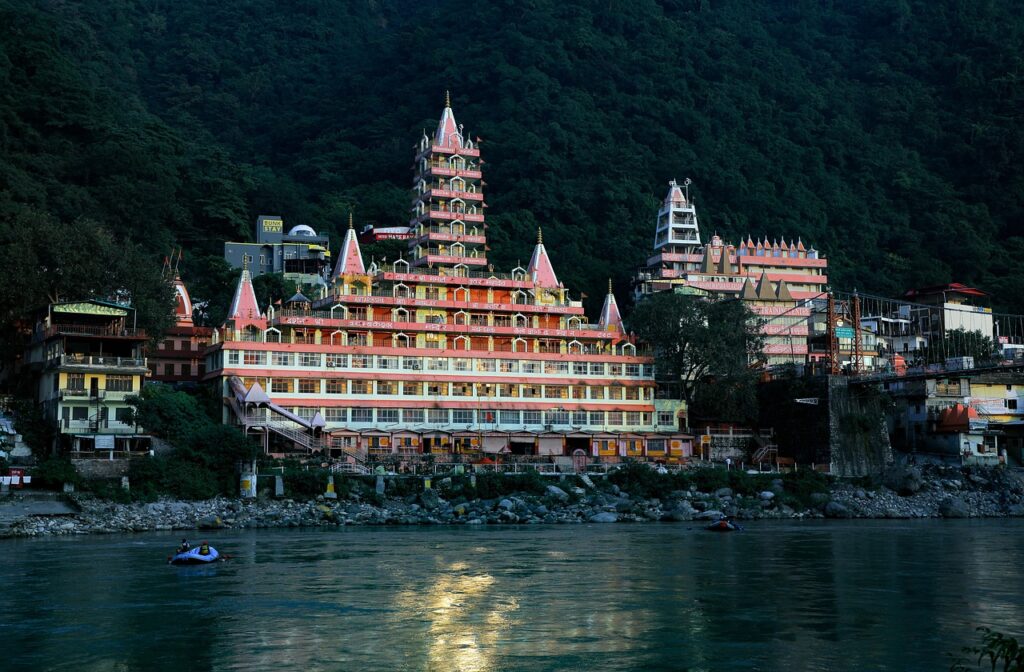
Indian Places To Visit: Rishikesh – The Yoga Capital Where the Ganga Meets the Soul
Far up in the foothills of the Himalayas, where the Ganga is still young, sparkling, and restless, lies Rishikesh — a place where the air itself feels charged with prayer. Here, the river doesn’t just flow; she sings. She rushes over smooth boulders, curls under suspension bridges, and carries with her stories older than the mountains themselves.
The Ancient Legends
The name Rishikesh comes from Hrishikesha, another name for Lord Vishnu — meaning “Lord of the Senses.” According to legend, the great sage Raibhya Rishi performed intense penance here. Pleased by his devotion, Vishnu appeared before him in this serene valley, blessing it as a sacred place for spiritual practice.
Another tale says that Lord Rama came here to atone for the sin of killing Ravana. His brother Lakshman is believed to have crossed the Ganga using a jute rope bridge at the site where the Lakshman Jhula stands today. For centuries afterward, saints, ascetics, and yogis made Rishikesh their home, meditating in caves and forests along the river.
The Ashram Era
By the 20th century, Rishikesh had become an international spiritual magnet. Dozens of ashrams opened along the riverbanks, offering yoga, meditation, and Vedic learning. Among them:
Parmarth Niketan – Known for its beautiful gardens and nightly Ganga Aarti.
Sivananda Ashram – A center for yoga teacher training.
Beatles Ashram – Once the Maharishi Mahesh Yogi’s ashram, where The Beatles stayed in 1968, writing songs inspired by their time here.
This was the moment Rishikesh became the Yoga Capital of the World, drawing seekers from every continent.
A Town of Two Energies
Rishikesh is both spiritual and adventurous — and that’s its magic.
Spiritual Side – Early mornings filled with temple bells, yoga on the ghats, and meditative chants by the river.
Adventure Side – Roaring river rapids for white-water rafting, cliff jumps, and India’s highest bungee jump.
You could spend the morning meditating by the river and the afternoon battling the rapids — and somehow, it feels perfectly natural.
Sacred Spots to Visit
Lakshman Jhula – A swaying suspension bridge with panoramic views of temples and the river.
Ram Jhula – Connecting Swarg Ashram and Sivananda Ashram, lined with cafes serving masala chai and vegan treats.
Triveni Ghat – The most sacred bathing spot, where the evening Ganga Aarti is serene and intimate.
Neelkanth Mahadev Temple – Dedicated to Lord Shiva, linked to the Samudra Manthan (churning of the ocean) legend.
The Ganga Aarti Experience
At sunset, people gather at Triveni Ghat, sitting cross-legged on the cool stone steps. Priests in saffron robes light large brass lamps, their flames swaying in unison as Sanskrit mantras fill the air. The river catches the reflection of hundreds of small diyas (oil lamps) set afloat, turning the Ganga into a ribbon of golden light. It’s less grand than Haridwar’s Aarti, but more personal — like the Ganga is speaking directly to you.
Adventure Beyond Spirituality
River Rafting – Rapids ranging from Grade II to Grade IV, with icy, glacial-fed waters.
Camping – On sandy riverbanks under starry Himalayan skies.
Bungee Jumping – At Mohan Chatti, 83 meters high.
Trekking – To nearby waterfalls like Neer Garh and Patna Waterfall.
Best Time to Visit
Sept–Nov & Feb–Apr – Pleasant weather for both adventure and meditation.
Winter (Dec–Jan) – Crisp mornings, ideal for yoga retreats.
Avoid Monsoon (Jul–Aug) – Strong river currents halt rafting.
Entry & Timings
City Entry – No ticket required; many temples open from sunrise (~5:00 am) to sunset (~8:00 pm).
Lakshman & Ram Jhula – Open 24 hours for pedestrians.
Adventure Activities – 9:00 am to 5:00 pm. Prices vary (rafting ₹600–₹1500 per person, bungee ₹3500+).
Travel Tips
Rishikesh is strictly vegetarian and alcohol-free.
For an authentic experience, stay in an ashram for at least 2–3 days.
Wear modest clothing, especially when visiting temples.
Carry a light sweater in the evenings, even in summer.
Book rafting or bungee in advance during peak season.
(6). Leh – Ladakh - ( Jammu and Kashmir )
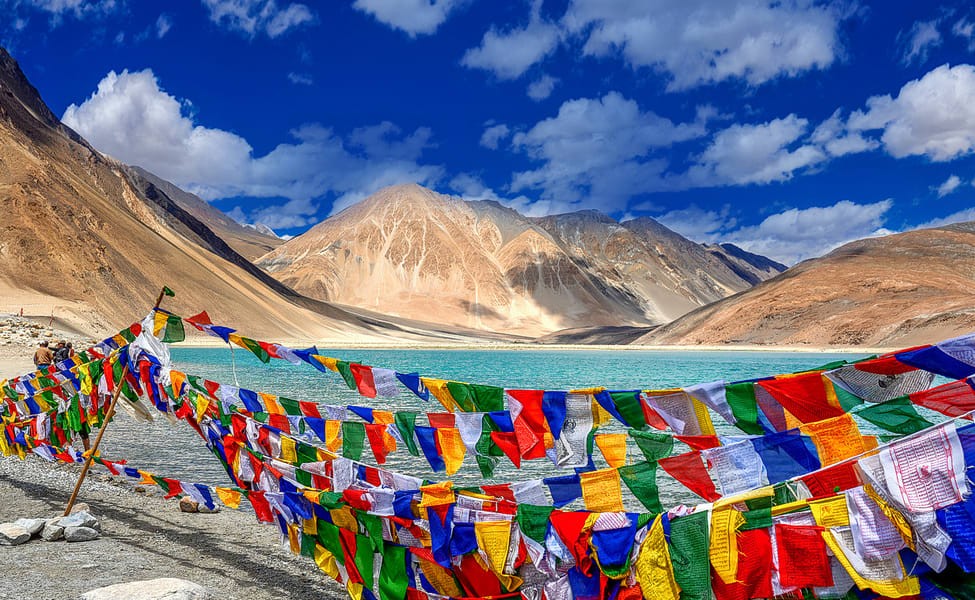
Indian Places To Visit: Leh–Ladakh—The Roof of India and Land of Eternal Skies
Far beyond the bustling plains of India, beyond the lush valleys of Kashmir, lies a land where the air thins and the sky feels so close you could touch it. Leh–Ladakh, perched high in the Himalayas, is a land of contrasts — barren mountains yet blooming apricot orchards, frozen rivers yet warm-hearted people, deep Buddhist chants yet roaring motorcycle engines.
For centuries, Ladakh has been called “La-Dags” in Tibetan — Land of High Passes. It’s not just a geographical description; it’s a reflection of its spirit — a place shaped by the mountains and the journeys across them.
A Journey Through Time – History of Leh–Ladakh
Ladakh’s story begins thousands of years ago. Archaeological evidence shows that humans have lived here since the Neolithic period. Its strategic location along the ancient Silk Route made it a crossroads for traders from Tibet, Central Asia, and the Indian subcontinent. Through its high passes came caravans loaded with salt, pashmina wool, turquoise, spices, and silk, along with ideas, religions, and art.
In the 1st century AD, Ladakh came under the influence of the Kushan Empire, which brought Buddhist teachings into the region. The religion thrived, and monasteries began to appear, some of which still stand today.
By the 10th century, the Namgyal dynasty rose to power, establishing Leh as the kingdom’s capital. The kings built palaces, forts, and monasteries, many influenced by Tibetan architecture. The famous Leh Palace, modeled after Tibet’s Potala Palace, is a proud reminder of that era.
Ladakh was often caught between powerful neighbors — Tibet, Baltistan, and the Mughal Empire. In the 17th century, it allied with the Mughals to fend off invasions, which brought a touch of Islamic culture to Leh, still visible in its mosques and bazaars.
In 1846, after the First Anglo-Sikh War, Ladakh became part of the princely state of Jammu & Kashmir under Dogra rule. It later became part of the Indian Union after 1947, but remained remote and difficult to access until recent decades.
Today, Ladakh has its own union territory status (since 2019) and is celebrated not just for its landscapes but also for preserving a unique Himalayan culture largely untouched by modern chaos.
Culture and Way of Life
Life in Ladakh is a delicate balance with nature. The short summers are for farming barley, wheat, and mustard; winters are for storytelling, festivals, and survival in temperatures that can drop below –25°C.
The majority of Ladakhis follow Tibetan Buddhism, and their villages are often marked by chortens (stupas), mani walls (stone walls inscribed with prayers), and brightly colored prayer flags. Each flag carries a mantra, and the wind is believed to spread blessings across the land.
Festivals are a riot of color in this barren landscape. The Hemis Festival in June–July sees masked dances, traditional music, and feasts to honor Guru Padmasambhava, the saint who brought Buddhism to Tibet and Ladakh.
Hospitality here is sacred. Visitors are often greeted with gur-gur chai (butter tea) or chang (barley beer), and conversations happen slowly, without hurry.
Monasteries – Guardians of Time
Hemis Monastery – The largest in Ladakh, founded in the 17th century, known for its annual masked dance festival and vast collection of thangkas (religious paintings).
Thiksey Monastery – A magnificent 12-story complex with stunning views, housing a giant 15-meter Maitreya Buddha statue.
Lamayuru Monastery – Set against moon-like landscapes, one of the oldest monasteries in Ladakh.
Diskit Monastery – Overlooking Nubra Valley, with a towering statue of the Future Buddha blessing the valley.
Inside these gompas, butter lamps flicker, murals tell ancient stories, and monks chant prayers that have been passed down for generations.
Natural Wonders That Take Your Breath Away
Pangong Tso – A high-altitude lake changing shades from emerald to turquoise to deep blue, stretching over 130 km, with two-thirds in Tibet.
Nubra Valley – A high-altitude desert with sand dunes and double-humped Bactrian camels, once part of the caravan route to Central Asia.
Tso Moriri – A serene lake at 4,522 meters, surrounded by snow-capped mountains and home to migratory birds.
Zanskar Valley – Remote, rugged, and famous for the Chadar Trek on its frozen river in winter.
Magnetic Hill – A quirky spot where optical illusion makes vehicles appear to roll uphill.
Adventure Capital of the Himalayas
Trekking – Markha Valley, Sham Valley, and Stok Kangri expeditions.
Biking – The Leh–Manali and Leh–Srinagar highways are bucket-list rides for bikers worldwide.
River Rafting – Zanskar and Indus rivers offer thrilling rapids.
Mountaineering – Peaks like Stok Kangri and Nun Kun challenge seasoned climbers.
Best Time to Visit
May–September – Pleasant days, clear roads, and accessible passes. Ideal for sightseeing, trekking, and biking.
October–April – Harsh winter with sub-zero temperatures; best for winter treks like Chadar, but many areas are closed.
Entry, Timings & Permits
City Entry – No fee for Leh.
Monastery Entry Fees – ₹30–₹100.
Permits – Required for Nubra, Pangong, Tso Moriri, Hanle, and border areas. Available in Leh (offline or online).
Timings – Monasteries open 7 am–7 pm; permit offices 9 am–5 pm.
Travel Tips for Ladakh
Acclimatize first – Spend 48 hours in Leh before higher trips.
Drink plenty of water; avoid alcohol in the first days.
Roads are challenging; hire experienced drivers or skilled bikers.
Layer clothing; temperatures vary drastically.
Cash is king; ATMs are limited and unreliable.
Network connectivity is minimal; BSNL and Jio work best in Leh.
The Leh–Ladakh Feeling
Imagine standing on Khardung La, at over 5,300 meters. The wind is sharp, the sky is a piercing blue, and prayer flags flap in the thin air. Around you are endless mountains, some bare and ochre, some white and glittering with snow. Down in the valleys, rivers glisten like silver threads. In that vast silence, you realize why travelers say Ladakh is not just a journey through space — it’s a journey within yourself.
(7). Amritsar - ( Punjab )
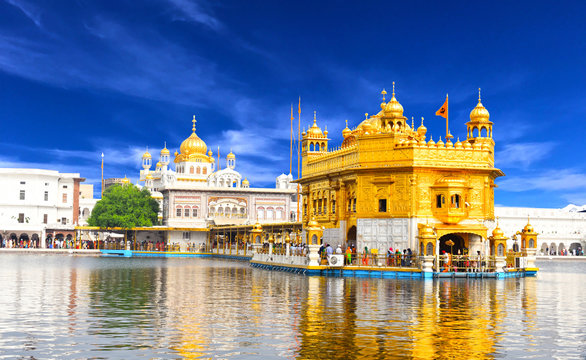
Amritsar – The Spiritual Heart of Punjab
The name Amritsar means Pool of Nectar, and when you first see the Golden Temple shimmering in the sunlight, it’s easy to understand why. But this city is not just about beauty; it is about resilience, faith, sacrifice, and celebration. Every stone here tells a story — of saints who preached compassion, of freedom fighters who bled for independence, and of ordinary people who turned hospitality into a sacred duty.
A Journey Through Time – The Birth of a Holy City
The story begins in the 16th century when the fourth Sikh Guru, Guru Ram Das, founded a settlement around a sacred pool. His successor, Guru Arjan Dev, oversaw the construction of Harmandir Sahib (The Golden Temple) in 1604, placing the Adi Granth (the Sikh holy scripture) inside.
But this was not just a temple. It was a revolutionary design — built lower than the surrounding land to symbolize humility, with doors on all four sides to welcome people from every direction, caste, and faith. In a time when India was divided by rigid hierarchies, this was radical.
Through the centuries, the temple faced invasions and destruction, particularly during the Afghan raids of the 18th century. Each time it was damaged, the Sikh community rebuilt it, stronger than before. The present gold-covered structure dates to the early 19th century under Maharaja Ranjit Singh, the “Lion of Punjab.”
Colonial Era and the Jallianwala Bagh Tragedy
Amritsar’s history also bears deep scars. On April 13, 1919, during the Baisakhi festival, thousands gathered peacefully in Jallianwala Bagh to protest British colonial rule. Without warning, General Dyer ordered his troops to open fire on the unarmed crowd. Hundreds died, many jumping into a well to escape the bullets. The massacre shook the nation and became a turning point in India’s freedom struggle. Today, Jallianwala Bagh stands as a solemn memorial to that dark day, with bullet holes still visible in its walls.
Partition of 1947 – A City Torn in Two
When India was partitioned in 1947, Punjab was split between India and Pakistan. Amritsar found itself just 28 kilometers from the new border. The city saw unspeakable violence, mass migration, and the heartbreak of divided families. Yet, it endured — and became a vibrant symbol of Punjabi resilience.
Culture and Way of Life
Amritsar is the beating heart of Punjabi culture. Here, mornings begin with devotional hymns echoing from Harmandir Sahib, afternoons are filled with the aromas of makki di roti and sarson da saag, and evenings end with bustling bazaars selling phulkari embroidery, juttis, and spicy street snacks.
Hospitality here is legendary — the Sikh practice of seva (selfless service) finds its most powerful expression in the langar (community kitchen) of the Golden Temple, which serves free meals to over 50,000 people every day, regardless of religion or status.
Major Attractions
Golden Temple (Harmandir Sahib) – The soul of Amritsar, open 24/7, with the shimmering gold dome reflected in the Amrit Sarovar.
Jallianwala Bagh – A memorial garden and museum preserving the memory of the 1919 massacre.
Wagah Border Ceremony – A high-energy daily flag-lowering ceremony at the India–Pakistan border.
Partition Museum – Chronicling the human stories of 1947 with rare photos, letters, and oral histories.
Gobindgarh Fort – A 250-year-old fort now turned into a cultural experience.
Festivals and Celebrations
Baisakhi – Celebrated in April, marking the Sikh New Year and the harvest season.
Gurpurabs – Birth anniversaries of Sikh Gurus, with special prayers, processions, and feasts.
Diwali in Amritsar – A spectacular sight as the Golden Temple glows with thousands of lamps.
Best Time to Visit
October–March – Pleasant weather; ideal for sightseeing.
April – Baisakhi celebrations, though it can be warm.
Avoid peak summer (May–June) due to high heat.
Timings & Entry Fees
Golden Temple – Open 24 hours; no entry fee.
Jallianwala Bagh – 6:30 am–7:30 pm; free entry.
Partition Museum – 10 am–6 pm (Monday closed); ₹10–₹250 depending on ticket type.
Wagah Border – Ceremony around 4:15 pm in winter, 5:15 pm in summer; free entry but arrive early.
Travel Tips
Dress modestly at the Golden Temple; cover your head (scarves provided at the entrance).
Photography is allowed outside the sanctum but not inside.
Expect large crowds, especially on weekends and festivals.
Book hotels near the old city for easy access to major attractions.
Try Amritsari kulcha, jalebi, and lassi from local dhabas.
The Amritsar Feeling
In Amritsar, the clang of the temple’s prayer gong mingles with the chatter of bazaars, the aroma of tandoori bread, and the hum of kirtan (devotional songs). The city teaches you that faith can be humble, hospitality can be holy, and resilience can turn even the deepest wounds into sources of strength.
(8).Goa
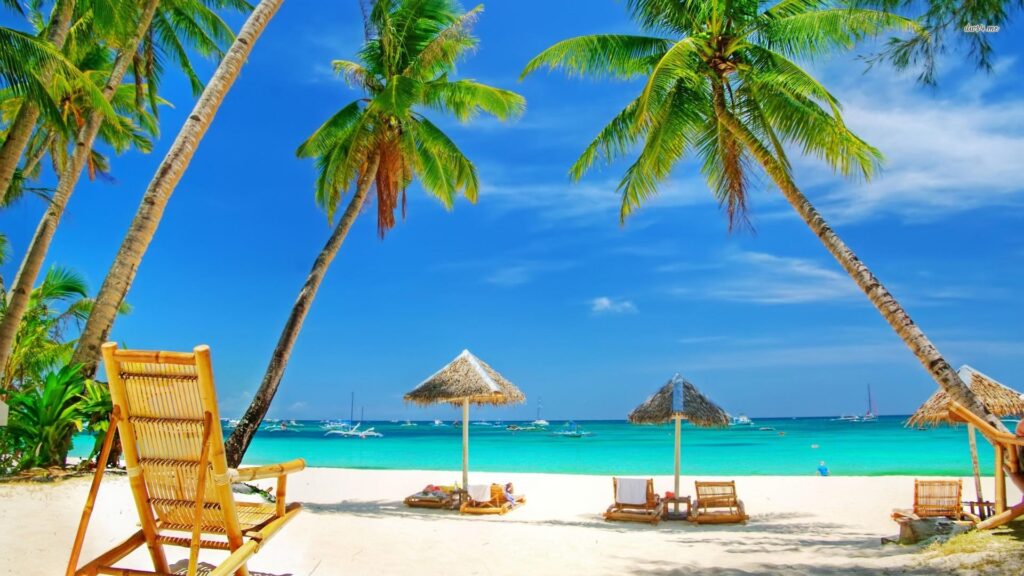
Goa – The Timeless Story of the Konkan’s Crown Jewel
Long before it became India’s party capital, Goa was a land whispered about in ancient trade routes — a lush strip along the Arabian Sea where coconuts swayed in the wind and spices perfumed the air. Traders from the Middle East, Europe, and Southeast Asia came for its black pepper, cinnamon, and cardamom. The Mauryas, Satavahanas, and Chalukyas ruled its fertile plains, but Goa truly began shaping its destiny when the Kadambas made it their capital in the 11th century, leaving behind intricate temple architecture and maritime connections that thrived for centuries.
The tide of history changed in 1510, when Portuguese explorer Afonso de Albuquerque seized Goa from the Bijapur Sultanate. Over the next 450 years, the Portuguese wove their culture into Goa’s soul — building grand cathedrals, cobblestoned streets, and colorful villas. They brought Christianity, introduced cashew nuts and feni, and set a pace of life unhurried by the outside world.
When Goa finally became part of independent India in 1961, it did so without losing its essence. Even today, Goa is a rare fusion — Latin elegance meets Indian vibrance.
Goa Beyond the Beaches
Most travelers know Goa for Baga, Calangute, and Palolem — but beneath the sunbathing and surfing is a cultural landscape just as fascinating as its coastline.
Old Goa is a time capsule — its Basilica of Bom Jesus holds the incorrupt remains of St. Francis Xavier, a relic that draws pilgrims from across the globe. The Se Cathedral, one of the largest churches in Asia, still echoes with hymns that have been sung for over four centuries.
Fontainhas, the Latin Quarter of Panaji, looks like a European village — with narrow lanes, pastel-painted houses, and wrought-iron balconies draped in bougainvillea.
Chandor, a sleepy village in South Goa, hides opulent Portuguese mansions filled with antique furniture and faded family portraits, telling stories of colonial grandeur.
The Rhythm of Goan Life
Mornings in Goa start with the sound of church bells mingling with temple chants. Fishermen haul in their catch before the sun rises too high, and by afternoon, markets bustle with vendors selling fresh prawns, red chilies, and the famed Goan sausage. Music is never far away — from Konkani mando folk songs to the thump of EDM at beach clubs.
Come evening, the Mandovi River glows with sunset cruises while tiny beach shacks light lanterns for late-night seafood feasts. And somewhere in the background, the monsoon winds or sea waves hum a tune that has been part of Goa for millennia.
Unique Experiences You Can’t Miss
Sail to Grand Island for snorkeling and dolphin watching.
Take the Konkan Railway through lush green tunnels and bridges — one of the most scenic train journeys in India.
Visit Dudhsagar Falls during monsoon, when the milky cascade roars down the Western Ghats.
Tour a spice plantation in Ponda and learn how black pepper, nutmeg, and cinnamon grow.
Try a Goan cooking class and learn to make xacuti or bebinca.
Best Time to Visit
Nov–Feb: Cool and pleasant (20°C–28°C), ideal for sightseeing, festivals, and water sports.
Mar–May: Hotter (up to 35°C), but fewer tourists — good for budget stays.
Jun–Sep: Monsoon magic, lush landscapes, fewer crowds, but sea swimming is risky.
Timings & Entry Fees
Beaches: Open all day, free entry.
Basilica of Bom Jesus: 9:00 am – 6:30 pm, no entry fee.
Se Cathedral: 7:30 am – 6:00 pm, no entry fee.
Dudhsagar Falls: ₹50–₹400 (depending on transport/guide).
Spice Plantation Tours: ₹200–₹400 per person (includes lunch).
Insider Travel Tips
Transport: Rent a scooter (₹300–₹500/day) for maximum freedom.
Stay Choices: North Goa for nightlife, South Goa for peace, inland villages for cultural immersion.
Festivals to Watch: Carnival (Feb/March), Feast of St. Francis Xavier (Dec), Shigmo (March).
Local Etiquette: Wear modest clothes in temples and churches.
Safety: Watch out for rip currents at some beaches; ask locals before swimming.
The Goa That Stays With You
Goa is more than the sum of its beaches, bars, and backpackers. It’s in the way strangers greet you with a smile, the aroma of fresh poi bread in the morning, the lazy afternoon siestas, and the blend of temple bells with the toll of church gongs. It’s where you can spend your morning in a 16th-century cathedral, your afternoon surfing, and your night dancing barefoot in the sand.
(9).Kerala
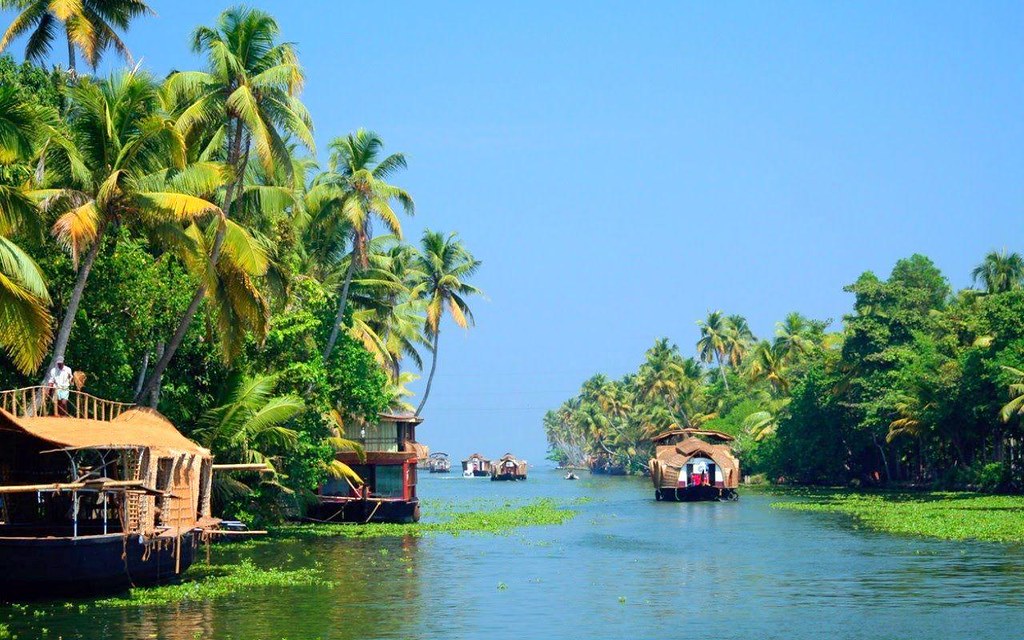
Kerala Backwaters – Alleppey & Kumarakom
“Where the Water Remembers Every Story”
Long before the hum of tourist houseboats, the Kerala Backwaters were the living arteries of the Malabar coast — a 900 km lattice of canals, rivers, lagoons, and lakes that shaped the destinies of those who lived along its banks. Here, water isn’t just a resource; it’s an unbroken thread weaving together centuries of trade, agriculture, spirituality, and folklore.
The Portuguese came in search of spices, the Dutch built embankments to protect the fertile lowlands, and the British turned Alleppey into a bustling port. But long before colonial powers mapped these waterways, fishermen, rice farmers, and toddy tappers knew every bend, current, and whisper of the Vembanad Lake. This lake, stretching over 96 km, is the heart of both Alleppey and Kumarakom — two jewels that show the backwaters’ dual personality: one vibrant and bustling, the other serene and unhurried.
Alleppey – The Venice of the East
In the late 19th century, Alleppey (Alappuzha) was Kerala’s rice export capital. Hundreds of kettuvallams — traditional boats lashed together with coir ropes and made entirely without nails — carried tons of rice and spices to market. These vessels, marvels of carpentry, later transformed into the iconic houseboats we know today, fitted with bedrooms, dining areas, and sundecks.
Today, stepping onto an Alleppey houseboat is like stepping into a moving postcard: emerald paddy fields stretch as far as the eye can see, coconut palms trace silhouettes against the sky, and fishermen balance on narrow canoes as they cast their nets, their movements unchanged for generations.
Kumarakom – Nature’s Whisper
If Alleppey is a conversation, Kumarakom is a lullaby. This quiet village on the eastern banks of Vembanad Lake is famous for its bird sanctuary, where migratory guests like Siberian cranes and pintail ducks join resident kingfishers and herons. The air here smells of wet earth and jasmine, and the waters move so slowly you can almost hear the fish swimming beneath.
In the early morning, fishermen paddle silently through the mist, while women in bright saris wash clothes on stone steps, exchanging gossip as they work. It’s a rhythm that has survived wars, rulers, and the modern world’s rush.
Cultural Heartbeat
The backwaters aren’t just scenery — they’re a living museum of Kerala’s heritage:
Kuttanad, the “Rice Bowl of Kerala,” lies below sea level and is one of the few places in the world where farming happens below the waterline, thanks to Dutch-era dykes.
Snake Boat Races (Vallam Kali), especially the Nehru Trophy Boat Race, turn the calm canals into roaring battlefields each August, as over 100 oarsmen in each boat row in perfect synchrony to drumbeats and crowd cheers.
Toddy Tapping is both craft and culture, producing a mildly alcoholic drink from coconut palms — best tasted fresh.
Unique Experiences
Overnight houseboat cruises on Vembanad Lake, complete with candlelit dinners.
Birdwatching at Kumarakom Bird Sanctuary during early morning hours.
Cycling or canoeing through Kuttanad’s narrow canals.
Visiting village coir-making units to watch artisans spin coconut fiber into rope.
Tasting Karimeen Pollichathu, pearl spot fish marinated in spices and wrapped in banana leaves.
Best Time to Visit
November to February: Ideal weather (23°C–32°C), perfect for houseboats and sightseeing.
June to September: Monsoon magic, lush greenery, and fewer tourists — but heavy rains; great for Ayurvedic retreats.
March to May: Hot and humid, but good for budget travelers; AC boats recommended.
Timings & Entry Fees
Houseboats:
Day cruises: 11:00 am–5:00 pm; ₹7,000–₹12,000 (for 2–4 people, varies by luxury level).
Overnight: 12:00 pm–9:00 am; ₹9,000–₹18,000.
Kumarakom Bird Sanctuary: 6:30 am–5:00 pm; ₹50 (Indians), ₹150 (foreigners).
Snake Boat Races: August; tickets ₹100–₹2,000 depending on stand.
Insider Travel Tips
Book houseboats early in peak season; ask for boats with proper safety gear.
Choose stationary houseboats if you’re prone to motion sickness.
Carry mosquito repellent and light cotton clothing.
Avoid heavy luggage — narrow boats and gangways make it cumbersome.
Always try local backwater snacks like banana chips fried in coconut oil and fresh toddy.
Why It Leaves a Mark on the Soul
The Kerala Backwaters aren’t just a destination; they’re an invitation to slow down and listen — to the paddle dipping into water, the temple bells drifting across the lake, the laughter of children jumping from a jetty. It’s not about arriving anywhere. It’s about letting the journey itself become the destination.
(10).Andaman & Nicobar Islands
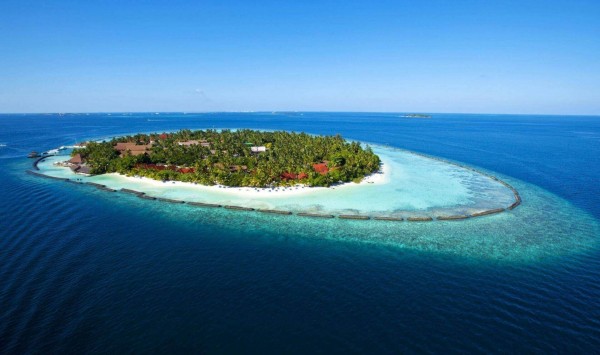
Andaman & Nicobar Islands – Where Legends Meet the Sea
“A Paradise with Stories Written in Sand and Salt”
Far out in the Bay of Bengal, more than 1,000 kilometers from mainland India, lie the emerald jewels of the Andaman & Nicobar Islands — 572 islands, islets, and rocks, only 37 of which are inhabited. Seen from above, they look like a scattered necklace, each gem sparkling against the blue expanse of the sea. But beneath their postcard beauty lies a tapestry of deep history, indigenous culture, colonial legacy, and marine wonders.
A Journey Through Time
Long before the first ship anchored here, the Andaman & Nicobar Islands were home to indigenous tribes — the Great Andamanese, Onge, Jarwa, and Sentinelese — each with their own language, traditions, and intimate relationship with the land and sea. Many of them remain fiercely protective of their way of life even today, with the Sentinelese on North Sentinel Island having almost no contact with the outside world.
By the 18th century, colonial powers saw the islands as a strategic naval outpost. The British formally established control in 1858 and built the infamous Cellular Jail in Port Blair — a massive, star-shaped prison designed for solitary confinement of freedom fighters. Known as “Kala Pani” (Black Waters), it was both a punishment and exile, a place where heroes like Veer Savarkar, Batukeshwar Dutt, and countless others endured unimaginable hardships. Today, the jail stands not as a symbol of despair, but of resilience, hosting a moving light-and-sound show every evening.
During World War II, the Japanese occupied the islands from 1942 to 1945, fortifying them and leaving behind bunkers and runways still visible in parts of Ross Island. Subhash Chandra Bose briefly hoisted the Indian tricolor here in 1943, declaring them the first Indian territory free from British rule.
Nature’s Endless Playground
The Andaman & Nicobar Islands are a diver’s dream and a nature lover’s sanctuary:
Havelock Island (renamed Swaraj Dweep) is home to the iconic Radhanagar Beach, ranked among the world’s best for its white powdery sand and turquoise waters.
Neil Island (Shaheed Dweep) charms with natural rock formations, coral reefs, and quiet beaches like Bharatpur and Laxmanpur.
North Bay Island offers vibrant snorkeling right off the shore, with corals teeming with clownfish, parrotfish, and stingrays.
Baratang Island surprises with limestone caves, mangrove creeks, and rare mud volcanoes.
Little Andaman reveals hidden waterfalls and surfing waves.
Nicobar Islands, more remote and largely off-limits to tourists, preserve untouched beauty and fragile tribal cultures.
Underwater, the Andamans hold one of the richest marine biodiversity zones in the world — coral gardens, manta rays, turtles, and reef sharks glide through waters so clear you can see thirty meters down.
Cultural Threads
While much of the islands’ tribal heritage remains protected and inaccessible, the settler population (descendants of mainland Indians, Burmese, and Sri Lankans) have created a unique cultural blend. Markets in Port Blair hum with Tamil, Bengali, and Hindi, while seafood stalls serve everything from spicy fish curry to grilled lobster.
Unique Experiences
Cellular Jail Light & Sound Show – an emotional journey into India’s freedom struggle.
Scuba diving in Havelock – Elephant Beach and Aquarium site for beginners; Dixon’s Pinnacle for advanced divers.
Glass-bottom boat rides at North Bay for coral viewing without getting wet.
Kayaking through mangroves in Mayabunder or Havelock under the moonlight.
Sea walking on the seabed at North Bay or Elephant Beach.
Island hopping – from the lively markets of Port Blair to the unspoiled sands of Long Island.
Best Time to Visit
October to May is ideal, with pleasant temperatures (23°C–31°C) and calm seas for water sports.
June to September brings heavy monsoons, choppy waters, and limited ferry services — better avoided unless you want solitude and lush greenery.
Timings & Entry Fees
Cellular Jail: 9:00 am–5:00 pm (closed Mondays); entry ₹30; Light & Sound Show ₹300 (premium seats).
Scuba Diving: ₹3,500–₹6,000 per dive (includes gear and instructor).
Glass-bottom boat ride: ₹600–₹1,000 per person.
Permits:
Indian citizens: Free access to most islands.
Foreigners: Restricted Area Permit (available on arrival at Port Blair airport or by sea). Some tribal reserves are completely off-limits.
Insider Travel Tips
Book ferry tickets (Makruzz or Govt. ferries) well in advance, especially for Havelock and Neil.
Carry cash — ATMs are limited on smaller islands.
Respect tribal protection laws — no photography or contact attempts with indigenous people.
Protect the corals — avoid touching or standing on reefs while snorkeling or diving.
Pack light cotton clothes, reef-safe sunscreen, and seasickness tablets for boat rides.
Why It Feels Like Another World
The Andaman & Nicobar Islands aren’t just about beaches — they’re about layers of history, the pride of freedom fighters, the mystery of ancient tribes, and the humbling beauty of nature that refuses to be tamed. Here, every wave seems to carry a story — of a sailor, a prisoner, a diver, or perhaps, you.
(11).Darjeeling - WestBengal
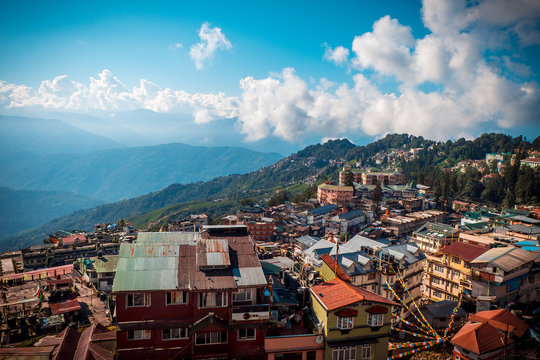
Darjeeling – The Queen of the Hills
“A Land Where the Clouds Come Down to Meet You”
Perched at 6,700 feet above sea level in the Himalayan foothills of West Bengal, Darjeeling is not merely a hill station; it’s a living, breathing postcard — one where the air smells faintly of tea leaves, prayer flags flutter against a backdrop of snowy peaks, and toy trains chug slowly as though time itself has learned to take it easy here.
The Story of Darjeeling – From Forest Hills to Tea Capital of the World
Before the British ever set foot here, Darjeeling was a dense, mist-shrouded forest inhabited by the Lepchas, the original people of the region. They called it “Dorje-Ling” — the “Land of the Thunderbolt,” in reverence to a Buddhist monastery built in the 18th century.
In 1828, two British officers stumbled upon this serene ridge while exploring the Sikkim hills. The British saw more than beauty here — they saw a strategic outpost and a perfect summer retreat from the sweltering plains of Bengal. By 1835, the Chogyal (King) of Sikkim leased the land to the British East India Company, and Darjeeling began its transformation.
But its destiny truly changed with tea. In the 1840s, the British began experimenting with Chinese tea seeds in Darjeeling’s soil, and the results were extraordinary. The unique climate, high altitude, and fertile slopes produced a tea so delicate and aromatic that it became known as the Champagne of Teas. By the late 19th century, Darjeeling tea was prized in markets from London to New York.
In 1881, the arrival of the Darjeeling Himalayan Railway (now a UNESCO World Heritage Site) connected the hills to the plains. The “Toy Train” was not just a mode of transport — it was a lifeline that carried tea, goods, and visitors up the winding slopes, turning Darjeeling into one of India’s most sought-after hill stations.
The Darjeeling of Today – A Blend of Cultures and Climates
Walk through Darjeeling today, and you’ll hear a chorus of languages: Nepali, Hindi, Bengali, Tibetan, and English. Its residents are an eclectic mix — descendants of Nepali laborers who came to work in the tea gardens, Tibetans who fled after 1959, and locals whose families have been here for generations.
Colonial-era architecture still dots the town — from the Gothic-style St. Andrew’s Church to the classic bungalows tucked amidst tea estates. Shops on the Mall Road sell woollens, Himalayan crafts, and steaming plates of momos, while cafes like Glenary’s and Keventer’s preserve a slice of the British Raj charm.
Experiences That Define Darjeeling
1. Sunrise at Tiger Hill
At dawn, travelers gather in hushed anticipation. As the first rays break the horizon, Kanchenjunga glows in shades of pink and gold, sometimes revealing a faint silhouette of Mount Everest in the far distance.
2. Riding the Darjeeling Himalayan Railway
The little blue steam engine winds its way through lush forests, tea gardens, and even through the heart of the town itself. The Batasia Loop — where the train makes a graceful spiral — offers panoramic valley views and a war memorial dedicated to Gorkha soldiers.
3. Tea Garden Walks
Visit Happy Valley Tea Estate or Makaibari, where guides explain how each tender leaf is plucked by hand, processed, and graded. The tea tasting that follows is a sensory journey — floral, muscatel, and delicately brisk.
4. Himalayan Mountaineering Institute & Zoological Park
Founded in 1954 by Tenzing Norgay himself, the institute showcases Everest artifacts and trains future mountaineers. The adjacent zoo is home to rare high-altitude animals like the snow leopard and red panda.
5. Monasteries & Spiritual Corners
The Ghoom Monastery, with its towering statue of Maitreya Buddha, and the Japanese Peace Pagoda, built to promote peace and unity, offer moments of serene reflection.
Best Time to Visit
Spring (March–May): Mild weather, blooming rhododendrons, and tea gardens at their lushest.
Autumn (October–December): Crisp skies and the clearest mountain views.
Winter (January–February): Quiet and cold, with a romantic stillness (snow is rare but magical when it happens).
Avoid Monsoon (June–September): Heavy rains, mist, and landslides can disrupt travel.
Timings & Entry Fees (Major Attractions)
Tiger Hill: Open sunrise to sunset; free entry, ₹100–₹500 for vehicle passes.
Toy Train Joy Rides: ₹1,500–₹3,000 (steam or diesel, class varies).
Tea Estate Tours: ₹100–₹500 depending on estate.
Himalayan Mountaineering Institute & Zoo: 8:30 AM–4:30 PM, ₹60 per adult.
Peace Pagoda: 4:30 AM–7:00 PM, free entry.
Travel Tips from a Seasoned Visitor
Always check weather forecasts before planning Tiger Hill visits — mist can block views.
Carry layers — Darjeeling weather changes quickly.
Book toy train tickets through IRCTC months in advance during peak season.
Sample local foods: thukpa, aloo dum, churpee, and fresh bakery treats from Glenary’s.
Explore on foot as much as possible — you’ll stumble upon hidden cafes, tiny temples, and stunning viewpoints.
Why Darjeeling Stays in the Soul
Darjeeling is not just about scenery — it’s about the rhythm of life here. It’s about sipping tea while watching clouds drift over tea bushes, listening to the slow whistle of a toy train, and feeling the Himalayas watching over you. It’s where nature, culture, and history blend so seamlessly that every traveler leaves feeling like they’ve lived a chapter of a timeless story.
(12) . Shimla & Manali – Himachal Pradesh
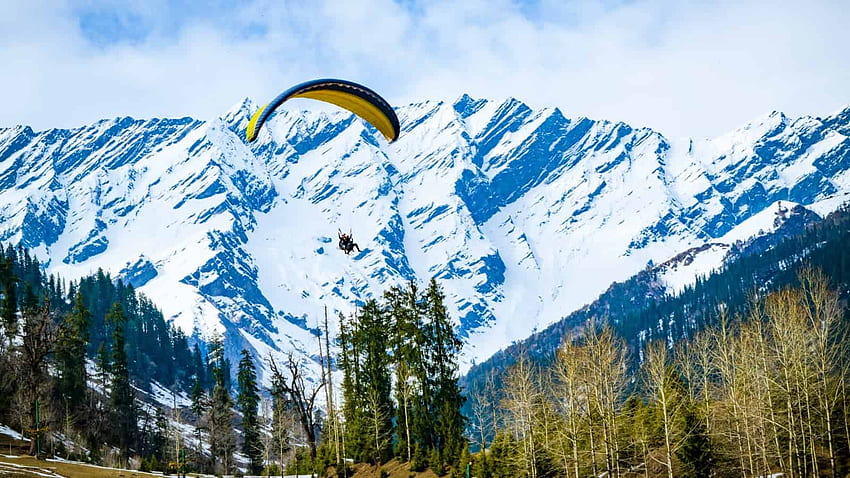
Shimla & Manali – The Twin Gems of Himachal Pradesh
“Where the Colonial Charm of the Hills Meets the Untamed Spirit of the Mountains”
Imagine a road that winds endlessly upward, leaving behind the plains and drawing you into a land of pine forests, snow-capped peaks, and crisp air that smells faintly of apples and cedarwood. This road eventually splits — one way leads you to Shimla, the former summer capital of the British Raj, and the other to Manali, a gateway to the Himalayas and high-altitude adventures. Together, these towns form one of India’s most beloved mountain circuits.
Shimla – The Queen of Hill Stations
The Birth of a Hill Capital
In the early 19th century, Shimla was a sleepy settlement of a few huts and dense deodar forests. But in 1819, after the Gurkha War, the British discovered this cool retreat. By the 1860s, Shimla had become the summer capital of British India, a place where the colonial elite escaped the burning heat of Calcutta and Delhi.
They brought with them architecture that still defines Shimla today — Tudor-style cottages, Neo-Gothic churches, and sprawling estates. The Kalka–Shimla Railway, built in 1903, became a lifeline, carrying officers, socialites, and cargo up 96 kilometers of mountain track (now a UNESCO World Heritage Site).
The Shimla Experience Today
Walk down The Mall Road, and you’ll still feel a colonial echo — cafes with hand-painted signs, bookshops that smell of old paper, and the slow chime of Christ Church’s clock tower. The Ridge offers sweeping views of the Himalayas, while Jakhoo Hill (the highest point in Shimla) greets you with a giant statue of Lord Hanuman and mischievous monkeys.
In winter, Shimla transforms into a snow-dusted wonderland, and in spring, the forests burst into color with wildflowers.
Manali – The Adventure Capital of Himachal
From Apple Orchards to Adventure Hub
Manali’s history is rooted in legend — it’s said to be named after Manu, the sage who is believed to have recreated human life after a great flood. Until the mid-20th century, it was a quiet village in the Kullu Valley, known for apple orchards, wooden temples, and handwoven shawls.
In the 1970s, hippie travelers found their way to Manali, drawn by its laid-back charm and the misty allure of the Himalayas. Over time, it grew into a base camp for trekkers, bikers, and thrill-seekers heading to Leh-Ladakh or the Rohtang Pass.
The Manali Experience Today
Old Manali retains its rustic charm with stone houses, wooden balconies, and cafes playing soft guitar music. Hidimba Devi Temple, set in a cedar forest, connects visitors to the region’s mythology. In contrast, Solang Valley buzzes with activity — paragliding, zorbing, skiing, and snowboarding.
The high-altitude Rohtang Pass (open May–November) is a dramatic gateway to Lahaul and Spiti, with snow walls and winding roads that look straight out of a Himalayan epic.
Experiences You Can’t Miss
In Shimla
Ride the Kalka–Shimla Toy Train – A slow, scenic journey through 103 tunnels and over 800 bridges.
Walk on The Ridge & Mall Road – Colonial-era landmarks, local handicrafts, and cozy cafes.
Visit Christ Church – The second-oldest church in North India, glowing golden at night.
Explore Kufri & Mashobra – Hill escapes for skiing in winter and hiking in summer.
In Manali
Hidimba Devi Temple – Built in 1553, surrounded by cedar trees and legends.
Solang Valley – Adventure sports hub with panoramic views.
Vashisht Village – Natural hot springs with mountain views.
Rohtang Pass – Snowfields and breathtaking high-altitude scenery.
Best Time to Visit
Summer (March–June): Pleasant weather, perfect for sightseeing and trekking.
Winter (December–February): Snow in both Shimla and Manali — ideal for winter sports and Christmas vibes.
Autumn (September–November): Clear skies, crisp air, fewer crowds.
Avoid Monsoon (July–August): Heavy rains, landslides, and slippery roads.
Timings & Entry Fees (Major Attractions)
Kalka–Shimla Toy Train: ₹500–₹1,500 depending on class; 5–6 hours journey.
Christ Church: 8:00 AM–6:00 PM; free entry.
Hidimba Devi Temple: 8:00 AM–6:00 PM; free entry.
Rohtang Pass Permit: ₹500–₹600 per vehicle, plus environmental tax; open May–Nov.
Travel Tips
Book Rohtang Pass permits online in advance.
Carry woollens even in summer — evenings get chilly.
In winter, check road conditions for Manali–Rohtang.
Try local foods: Siddu, Babru, and fresh Himachali apple juice.
Stay at least 2–3 days in each town to soak in the atmosphere instead of rushing.
Why These Twin Towns Stay in Memory
Shimla soothes the soul with nostalgia and quiet beauty, while Manali stirs the spirit with adrenaline and raw Himalayan grandeur. Together, they offer a complete hill experience — one steeped in history, the other in adventure — making them a pair you’ll never forget once you’ve walked their winding roads.
(13) . Ajanta & Ellora Caves – Maharashtra
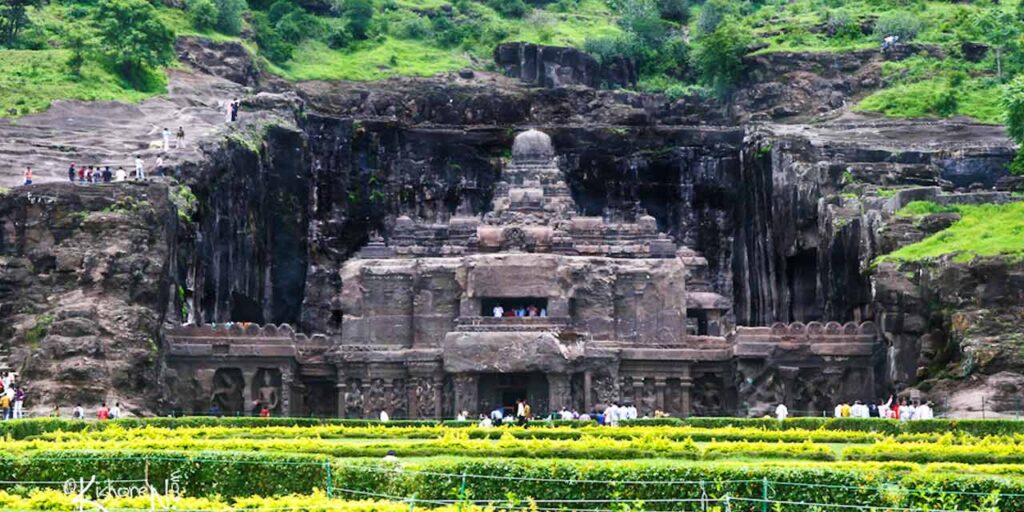
Ajanta & Ellora Caves – Maharashtra
“A Journey into India’s Eternal Stone Scriptures”
A World Hidden in the Hills
In the rugged Sahyadri hills of Maharashtra, nature guards two of India’s greatest treasures — Ajanta and Ellora. For centuries, these caves lay silent, their stories buried in darkness, their paintings and carvings forgotten under vines and dust. Then, one by one, the world rediscovered them, and suddenly, the rocks began to speak again.
Ajanta Caves – The Painted Prayer Halls of the Buddha
Time Period: 2nd Century BCE – 6th Century CE
Faith: Buddhist
Long before cities roared with traffic, Buddhist monks sought solitude in the cliffs above the Waghora River. With simple chisels and infinite patience, they carved sanctuaries into the rock — Chaityas (prayer halls) and Viharas (monasteries) — where chants echoed and oil lamps glowed.
Inside these caves, walls became canvases. The Ajanta murals are India’s answer to the Sistine Chapel — vivid, emotional, and timeless. They tell stories of the Jataka tales — the Buddha’s previous lives — with scenes of kings, merchants, dancers, and forests alive with wildlife. Even after 1,500 years, the mineral-based pigments retain their brilliance: deep lapis blue from distant Afghanistan, red from local iron ore, yellow from ochre, and green from terra verde.
The Great Silence and Rediscovery
By the 7th century, Buddhism’s influence in the region waned. Slowly, nature took over. The caves vanished beneath thick jungle, their entrances hidden from human eyes. For more than 1,000 years, they slept.
Then in 1819, during a tiger-hunting expedition, British officer Captain John Smith spotted an arched doorway on a cliff face. Inside, torchlight revealed astonishing paintings — a window into a forgotten world.
Ellora Caves – Where Three Faiths Meet in Stone
Time Period: 6th – 10th Century CE
Faiths Represented: Hinduism, Buddhism, Jainism
If Ajanta is about delicate art, Ellora is about sheer scale and ambition. Unlike Ajanta, Ellora never disappeared from memory; it remained an active pilgrimage site for centuries.
The most famous marvel here is the Kailasa Temple (Cave 16). Built by Rashtrakuta king Krishna I in the 8th century, it is the largest monolithic rock excavation in the world — carved top to bottom from a single volcanic basalt hill. Craftsmen removed an estimated 200,000 tons of rock without modern machinery, revealing a free-standing temple complex complete with pillared halls, giant stone elephants, and sculptures depicting scenes from Hindu epics.
Ellora is unique in its spiritual inclusivity:
Buddhist caves (Caves 1–12) hold serene Buddha images and monastery cells.
Hindu caves (Caves 13–29) explode with energy — dancing Shiva, fierce Durga, and celestial musicians.
Jain caves (Caves 30–34) radiate simplicity and grace, with finely detailed carvings.
Best Time to Visit
November to March: Cool, pleasant weather ideal for exploring.
Avoid June–September: Heavy rains make travel and photography challenging.
Timings & Entry Fees
Ajanta: 9:00 AM – 5:30 PM (Closed Mondays)
Ellora: 9:00 AM – 5:30 PM (Closed Tuesdays)
Indian Citizens: ₹40 per site
Foreign Nationals: ₹600 per site
Children below 15 years: Free entry
Travel Tips for an Enriched Visit
Split your trip: Dedicate one full day each to Ajanta and Ellora — rushing will dull the experience.
Hire a guide: The stories behind the art make the stones come alive.
No flash at Ajanta: Protects the fragile ancient paintings.
Carry water & light snacks: Facilities inside are limited.
Start early: Morning light enhances photography, and the sites are less crowded.
Why Ajanta & Ellora Stay in the Soul
Ajanta is a whisper — soft, painted, meditative. Ellora is a roar — grand, sculpted, commanding. Together, they are not just monuments but chapters of India’s spiritual autobiography written in stone and color.
Standing in Ajanta’s Cave 1, gazing at the tranquil face of the Bodhisattva Padmapani, or walking through Ellora’s towering Kailasa Temple, you realize you’re not just visiting history — you’re inside it.
(13) . Hampi –( Karnataka )
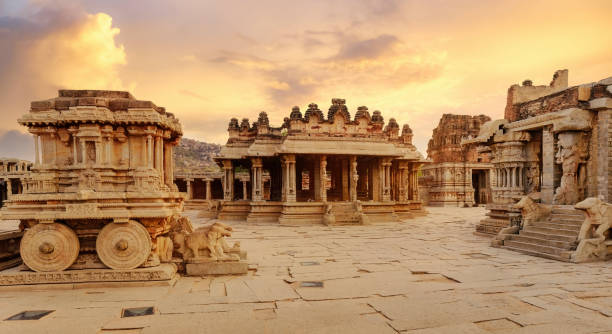
Hampi – Karnataka
“A land where granite whispers, temples sing, and the wind carries the forgotten pride of an empire.”
1. Where the Past Meets the Landscape
Hampi sits on the southern bank of the Tungabhadra River, in Karnataka’s Bellary district. What strikes visitors first isn’t just the temples or ruins — it’s the surreal topography: miles of giant granite boulders balanced on each other like a child’s play, lush banana groves swaying beside paddy fields, and the slow-moving Tungabhadra reflecting the sky’s changing colors.
Locals still believe that this very landscape is Kishkindha, the monkey kingdom from the Ramayana, where Lord Rama met Hanuman and Sugriva. That legend gives Hampi a mythical aura that merges seamlessly with its historical grandeur.
2. Before the Empire – Myth & Early Settlements
Long before Vijayanagara’s rise, the area was already a sacred site. Archaeological evidence suggests human habitation here since the Neolithic period. Small shrines and carvings along the riverbanks predate the empire, and stories of the Ramayana tie the landscape to divine events — the Anjaneya Hill is said to be Hanuman’s birthplace.
By the 10th century, Hampi was under the Chalukyas and later the Hoysalas, who built some of the earliest temples in the area. But the stage for its golden age was set in the early 14th century.
3. Birth of the Vijayanagara Empire (1336 CE)
The 14th century was turbulent. The Delhi Sultanate’s expansion into the south caused the fall of several Hindu kingdoms. Amid this chaos, two brothers — Harihara I and Bukka Raya I — reportedly former commanders of the Kampili kingdom, established Vijayanagara with guidance from the saint Vidyaranya of the Sringeri Mutt.
Strategically located near the Tungabhadra, Hampi was chosen as the capital — easy to defend with its rocky hills, yet close to rich farmlands. Over the next 200 years, it became the largest city in India and one of the wealthiest in the world.
4. A City Beyond Imagination
Foreign travelers left glowing accounts:
Niccolò de’ Conti (Italian, 1420s): “The circumference of the city is sixty miles; it is full of palaces, gardens, and markets where you can buy anything.”
Domingo Paes (Portuguese, 1520s): “The king has countless treasures… on feast days, thousands of horses and elephants parade through streets lined with silk and gems.”
The city was divided into:
Sacred Center – along the river, dominated by temples like Virupaksha, Achyutaraya, and Vittala.
Royal Center – south of the Sacred Center, home to palaces, audience halls, water tanks, and military barracks.
Suburban Settlements – home to traders, artisans, and farmers.
Hampi’s bazaars sold diamonds (mined nearby), Arabian horses, Persian carpets, Chinese porcelain, and Southeast Asian spices — making it an international trading hub.
5. Architecture – Stone Turned to Poetry
Hampi’s architecture blended Dravidian temple design with Indo-Islamic influences (especially in arches, domes, and water structures).
Virupaksha Temple: Dating back to the 7th century, expanded during Vijayanagara rule, it’s still a living temple. During annual chariot festivals, the temple’s shadow aligns perfectly with carvings — a marvel of ancient engineering.
Vittala Temple: Iconic for its Stone Chariot and musical pillars, each carved to produce different notes.
Lotus Mahal: A palace for royal women, designed with symmetrical curves and lotus-bud domes.
Elephant Stables: Vast chambers with Indo-Islamic arches, reflecting the multicultural influences in Vijayanagara’s court.
Stepped Tanks: Perfectly symmetrical water reservoirs, used for royal ceremonies and temple rituals.
6. Life in Vijayanagara
Imagine Hampi in its prime:
Mornings: Priests chanting in temple courtyards, markets opening with traders calling out their wares.
Afternoons: Royal processions, musicians performing in palace halls, wrestlers competing in arenas.
Evenings: Oil lamps lighting temple steps, travelers from Persia, Portugal, and China exchanging news in bustling taverns.
The empire was religiously tolerant — with temples, mosques, and Jain shrines coexisting.
7. The Fall – 1565 CE
Hampi’s end came swiftly. At the Battle of Talikota, the combined armies of the Deccan Sultanates outmaneuvered the Vijayanagara forces. King Aliya Rama Raya was captured and executed.
The victors entered Hampi and unleashed six months of looting and destruction. Palaces were burned, temples desecrated, treasures stolen. Survivors fled, and Hampi was abandoned — its silence becoming its only guardian.
8. Rediscovery & UNESCO Recognition
In the 19th century, British archaeologists began documenting Hampi’s ruins. Today, it’s a UNESCO World Heritage Site, attracting both history lovers and backpackers.
9. Travel Guide
Best Time to Visit:
October – February: Cool weather; perfect for exploring.
Avoid summer (March–May) — daytime temperatures can cross 38°C.
Timings:
Monuments: 6:00 AM – 6:00 PM
Temples may open earlier for rituals.
Entry Fee:
₹40 for Indians, ₹600 for foreigners (Vittala Temple & Royal Enclosure).
Other sites are free.
How to Reach:
Nearest major railway station: Hospet (13 km).
Closest airport: Hubli (160 km) or Bengaluru (350 km).
Local Transport:
Bicycles (₹150/day), mopeds (₹300/day), or auto-rickshaws for day tours.
Tips:
Start early to avoid midday heat.
Carry water and wear comfortable walking shoes — Hampi involves a lot of walking.
Hire a local guide to uncover hidden carvings and stories.
Spend at least 3–4 days to see both the Sacred and Royal Centers, plus sunset points like Matanga Hill.
10. Why Hampi is Unforgettable
Hampi isn’t just a destination — it’s an experience. You don’t just “see” the ruins; you feel them. You’ll hear the echoes of conch shells in temple corridors, imagine jeweled elephants in the royal stables, and watch the same sunset that kings once admired.
It’s a city that refuses to die — because every stone here still speaks.
(14). Meghalaya –( Cherrapunji & Shillong)
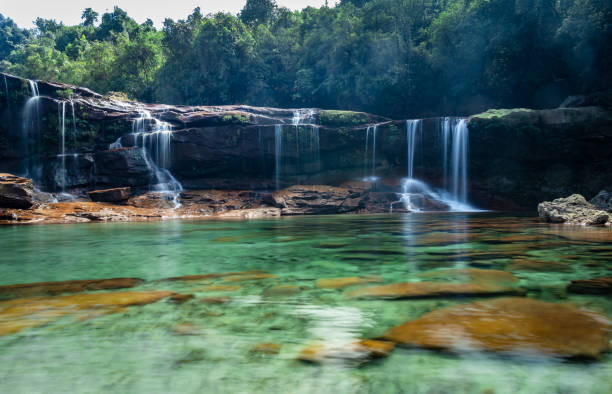
Meghalaya – Cherrapunji & Shillong
“Where clouds dance with the hills, waterfalls sing to the valleys, and nature wears a thousand shades of green.”
1. Introduction – The Land Above the Clouds
Meghalaya, meaning “Abode of Clouds” in Sanskrit, is a jewel of Northeast India. Its rolling emerald hills, endless waterfalls, living root bridges, limestone caves, and vibrant Khasi culture make it one of India’s most enchanting destinations.
Two of its most iconic spots — Cherrapunji (Sohra to locals) and Shillong — offer completely different yet complementary experiences: Cherrapunji with its raw, untouched nature and legendary rainfall, and Shillong with its cosmopolitan charm, colonial heritage, and music-loving streets.
2. Cherrapunji (Sohra) – Nature’s Rain-Sculpted Wonderland
A Place Where the Skies Open
Once considered the wettest place on Earth, Cherrapunji receives rain not just in the monsoon but often in fine, misty drizzles throughout the year. The rain here isn’t a nuisance — it’s the lifeblood that feeds countless waterfalls, nurtures lush valleys, and carves deep gorges.
Key Natural Wonders
Nohkalikai Falls
The tallest plunge waterfall in India (1,115 ft).
Its turquoise pool glows mysteriously in sunlight.
Associated with a tragic local legend of a woman named Likai.
Seven Sisters Falls (Nohsngithiang)
Seven parallel streams cascading from a massive cliff face — especially stunning in the monsoon.
Mawsmai Caves
Naturally formed limestone caves with stalactites and stalagmites.
Easy to explore but give you a taste of Meghalaya’s vast underground cave systems.
Living Root Bridges (Riwai & Nongriat)
Ingenious bioengineering by the Khasi people, made from the roots of rubber fig trees trained over decades.
The Double Decker Living Root Bridge in Nongriat is a bucket-list trek (3,500+ steps down through the forest).
Eco Park & Thangkharang Park
Panoramic views of Bangladesh’s plains, which lie just across the border.
Cultural Touch
Sohra is deeply connected to Khasi traditions. The Khasi people follow a matrilineal society — family lineage is traced through the mother, and property passes to the youngest daughter. Their festivals, folk songs, and weaving traditions blend beautifully with their deep respect for nature.
3. Shillong – Scotland of the East
Colonial Elegance Meets Modern Buzz
Once the summer capital of Assam during British rule, Shillong’s cool climate, pine-covered hills, and Victorian-era bungalows earned it the nickname “Scotland of the East.” Today, it’s a vibrant hill city with buzzing cafes, live music, and a youthful energy.
Major Attractions
Ward’s Lake – A century-old man-made lake surrounded by gardens, perfect for an evening stroll.
Shillong Peak – The highest point in Meghalaya (6,449 ft), offering a bird’s-eye view of the city.
Elephant Falls – Three-tiered falls that are easily accessible from the city.
Don Bosco Museum – An impressive museum showcasing the cultures of all seven northeastern states.
Police Bazar – The city’s main commercial hub — from street snacks to high-end fashion.
Cathedral of Mary Help of Christians – Beautiful Gothic-style church with serene interiors.
The Music Capital of India
Shillong has an unmatched passion for music — especially rock and blues. International bands have performed here, and local musicians often play live in cafes. Music festivals like NH7 Weekender Shillong draw fans from across the country.
4. Climate & Best Time to Visit
Best Season:
October to April: Clear skies, comfortable temperatures (perfect for sightseeing).
Monsoon (June–September): Intense rainfall — great for waterfalls, but expect landslides and travel delays.
Temperature: 5°C in winter to 24°C in summer.
5. Food & Flavors
Khasi cuisine is simple yet flavorful:
Jadoh – Rice cooked with meat, often pork.
Dohneiiong – Pork cooked in black sesame paste.
Tungrymbai – Fermented soybean chutney.
Street snacks like momos and chow mein are common in Shillong’s markets.
6. Travel Tips
Connectivity:
Nearest airport: Umroi Airport (Shillong) or Guwahati Airport (3 hrs from Shillong).
Good road connections from Guwahati to both Shillong and Sohra.
Local Transport:
Shared sumos, taxis, and hired cabs. Scooters are available for rent in Shillong.
Stay Options:
Shillong: Colonial-style hotels, boutique stays, and music-themed hostels.
Cherrapunji: Eco-resorts, homestays overlooking valleys, and riverside camps.
Clothing:
Always carry a light rain jacket, even in winter.
Comfortable trekking shoes for Cherrapunji hikes.
7. Why It’s Unforgettable
In Shillong, you’ll sip coffee in a music café while rain taps on the windows; in Cherrapunji, you’ll trek to bridges that are grown, not built; you’ll hear stories in a language older than the hills and see clouds roll in so close you can touch them.
It’s a place where the sky meets the earth — and where you’ll carry the sound of waterfalls long after you leave.
(15). Khajuraho – (Madhya Pradesh)
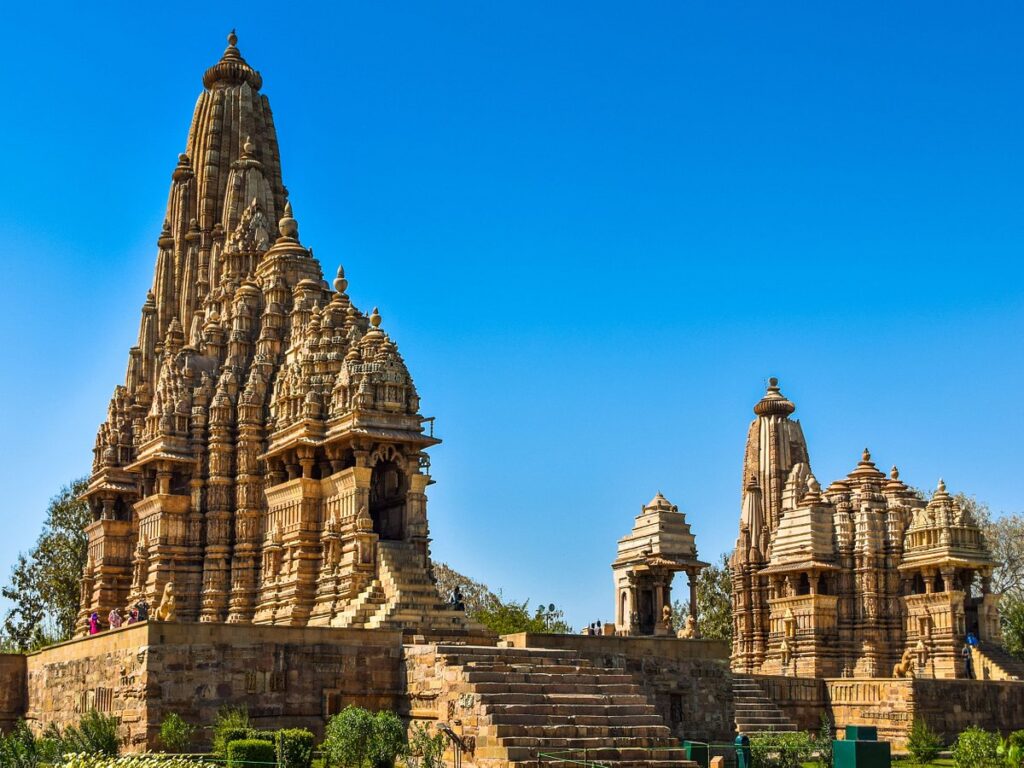
Khajuraho – Madhya Pradesh
“Where stone breathes, and every carving whispers a thousand-year-old story.”
1. Introduction – More Than Just Temples
Nestled in the heart of Madhya Pradesh, Khajuraho is a UNESCO World Heritage Site celebrated for its exquisite temple architecture and intricate sculptures. Built between 950 and 1050 CE during the reign of the Chandela dynasty, these temples are a living testimony to India’s mastery in stone carving, blending spirituality, sensuality, mythology, and daily life in a way no other place on earth does.
Today, Khajuraho is not just an archaeological site — it’s a window into an era when art was free, human emotions were celebrated, and religion embraced beauty without shame.
2. History – Rise, Decline, Rediscovery
The Chandela Era (9th–13th Century)
The Chandela Rajputs ruled the Bundelkhand region and were patrons of art and culture.
Over 85 temples were built in Khajuraho, dedicated to Hindu gods (Shiva, Vishnu, Devi) and Jain Tirthankaras.
These temples weren’t just places of worship — they were centers of education, art, dance, and spiritual discourse.
Decline (13th–18th Century)
With the decline of the Chandela dynasty and the arrival of Islamic rule in the region, many temples fell into neglect.
Dense forests grew around them, protecting the structures but hiding them from the world for centuries.
Rediscovery (1838)
British surveyor T.S. Burt stumbled upon the temples while exploring the area.
His reports and drawings sparked worldwide interest in Khajuraho’s “erotic sculptures” — but over time, historians emphasized the holistic philosophy behind the art.
3. The Art & Symbolism of Khajuraho Temples
Khajuraho is often misrepresented as “erotic temples,” but that’s only a small part of the story.
In truth:
Only 10% of the sculptures depict sensual themes.
The rest portray deities, mythological scenes, dancers, musicians, warriors, and animals.
Symbolism:
The erotic figures represent kama (desire) — one of the four goals of life in Hindu philosophy (dharma, artha, kama, moksha).
They’re placed on outer walls, symbolizing that one must leave desires outside before entering the sacred space.
4. Architectural Marvel
Nagara Style: Curvilinear towers (shikharas) that rise like a mountain peak.
Sandstone Craftsmanship: Temples were built without mortar — the stones were interlocked with precision.
Three Zones:
Western Group – The most famous and well-preserved (Kandariya Mahadev, Lakshmana, Vishwanath temples).
Eastern Group – Mainly Jain temples.
Southern Group – More isolated but equally beautiful (Duladeo, Chaturbhuj temples).
5. Must-Visit Temples
Kandariya Mahadev Temple – Dedicated to Lord Shiva, with over 800 sculptures, some over 1m high.
Lakshmana Temple – Dedicated to Vishnu; one of the oldest in the complex.
Chitragupta Temple – Dedicated to Surya (Sun God).
Adinath Temple – Jain temple with ornate carvings.
6. Festivals & Cultural Life
Khajuraho Dance Festival (Feb–Mar) – Classical dancers from all over India perform with the temples lit up as a backdrop.
Local crafts: Stone carvings, tribal art, and handwoven textiles reflect Bundelkhand’s heritage.
7. Best Time to Visit
October to March – Pleasant weather for sightseeing.
Avoid summer (April–June) when temperatures can exceed 40°C.
Monsoon (July–Sept) brings greenery but heavy rains can affect travel.
8. Timings & Entry Fees
Open: Sunrise to sunset (6:00 AM – 6:00 PM).
Entry Fee:
Indians: ₹40 (for Western Group)
Foreigners: ₹600
Children under 15: Free
Eastern & Southern groups often have no entry fee.
9. Travel Tips
How to Reach:
Nearest airport: Khajuraho Airport (domestic, limited flights).
Nearest major rail: Jhansi (175 km) or Khajuraho Railway Station.
Stay: Heritage hotels, mid-range lodges, and boutique resorts near the site.
Guides: Hire licensed guides for deep historical insight — they often share fascinating temple legends.
Photography: Tripods not allowed without special permission.
10. Why Khajuraho is Unforgettable
Khajuraho is not just about sculptures — it’s about an ancient worldview where spirituality, nature, and human emotions were all seen as parts of the same divine design.
Here, every stone tells a story — from celestial dancers frozen mid-spin to lovers entwined in an eternal embrace, from fierce gods in battle to gentle depictions of daily village life. It’s a place where art, history, and philosophy meet under the open Bundelkhand sky.
(16). Mysuru – (Karnataka)
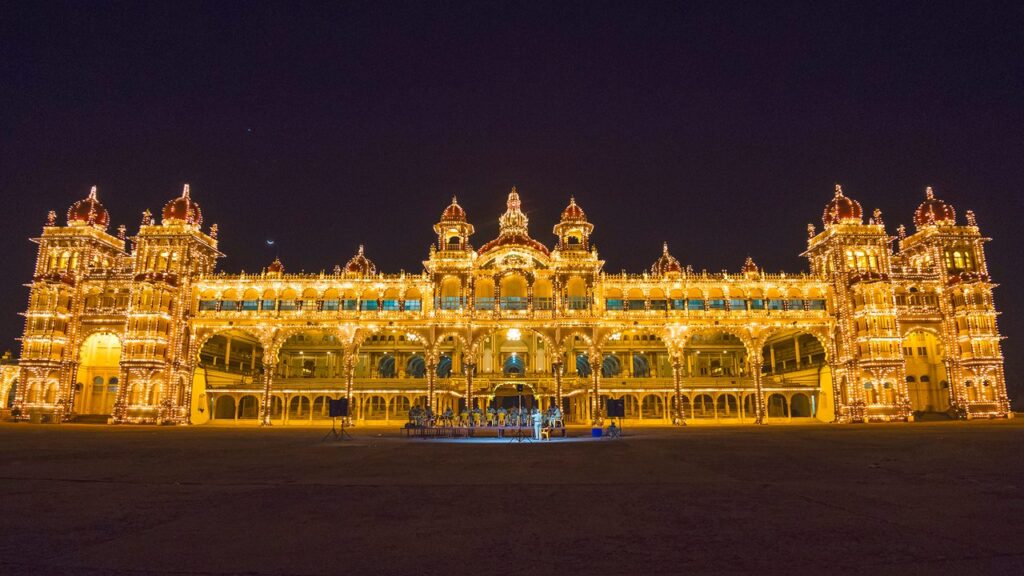
Mysuru – Karnataka
“The City Where Royalty Still Lives in Every Street”
1. Introduction – The Soul of Karnataka
Set at the foot of the Chamundi Hills, Mysuru is more than just a city — it’s a living museum of Karnataka’s regal past. Once the seat of the Wadiyar dynasty for over six centuries, Mysuru blends palatial architecture, age-old traditions, sandalwood scents, silk markets, and the rhythmic beats of classical dance and music.
Visitors often say Mysuru doesn’t just show you history — it immerses you in it. The city still carries that calm dignity of a place that once ruled an entire kingdom.
2. History – A Royal Chronicle
The Wadiyar Era
The Wadiyars came to power in 1399 CE, turning Mysuru into the capital of their kingdom.
They were patrons of art, music, literature, and temple architecture.
The dynasty encouraged cultural festivals, which laid the foundation for Mysuru Dasara, still celebrated grandly today.
Hyder Ali & Tipu Sultan (1761–1799)
In the late 18th century, Hyder Ali, the commander-in-chief, and later his son Tipu Sultan, took control.
Tipu Sultan modernized the army, engaged in fierce battles against the British, and was called the Tiger of Mysore.
After Tipu’s death in 1799 during the Fourth Anglo-Mysore War, the British restored the Wadiyar monarchy but kept political control.
The Colonial Touch & Modern Times
Under British influence, Mysuru saw infrastructural growth — railways, colleges, hospitals.
Post-independence, Mysuru became part of Karnataka but retained its reputation as a heritage and cultural capital.
3. Architectural & Cultural Marvels
Mysore Palace
Heart of the city’s identity, built in Indo-Saracenic style with domes, arches, and stained glass.
Illuminated with nearly 100,000 bulbs every Sunday evening and during Dasara — a sight that draws thousands.
Interiors are a royal feast for the eyes — intricate carvings, painted ceilings, and gilded doors.
Chamundeshwari Temple
Perched on Chamundi Hills, dedicated to Goddess Chamundeshwari, the city’s guardian deity.
Offers panoramic views of Mysuru.
St. Philomena’s Church
Neo-Gothic structure inspired by Cologne Cathedral, with soaring spires and stained glass.
Jaganmohan Palace
Now an art gallery housing paintings by Raja Ravi Varma and artefacts from Mysuru’s golden era.
4. Festivals & Traditions
Mysuru Dasara
A 10-day royal festival held in September/October.
The palace is lit up, cultural performances take place, and a grand procession with decorated elephants marks the finale.
This tradition dates back to the 15th century, symbolizing the victory of good over evil.
Silk & Sandalwood
Mysuru silk sarees are world-famous for their quality and zari work.
Sandalwood carvings and incense production remain an integral part of local craft.
5. Food Scene
Mysore Pak – a rich sweet invented in the royal kitchens.
Mysore Masala Dosa – crispy, spiced perfection.
Filter Coffee – strong, aromatic South Indian coffee.
6. Best Time to Visit
October to March – Pleasant weather; perfect for sightseeing.
Dasara Season – The city is at its most festive, but also crowded.
Summers (April–June) can get hot; monsoon (July–Sept) brings lush greenery.
7. Timings & Entry Fees
Mysore Palace:
10:00 AM – 5:30 PM
Entry Fee: ₹70 (Indians), ₹300 (Foreigners), free for children under 10.
Palace Illumination: Sunday & Public Holidays, 7:00 PM – 8:00 PM (no extra charge).
Chamundeshwari Temple: 7:30 AM – 2:00 PM, 3:30 PM – 6:00 PM, 7:30 PM – 9:00 PM.
8. Travel Tips
How to Reach:
Airport: Mysuru Airport (domestic flights).
Rail: Well-connected from Bangalore, Chennai, Hyderabad.
Road: 3–4 hours from Bangalore via scenic highway.
Stay: Heritage hotels, luxury resorts, and budget lodges are available.
Shopping: Visit the Government Silk Factory and Cauvery Handicrafts Emporium for authentic souvenirs.
Explore Nearby: Brindavan Gardens (musical fountain show), Srirangapatna (Tipu’s capital), Ranganathittu Bird Sanctuary.
9. Why Mysuru is Unforgettable
Mysuru is like a chapter of Indian history you can walk through — every palace arch, temple gopuram, and street bazaar carries whispers of kings, queens, poets, and artisans. It’s a place where royalty still feels alive, not as a relic of the past but as a breathing part of the city’s present.
(17).Rann of Kutch – ( Gujarat )
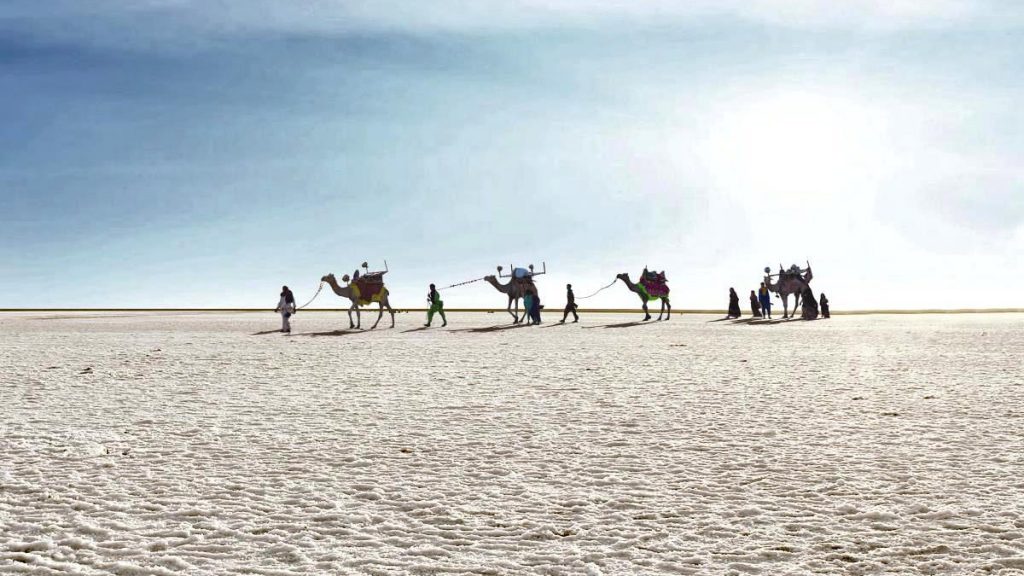
Rann of Kutch – Gujarat
“Where the Earth Turns to White and the Sky Becomes the Canvas”
1. Introduction – A White Wonderland
In the remote northwestern corner of Gujarat, the land opens up into a surreal spectacle — a vast white desert stretching endlessly to the horizon. This is the Great Rann of Kutch, one of the largest salt deserts in the world. By day, it dazzles like a sheet of diamonds under the scorching sun; by night, it glows mysteriously under the full moon.
The Rann is more than a natural wonder — it’s a blend of ancient cultures, vibrant festivals, migratory wildlife, and resilient communities who have made this harsh land their home.
2. A Glimpse into History
Ancient Trade Routes: Archaeological evidence shows that this region was part of the Indus Valley Civilization (Harappan sites like Dholavira lie nearby). Traders crossed this salt desert to connect India with Mesopotamia and Persia.
Legendary Kingdoms: The Kutch region was ruled by the Jadeja Rajputs for centuries, who built forts, palaces, and patronized crafts.
Natural Transformation: Geologists believe the Rann was once a shallow part of the Arabian Sea that got cut off due to tectonic shifts, leaving behind the salt flats we see today.
Modern Fame: In recent years, the Gujarat government has transformed the Rann into a major tourism hub, especially through the Rann Utsav.
3. The Landscape – Nature’s Artwork
Great Rann vs. Little Rann:
The Great Rann is famous for its endless salt flats.
The Little Rann is home to the Indian Wild Ass Sanctuary.
Seasonal Changes: During the monsoon, the desert floods and becomes inaccessible. As the water evaporates (October onward), a hard crust of salt remains, creating the iconic white desert.
Magical Moonlit Nights: A full moon night in the Rann feels like walking on silver — the salt reflects the moonlight, creating an ethereal glow.
4. Culture & Festivals – The Heartbeat of Kutch
Rann Utsav (November to February)
A cultural extravaganza showcasing Kutch’s music, dance, crafts, and cuisine.
Visitors stay in luxury tent cities set up in Dhordo village.
Camel rides, folk performances, handicraft bazaars, and star-gazing are major attractions.
Handicrafts & Artisans
The villages around the Rann, like Hodka, Nirona, and Bhujodi, are treasure troves of embroidery, bandhani tie-dye, leatherwork, and Rogan art.
Many artisans carry forward centuries-old traditions.
5. Wildlife & Nature
Flamingos & Migratory Birds: During winter, the Rann becomes a haven for flamingos, pelicans, cranes, and more.
Wild Ass Sanctuary: The Little Rann protects the endangered Indian Wild Ass.
Desert Flora & Fauna: Acacia trees, thorny bushes, desert foxes, and blue bulls survive in this arid ecosystem.
6. Best Time to Visit
November to February – The desert is dry, the weather is pleasant, and the Rann Utsav is in full swing.
Full Moon Nights – Particularly magical; book in advance as they sell out quickly.
Avoid monsoon (July–Sept) as the area floods.
7. Timings & Entry Fees
Permit Required: Since the Rann is close to the India-Pakistan border, visitors need a permit (available online or at Bhirandiyara checkpost).
Permit Fee: Around ₹100 per adult, ₹50 per child, plus vehicle charges.
Visiting Hours: Sunrise to sunset, but staying for moonlight viewing is possible with special arrangements.
8. Travel Tips
Getting There:
Nearest Airport: Bhuj (85 km from Dhordo).
By Train: Bhuj is the closest railway station.
By Road: State transport buses and taxis connect Bhuj to the Rann.
Stay: Tent cities in Dhordo during Rann Utsav; homestays and eco-resorts in nearby villages.
Clothing: Warm clothes for nights (temperatures can drop sharply), light cotton for daytime.
Footwear: Comfortable walking shoes; the salt can be hard on bare feet.
Photography: Early morning and late afternoon offer the best light for photos.
9. Why the Rann is Unforgettable
The Rann of Kutch is not just a destination; it’s a feeling — the silence of the desert broken only by the wind, the play of light on a white canvas, the warmth of Kutch’s people, and the rhythm of their folk songs under a starlit sky. It’s a place where time slows down, and the world feels infinite.
(18).Sikkim
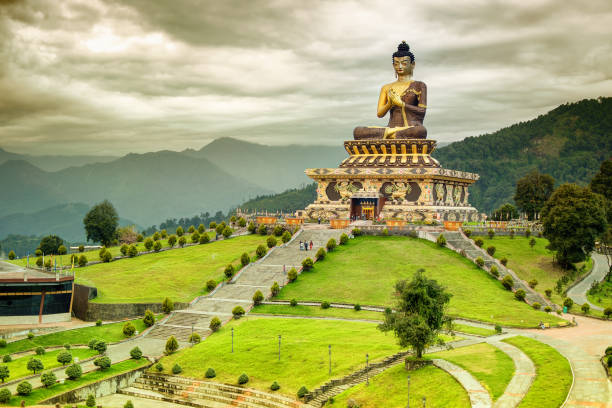
Sikkim – The Hidden Himalayan Kingdom
“Where Snow-Clad Peaks Meet Monasteries and Mystical Valleys”
1. Introduction – The Jewel of the Eastern Himalayas
High in the Eastern Himalayas, nestled between Nepal, Bhutan, and Tibet, lies Sikkim — India’s second smallest state but one of its most enchanting. With the mighty Kanchenjunga (the world’s third-highest peak) watching over it, Sikkim is a dreamscape of snow peaks, alpine meadows, rhododendron valleys, turquoise lakes, and ancient Buddhist monasteries.
This is a place where nature and spirituality merge, where prayer flags flutter in the mountain breeze, and where every turn on the road reveals a new wonder.
2. A Journey Through History
The Lepcha Roots: The earliest inhabitants were the Lepchas, who considered Kanchenjunga sacred and worshipped nature.
The Namgyal Kingdom: In the 17th century, the Namgyal dynasty established the Kingdom of Sikkim, with Tibetan influence shaping its culture and governance.
Buddhism’s Spread: The arrival of Tibetan lamas in the 1640s cemented Sikkim as a center for Vajrayana Buddhism.
Colonial Era: The British treated Sikkim as a buffer state between Tibet and India.
Merger with India: In 1975, Sikkim became the 22nd state of India, ending its monarchy but preserving its unique identity.
3. The Land of Many Wonders
Kanchenjunga & Beyond
The towering Kanchenjunga is visible from almost everywhere in Sikkim. Locals believe it is the guardian deity of the land.
Gurudongmar Lake
At 17,800 ft, it’s one of the highest lakes in the world. In winter, it freezes into a surreal mirror of ice, surrounded by snow peaks.
Yumthang Valley
Known as the Valley of Flowers of the East, it explodes in colors during spring with rhododendrons and wildflowers.
Nathula Pass
Once part of the historic Silk Route, this Indo-China border crossing is now a high-altitude tourist attraction.
Tsomgo Lake
A glacial lake at 12,000 ft, changing colors with the seasons, surrounded by legends.
4. Culture & Spirituality
Buddhist Monasteries: Sikkim is dotted with serene monasteries like Rumtek, Pemayangtse, and Tashiding, where monks chant to the rhythm of drums and horns.
Festivals:
Losar – Tibetan New Year celebrated with dances and rituals.
Saga Dawa – Honoring the birth, enlightenment, and death of Buddha.
Pang Lhabsol – Dedicated to Kanchenjunga, with masked dances and vibrant costumes.
Cuisine: Momos, thukpa, phagshapa (pork stew), and millet-based drinks reflect Tibetan and Nepali influences.
5. Wildlife & Nature
Khangchendzonga National Park – A UNESCO World Heritage Site with snow leopards, Himalayan black bears, red pandas, and a range of alpine flora.
Birdwatching Paradise – Sikkim is home to over 550 species of birds, including blood pheasants and Himalayan monals.
6. Best Time to Visit
Spring (March–May): Flowers bloom across the valleys.
Autumn (September–November): Clear skies, perfect for mountain views.
Avoid Monsoon (June–August): Heavy rains cause landslides.
Winter (Dec–Feb): Snowfall in high-altitude areas, but very cold.
7. Timings & Entry Requirements
Inner Line Permit (ILP): Required for foreign tourists (easily obtainable in Gangtok or at entry points).
Protected Area Permits: Needed for Nathula, Gurudongmar, Yumthang — available through registered tour operators.
Visiting Hours: Most sites open between 8 AM – 5 PM, depending on location.
8. Travel Tips
Getting There:
Nearest Airport: Pakyong Airport (limited flights) or Bagdogra (West Bengal).
By Train: Nearest station is New Jalpaiguri (NJP).
Road: From Siliguri or NJP via shared jeeps/taxis.
Stay: Gangtok offers hotels and resorts; homestays are common in North Sikkim.
Acclimatization: High-altitude destinations like Gurudongmar require slow travel to prevent AMS (Acute Mountain Sickness).
Clothing: Layered clothing — weather changes rapidly.
Eco-Friendly Travel: Avoid plastic bottles, respect sacred sites, and don’t litter.
9. Why Sikkim Captures the Soul
Sikkim is not just about scenic beauty — it’s about inner peace. Standing before Kanchenjunga at sunrise, hearing the chants from a centuries-old monastery, or sipping butter tea in a remote village, you feel a quiet transformation. It’s a land where every moment feels like a prayer.
(19).Munnar
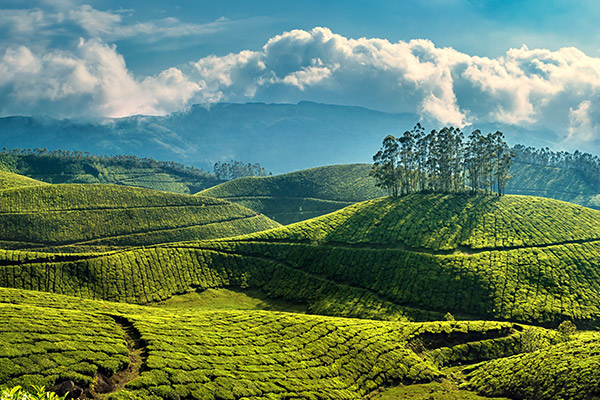
Munnar – Kerala’s Misty Crown of the Western Ghats
“Where rolling tea gardens meet clouds and the air smells of cardamom”
1. Introduction – The Hills That Whisper Stories
Nestled at an altitude of 1,600 meters in the Western Ghats, Munnar is Kerala’s most romantic hill station — a place where the mountains wear a green carpet of tea plantations, mist dances in the morning air, and waterfalls tumble through the valleys. The name “Munnar” means “Three Rivers”, referring to the confluence of the Muthirapuzha, Nallathanni, and Kundala rivers that cradle the town.
2. The Story of Munnar – From Wild Hills to Tea Heaven
Long before Munnar became a honeymooner’s dream, it was home to the Muthuvan tribal community, who lived in harmony with the thick forests and wild elephants. In the late 19th century, British planters discovered the region’s potential for tea cultivation.
Colonial Era Beginnings: In the 1870s, Scottish planter John Daniel Munro obtained the land from the local royal family, the Poonjar Chief, and began large-scale tea plantations.
Birth of Tata Tea Legacy: The British set up estates, built bungalows, and introduced the railway system for transport. Later, Tata Tea (now Kanan Devan Hills Plantations) became a symbol of Munnar’s tea empire.
World Wars & Trade: During the World Wars, Munnar’s tea supplied not just India but Britain’s war demands, boosting its economy.
Even today, the colonial charm lives on in Munnar’s heritage hotels and old bungalows.
3. Natural Beauty & Major Attractions
Eravikulam National Park
Home to the endangered Nilgiri Tahr and rolling grasslands, this park is also famous for the Neelakurinji flower, which blooms once every 12 years, turning the hills purple-blue.
Tea Gardens & Tea Museum
Endless emerald slopes of manicured tea bushes surround Munnar. The Tata Tea Museum showcases the history and processing of tea, with steaming cups ready for visitors.
Mattupetty Dam & Lake
A peaceful spot for boating with beautiful reflections of the surrounding hills.
Top Station
At 1,880 meters, it’s the highest point in Munnar, offering panoramic views of the Western Ghats and the plains of Tamil Nadu.
Attukal & Lakkam Waterfalls
Natural cascades surrounded by lush forests, perfect for photography and picnics.
Kolukkumalai Tea Estate
The world’s highest tea plantation, producing some of the most aromatic tea in India.
4. Culture & People
Munnar’s culture is a blend of Malayali traditions, British colonial influences, and tribal heritage. Locals are warm and welcoming, often inviting visitors to taste spiced chai or traditional Kerala dishes like puttu and kadala curry.
Festivals here include:
Onam – The harvest festival with boat races, flower carpets, and feasts.
Vishu – New Year celebration in Kerala.
Tea Festival – Celebrating Munnar’s tea legacy.
5. Best Time to Visit
September to May: Cool, pleasant weather — perfect for sightseeing.
Monsoon (June–August): Heavy rainfall, but ideal for lush greenery and fewer tourists (good for nature photographers).
Winter (Dec–Feb): Cold mornings and evenings, with misty landscapes.
6. Timings & Entry Fees
Eravikulam National Park: 7:00 AM – 4:00 PM | Fee: ₹200 (Indians), ₹500 (Foreigners)
Tea Museum: 9:00 AM – 4:00 PM (Closed Mondays) | Fee: ₹125
Mattupetty Dam: 9:30 AM – 5:00 PM | Fee: Nominal boating charges
No entry fee for most tea gardens, though some estates offer guided tours for ₹100–₹200.
7. Travel Tips
Getting There:
Nearest Airport: Cochin International Airport (110 km)
Nearest Railhead: Aluva (110 km) or Ernakulam (130 km)
By Road: Well-connected via NH 85 from Kochi and Tamil Nadu.
Stay Options: From luxury resorts overlooking tea gardens to budget-friendly homestays in the valleys.
What to Pack: Light woollens (even in summer nights), raincoat if visiting in monsoon.
Local Experience: Try spice plantation walks and fresh cardamom tea from roadside stalls.
Eco-Friendly Travel: Avoid plastic waste; Munnar’s beauty depends on keeping it pristine.
8. Why Munnar Feels Like a Dream
Munnar isn’t just a hill station — it’s a living postcard. Every bend in the road opens up to breathtaking views: a tea picker silhouetted against the mist, a brook rushing over mossy stones, a rainbow arching over a waterfall. It’s the kind of place where you slow down, sip your tea, and simply let the mountains heal you.
(20) . Udaipur – ( Rajasthan )
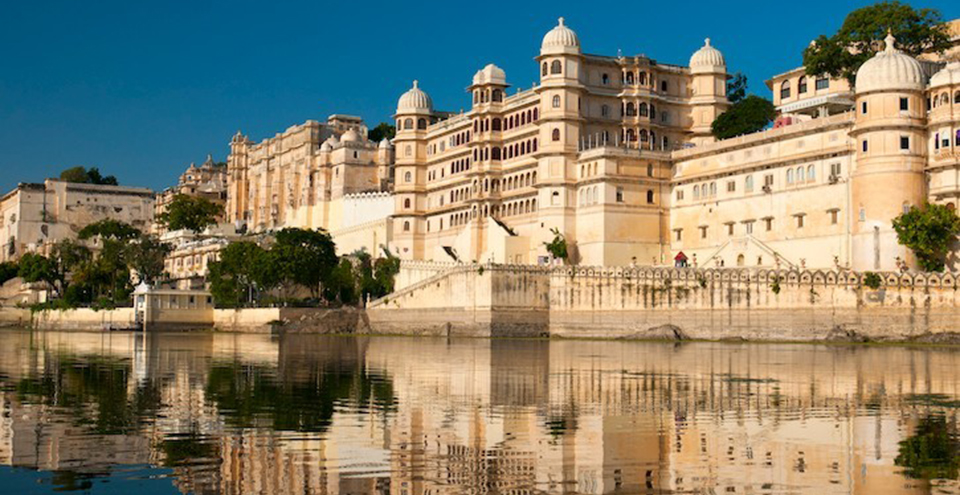
Udaipur – The City of Lakes and Eternal Romance
“Where palaces float on water and sunsets paint the Aravallis in gold”
1. Introduction – A City Born of Royal Dreams
Udaipur, often called the Venice of the East, sits cradled by the Aravalli Hills in southern Rajasthan. With shimmering lakes, grand palaces, narrow old streets, and a regal charm that refuses to fade, this city is one of India’s most romantic destinations. Every corner seems to hum with tales of Rajput bravery, royal love stories, and cultural opulence.
2. The Story of Udaipur – From War to Wonder
The history of Udaipur begins in the mid-16th century when Maharana Udai Singh II of Mewar founded the city in 1559.
Birth of a Capital: Chittorgarh, the earlier Mewar capital, had been repeatedly attacked by the Mughals. Guided by a hermit’s prophecy, Maharana Udai Singh moved the capital to the safer, lake-rich valley surrounded by the Aravallis. Thus, Udaipur was born.
Rajput-Mughal Relations: While neighboring Rajput kingdoms allied with the Mughals, Mewar maintained proud resistance. The city became a symbol of Rajput honor and independence.
British Raj Era: Udaipur entered a treaty with the British in 1818 but retained its internal autonomy. The royals continued building palaces, gardens, and temples, leaving behind a legacy of architectural marvels.
Post-Independence: After 1947, Udaipur merged into the state of Rajasthan but remained a cultural crown jewel. Today, it blends old-world charm with luxury tourism.
3. Major Attractions & Experiences
City Palace
A sprawling complex overlooking Lake Pichola, blending Rajput, Mughal, and European architecture. Its courtyards, ornate balconies, and museums narrate the story of Mewar’s glory.
Lake Pichola & Lake Palace
Lake Pichola, built in 1362, is famous for boat rides at sunset. Floating in the middle is the Taj Lake Palace, once a royal summer retreat, now one of the most luxurious hotels in the world.
Jag Mandir
Another island palace, said to have inspired the Taj Mahal’s design. Perfect for evening dining with lake views.
Fateh Sagar Lake
Known for its peaceful charm and the Nehru Park island garden.
Saheliyon-ki-Bari
A beautiful garden built for the queen’s maidens, with fountains, lotus pools, and marble pavilions.
Bagore Ki Haveli
An 18th-century haveli turned museum showcasing royal artifacts and traditional Rajasthani dance performances in the evening.
Monsoon Palace (Sajjangarh)
Perched atop a hill, offering panoramic views of the city and lakes, especially enchanting at sunset.
4. Culture & Festivals
Udaipur’s culture is steeped in Rajputana traditions, folk music, colorful handicrafts, and festivals.
Mewar Festival (March/April): Celebrates spring with processions, folk dances, and boat rides.
Shilpgram Crafts Fair: A vibrant exhibition of Rajasthani arts, crafts, and performances.
Rangoli & Puppet Shows: Common in havelis and cultural centers, reflecting local artistry.
5. Best Time to Visit
October to March: Pleasant winter climate, ideal for sightseeing.
Monsoon (July–September): Lush greenery and cooler weather, but occasional heavy rains.
Summer (April–June): Hot and dry — less ideal, but great for fewer crowds and discounts.
6. Timings & Entry Fees
City Palace: 9:30 AM – 5:30 PM | Fee: ₹300 (Indians), ₹700 (Foreigners)
Bagore Ki Haveli Dance Show: 7:00 PM – 8:00 PM | Fee: ₹90 (Indians), ₹150 (Foreigners)
Boat Ride on Lake Pichola: ₹400–₹800 depending on time and type.
7. Travel Tips
Getting There:
Nearest Airport: Maharana Pratap Airport (22 km)
Nearest Railhead: Udaipur City Railway Station (well connected to major cities)
Road: Good connectivity via NH 76 and NH 8.
Local Transport: Auto-rickshaws, taxis, and even heritage walks through the old city.
Where to Stay: Luxury lovers can stay in heritage hotels like Taj Lake Palace or The Oberoi Udaivilas; budget travelers will find charming havelis in the old city.
Shopping: Miniature paintings, silver jewelry, Rajasthani textiles, and handicrafts.
Food to Try: Dal Baati Churma, Laal Maas, and Ghevar.
8. Why Udaipur Steals Hearts
From dawn to dusk, Udaipur feels like living in a painting. Mornings begin with the sun glistening on the lakes, afternoons are spent wandering marble palaces, and evenings end with candlelit boat rides as the city lights shimmer on the water. It’s no wonder poets, artists, and filmmakers find endless inspiration here — Udaipur is, and always will be, a love letter written in stone and water.