

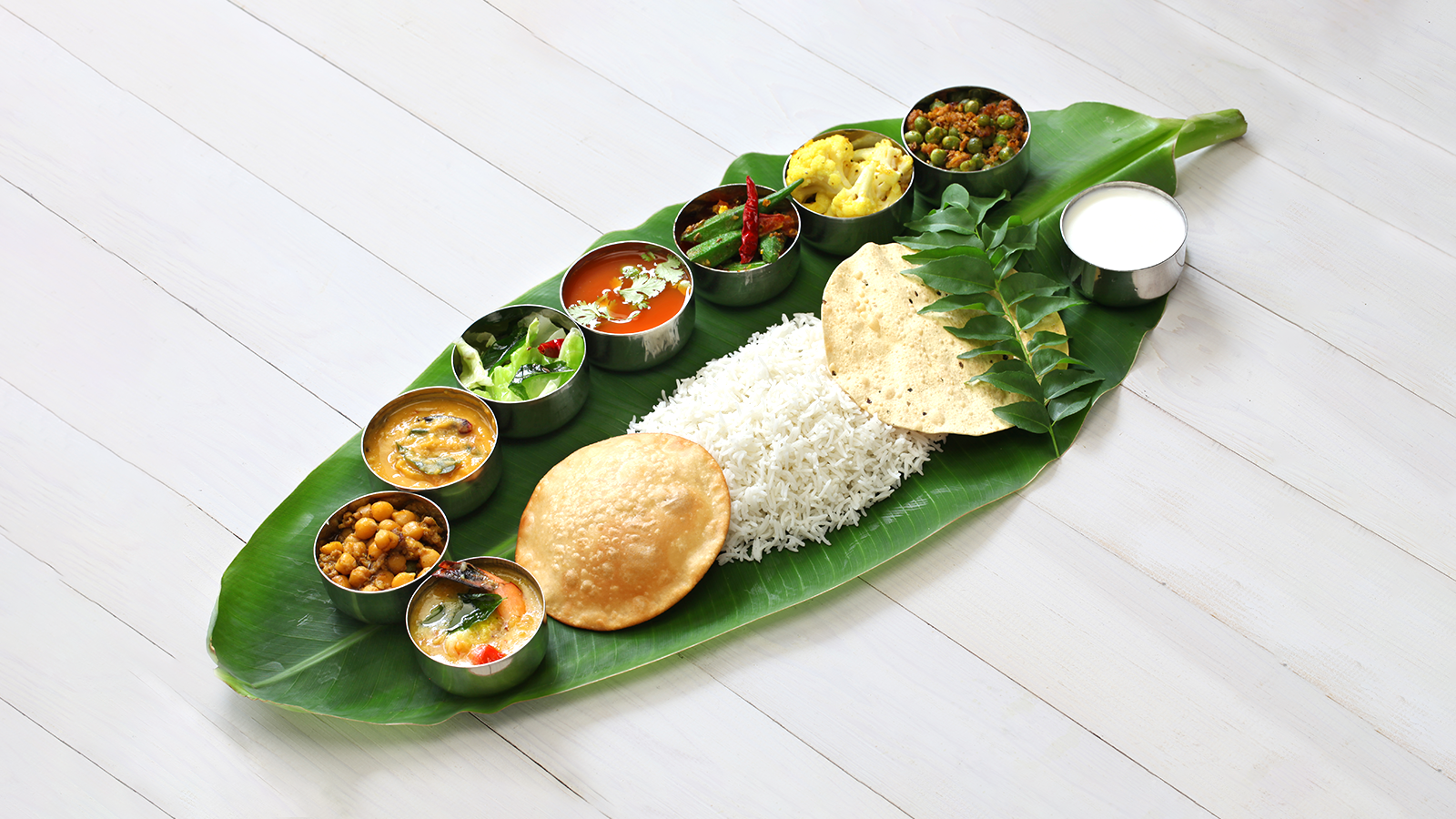
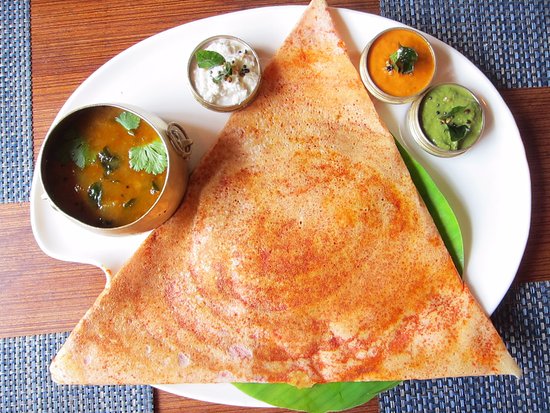
🍛 Masala Dosa (Karnataka) – The Iconic South Indian Delight
📖 Most Loved South Indian Food: Introduction
Most Loved South Indian Food: Masala Dosa is one of the most popular and loved South Indian dishes, originating from Karnataka. It is a crispy, golden-brown rice and lentil crepe, filled with a spiced potato-onion curry, and served with coconut chutney and sambar. Light yet filling, crunchy on the outside and soft inside, Masala Dosa is not just food—it’s an experience that represents the essence of South Indian cuisine.
🎭Most Loved South Indian Food: Cultural Significance
Masala Dosa holds a special place in Karnataka’s culinary heritage and has spread across India and the world as a symbol of South Indian food. In Karnataka, breakfast is incomplete without dosa, and Masala Dosa is the most celebrated version. It is also commonly served during festivals, weddings, and special occasions, symbolizing hospitality and tradition. The dish beautifully reflects the South Indian way of balancing nutrition, flavor, and tradition.
🥦Most Loved South Indian Food: Key Ingredients
-
Rice & Urad Dal (Black Gram Lentils) – for the dosa batter
-
Fenugreek Seeds – aids fermentation and adds flavor
-
Potatoes – for the spiced filling
-
Onions, Green Chilies, Ginger – for the masala base
-
Turmeric & Mustard Seeds – for color and tempering
-
Curry Leaves & Coriander – for aroma and garnish
-
Oil / Ghee – for crisping the dosa
👩🍳Most Loved South Indian Food: Preparation Method
1. Making the Batter
-
Rice and urad dal are soaked, ground, and fermented overnight to create a smooth batter.
2. Preparing the Potato Masala
-
Boiled potatoes are mashed and cooked with sautéed onions, green chilies, ginger, mustard seeds, turmeric, and curry leaves.
3. Making the Dosa
-
A ladle of fermented batter is spread thinly on a hot tawa (griddle) into a round crepe.
-
Drizzled with oil or ghee until golden brown and crispy.
4. Assembling
-
A portion of potato masala is placed inside the dosa.
-
Folded into a roll or triangle and served hot.
🍴 Serving Suggestions
-
Served with fresh coconut chutney, tomato chutney, and piping hot sambar.
-
Best enjoyed hot and crisp, straight from the tawa.
-
Can be paired with filter coffee for a complete South Indian breakfast experience.
❤️ Why Everyone Likes It
-
Perfect Balance – crispy dosa + soft masala filling.
-
Nutritious & Wholesome – protein-rich batter with a hearty potato curry.
-
Universal Appeal – loved by kids and adults alike.
-
Comfort Food – warm, flavorful, and satisfying any time of the day.
-
Global Fame – Masala Dosa is now recognized worldwide as the face of South Indian cuisine.
🌟 Final Thought
Masala Dosa is more than just a dish—it’s a cultural ambassador of Karnataka and South India. From small roadside eateries to fine-dining restaurants, Masala Dosa remains timeless, delicious, and deeply loved. Its crispy texture, flavorful filling, and soulful accompaniments make it a dish that truly represents the heart of South Indian cuisine.
🍲 Sambar (Tamil Nadu) – The Soul of South Indian Cuisine
📖 Introduction
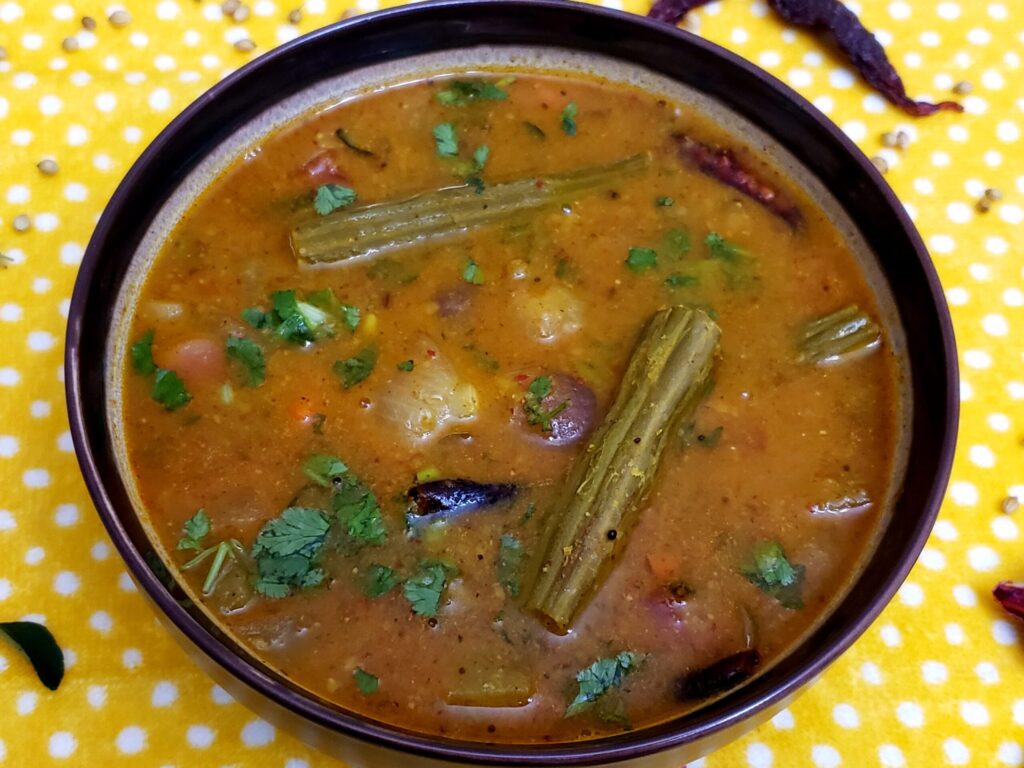
Sambar is a flavorful and tangy lentil-based stew that forms the backbone of South Indian cuisine, especially in Tamil Nadu. Made with toor dal (pigeon peas), tamarind, and a medley of vegetables, it is infused with a unique spice blend called sambar powder. Known for its rich aroma, balanced taste, and comforting qualities, sambar is more than just food—it’s an emotion for millions in South India.
🎭 Cultural Significance
In Tamil households, sambar is a daily staple, served with rice, idli, dosa, or vada. It is deeply rooted in tradition and is also a must-have dish during weddings, festivals, and temple feasts. Sambar represents the South Indian philosophy of balance in food—a mix of proteins, vegetables, spices, and tanginess. Each region in South India has its own version—Arachuvitta Sambar (with freshly ground spices), Onion Sambar, Drumstick Sambar, etc.—making it a dish that unites yet diversifies the South Indian culinary identity.
🥦 Key Ingredients
-
Toor Dal (Pigeon Pea Lentils) – base for the stew
-
Tamarind Pulp – gives tangy flavor
-
Mixed Vegetables – drumstick, pumpkin, okra, brinjal, carrots, beans, etc.
-
Sambar Powder – a roasted spice mix of coriander, cumin, fenugreek, dried chilies, etc.
-
Curry Leaves & Mustard Seeds – for tempering
-
Turmeric & Asafoetida (Hing) – for color and aroma
-
Ghee or Oil – for richness
👩🍳 Preparation Method
1. Cooking the Dal
-
Toor dal is pressure-cooked until soft and mashed to form a creamy base.
2. Preparing Tamarind Extract
-
Tamarind is soaked in warm water, pulp is extracted, and added for tanginess.
3. Adding Vegetables
-
Vegetables are simmered in tamarind water until tender.
4. Flavoring with Sambar Powder
-
The spice mix (sambar powder) is added for depth and aroma.
5. Tempering (Tadka)
-
Mustard seeds, curry leaves, and dried red chilies are tempered in hot ghee/oil and poured over the sambar.
🍴 Serving Suggestions
-
Traditionally served with steamed rice and a dollop of ghee.
-
Also pairs beautifully with idli, dosa, medu vada, and pongal.
-
Served hot, often accompanied by papad or poriyal (dry vegetable stir-fry) on the side.
❤️ Why Everyone Likes It
-
Comforting & Wholesome – warm, tangy, and nourishing.
-
Nutritious – packed with protein, fiber, and essential vitamins.
-
Versatile – pairs with almost every South Indian dish.
-
Customizable – every household has its own secret recipe.
-
Aromatic & Flavorful – the balance of spices and tamarind is addictive.
🌟 Final Thought
Sambar is the soul food of Tamil Nadu and South India, symbolizing warmth, comfort, and tradition. Its perfect blend of dal, tamarind, vegetables, and spices makes it both healthy and delicious. Whether served at a temple feast, a wedding, or a simple home-cooked meal, sambar is a dish that truly captures the essence of South Indian culinary culture.
🍽️ Idli & Vada – The Perfect South Indian Breakfast Combo
📖 Introduction
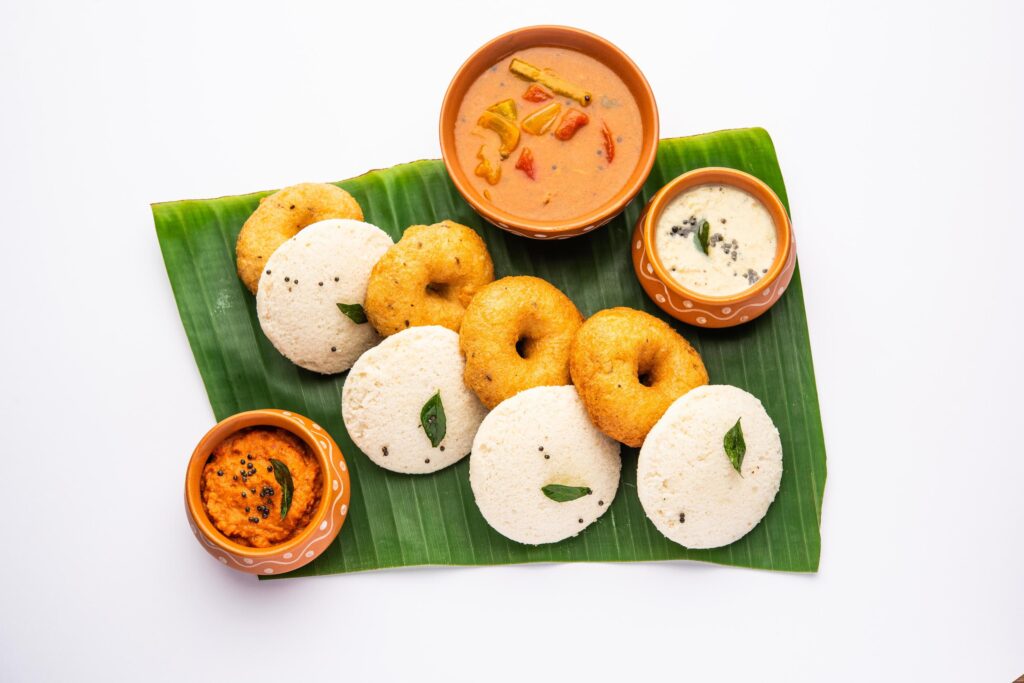
Idli and Vada together form the quintessential South Indian breakfast, loved for its balance of lightness and indulgence. Idli is a soft, fluffy steamed rice-lentil cake, while Vada is a deep-fried savory doughnut made from urad dal. When served with coconut chutney and sambar, this duo creates a harmonious meal that is both wholesome and satisfying.
🎭 Cultural Significance
In South India, especially Tamil Nadu and Karnataka, idli and vada are not just dishes but a daily ritual. They are served in homes, restaurants, temple kitchens, and even on banana leaves during festivals. Idli is considered a healthy, sattvic (pure) food, often recommended for children and the elderly. Vada, on the other hand, adds a crunchy, festive element, making the combo a favorite for special occasions, weddings, and feasts. The Idli-Vada-Sambar-Chutney platter is now famous worldwide as the face of South Indian breakfast.
🥦 Key Ingredients
For Idli:
-
Rice and urad dal (black gram lentils) – for the fermented batter
-
Fenugreek seeds – helps fermentation
-
Salt – for taste
For Vada:
-
Urad dal – soaked and ground into a fluffy batter
-
Green chilies, ginger, curry leaves – for flavor
-
Black pepper & cumin – for spice
-
Oil – for deep frying
Accompaniments:
-
Coconut chutney
-
Tomato chutney
-
Sambar
👩🍳 Preparation Method
Idli
-
Rice and urad dal are soaked, ground, and fermented overnight.
-
Batter is poured into idli molds and steamed until soft and fluffy.
Vada
-
Urad dal is soaked, ground into a smooth batter, and flavored with spices and herbs.
-
The batter is shaped into doughnut-like rounds with a hole in the center.
-
Deep-fried until golden and crispy on the outside, fluffy inside.
🍴 Serving Suggestions
-
Classic Combo – A plate of hot idlis, crispy vadas, coconut chutney, and sambar.
-
Special Touch – Idlis can be drizzled with ghee or podi (spiced lentil powder with oil).
-
Street Style – Vada dunked in sambar, known as Sambar Vada, is a crowd favorite.
-
Light Meal – Idli is often eaten for breakfast or dinner, while vada adds richness during festive meals.
❤️ Why Everyone Likes It
-
Perfect Contrast – soft and fluffy idli + crispy and crunchy vada.
-
Healthy & Nutritious – idli is steamed, low-fat, and easy to digest.
-
Flavor Explosion – when paired with chutney and sambar, it’s irresistible.
-
Versatile – can be eaten for breakfast, lunch, dinner, or snacks.
-
Global Fame – idli is even recognized as one of the world’s healthiest breakfasts.
🌟 Final Thought
Idli and Vada together create a complete South Indian meal experience. While idli comforts with its softness and health benefits, vada excites with its crunch and rich flavor. The combination, enhanced by chutney and sambar, is a timeless favorite that continues to win hearts across the globe.
🍗 Hyderabadi Biryani (Telangana) – The Crown Jewel of South Indian Cuisine
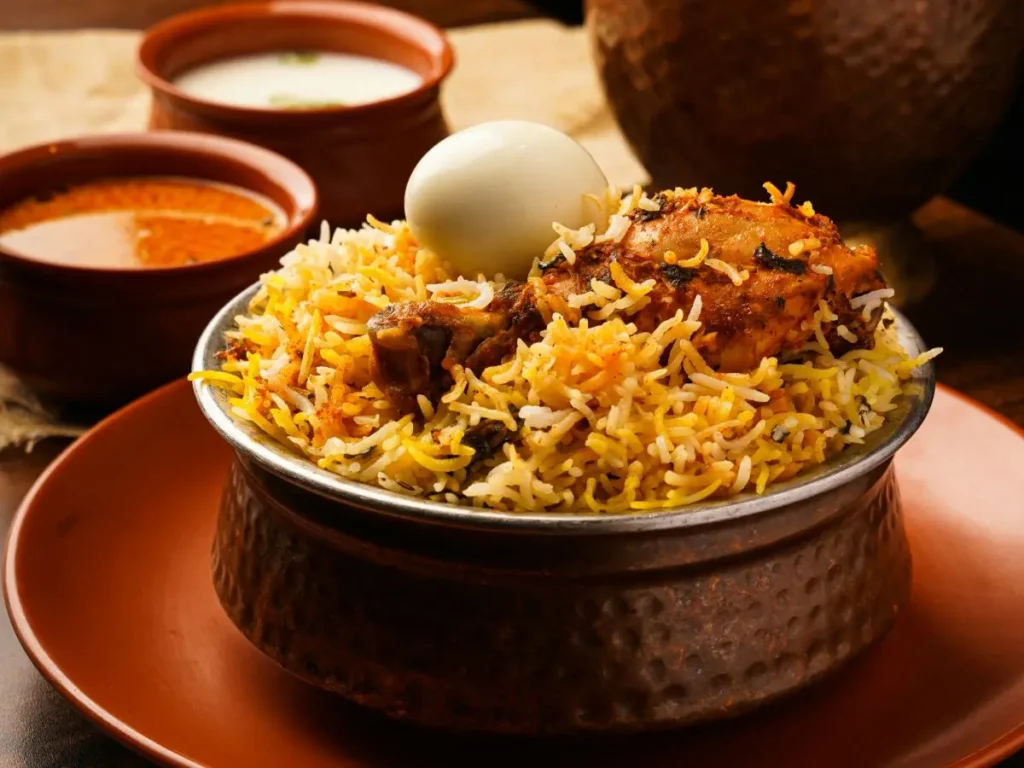
📖 Introduction
Hyderabadi Biryani is more than just a dish—it’s a royal legacy of flavor, history, and cultural fusion. Originating in the kitchens of the Nizams of Hyderabad, this biryani is renowned worldwide for its aromatic basmati rice, succulent meat, saffron, and a unique blend of spices. Rich, indulgent, and deeply satisfying, it is often regarded as the king of biryanis and the pride of Telangana.
🎭 Cultural Significance
Hyderabadi Biryani is not just food—it is a celebration of heritage. Introduced during the Mughal era, it evolved under the patronage of the Nizams, blending Mughlai, Turkish, and Telugu influences. Today, it is a centerpiece at weddings, festivals like Eid, and grand feasts. In Hyderabad, biryani is not an occasional treat—it’s a way of life. Locals and tourists alike consider tasting authentic Hyderabadi Biryani a must-have experience.
🥦 Key Ingredients
-
Basmati Rice – long-grain, aromatic rice
-
Meat (Chicken, Mutton, or sometimes Fish/Shrimp) – marinated with yogurt and spices
-
Yogurt & Lemon Juice – for tenderizing the meat
-
Spices – cloves, cardamom, cinnamon, bay leaves, and star anise
-
Green Chilies & Ginger-Garlic Paste – for heat and aroma
-
Fresh Herbs – mint and coriander leaves
-
Fried Onions (Birista) – adds sweetness and crunch
-
Saffron soaked in milk – for royal fragrance and golden hue
-
Ghee – for richness
👩🍳 Preparation Method
Hyderabadi Biryani is prepared in two famous styles:
1. Kacchi (Raw) Biryani
-
Meat is marinated with yogurt, spices, and herbs.
-
Layered raw with half-cooked rice in a handi (pot).
-
Sealed with dough and cooked on dum (slow steam) for hours.
-
The meat and rice cook together, absorbing all flavors.
2. Pakki (Cooked) Biryani
-
Meat is pre-cooked with spices and gravy.
-
Layered with parboiled rice and cooked on dum.
-
Less time-consuming but equally flavorful.
🍴 Serving Suggestions
-
Traditionally served with Mirchi ka Salan (a tangy green chili curry) and Raita (yogurt with onions, cucumbers, or boondi).
-
Garnished with fried onions, boiled eggs, and fresh herbs.
-
Often paired with salad and papad in festive feasts.
❤️ Why Everyone Likes It
-
Rich & Aromatic – the saffron, spices, and slow cooking create a fragrance that fills the room.
-
Balanced Flavors – spicy, tangy, and mildly sweet from onions.
-
Tender Meat – marinated for hours, it melts in the mouth.
-
Royal Feel – every bite feels like a taste of history.
-
Global Appeal – Hyderabadi Biryani is loved not just in India but across the world.
🌟 Final Thought
Hyderabadi Biryani is a culinary masterpiece that goes beyond food—it is an experience of culture, tradition, and royal indulgence. Every grain of rice, every piece of meat carries the legacy of centuries of refinement. For Telangana and India as a whole, it is not just a dish but a symbol of pride and identity.
🥥 Appam with Stew (Kerala) – The Gentle Hug of South Indian Cuisine
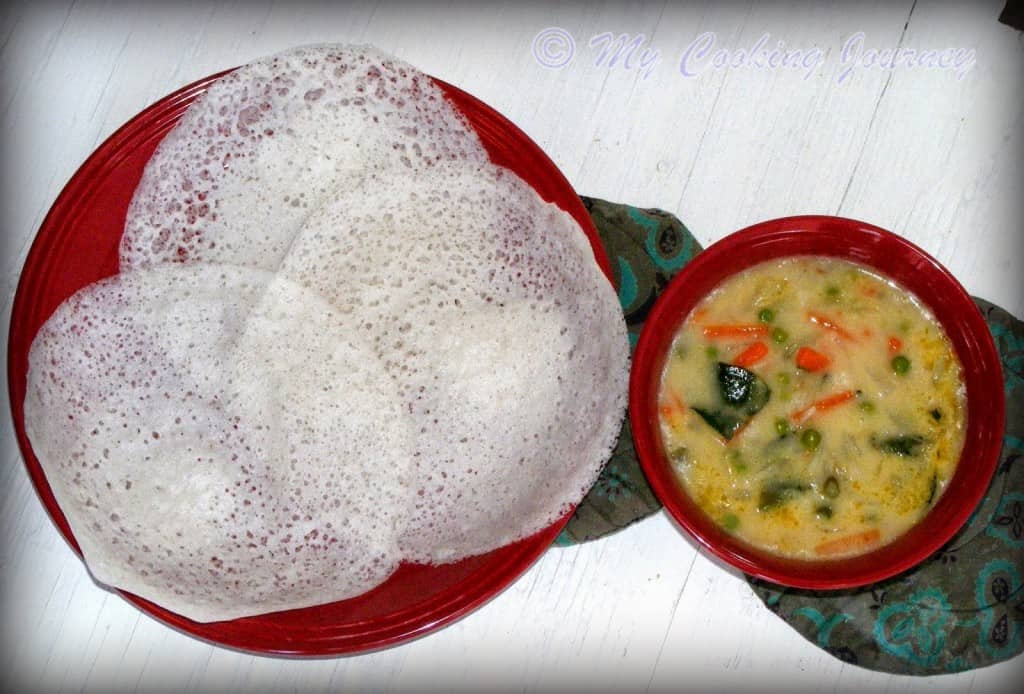
📖 Introduction
Appam with Stew is a classic Kerala delicacy that beautifully combines the fluffy, lacy, bowl-shaped pancake (Appam) with a fragrant, mildly spiced vegetable or meat stew simmered in coconut milk. This dish is the epitome of Kerala’s coastal flavors, offering a light yet deeply satisfying meal. With its delicate balance of taste and nutrition, it is often called the soul food of Kerala.
🎭 Cultural Significance
Appam has deep roots in Kerala’s Christian community, often prepared for Sunday breakfasts, weddings, and festive occasions like Christmas and Easter. However, over time, it has become a staple across Kerala households, loved by people of all communities. The stew, enriched with coconut milk, reflects the region’s abundant coconut cultivation and Kerala’s age-old connection with spices and trade routes. Together, appam with stew showcases Kerala’s tradition of blending simplicity with elegance.
🥦 Key Ingredients
For Appam:
-
Raw rice & parboiled rice – soaked and ground into batter
-
Grated coconut – for softness and flavor
-
Cooked rice – for extra fluffiness
-
Yeast or toddy (fermented palm sap) – for fermentation
-
Salt – to taste
For Stew (Vegetable / Chicken / Mutton):
-
Coconut milk – fresh, thick, and thin varieties
-
Vegetables (potato, carrot, beans, peas) or meat
-
Onions, green chilies, ginger – for aroma
-
Curry leaves – signature Kerala flavor
-
Spices – black pepper, cloves, cardamom, cinnamon
-
Coconut oil – for tempering
👩🍳 Preparation Method
Appam
-
Soak rice and grind with coconut, cooked rice, and yeast into a smooth batter.
-
Allow to ferment overnight.
-
Pour a ladle of batter into an appachatti (special curved pan), swirl to spread thin edges, leaving the center thick.
-
Cover and cook until the edges turn crispy and golden, while the center remains soft and fluffy.
Stew
-
Sauté onions, ginger, chilies, and curry leaves in coconut oil.
-
Add vegetables or meat and cook lightly with spices.
-
Pour in thin coconut milk, simmer until ingredients are tender.
-
Finish with thick coconut milk and a drizzle of coconut oil for richness.
🍴 Serving Suggestions
-
Serve hot appams with a generous bowl of stew.
-
Accompanied by coconut chutney or pickles for added punch.
-
Can be enjoyed at breakfast, dinner, or festive meals.
❤️ Why Everyone Likes It
-
Comforting & Light – stew is mildly spiced and soothing.
-
Perfect Balance – crisp edges of appam meet soft fluffy center, paired with creamy stew.
-
Healthy & Nutritious – coconut milk adds good fats, vegetables/meat provide protein and fiber.
-
Festive Charm – brings people together during celebrations.
-
Universal Appeal – even those new to South Indian food find it approachable and delightful.
🌟 Final Thought
Appam with Stew is more than just a dish—it’s an emotion of comfort and festivity in Kerala. It represents the region’s generosity, love for coconut, and skill in creating flavors that are gentle yet unforgettable. Whether on a festive morning or a quiet dinner, this dish never fails to warm the heart.
🍋 Puliyodarai (Tamarind Rice – Tamil Nadu) – The Tangy Soul of South India
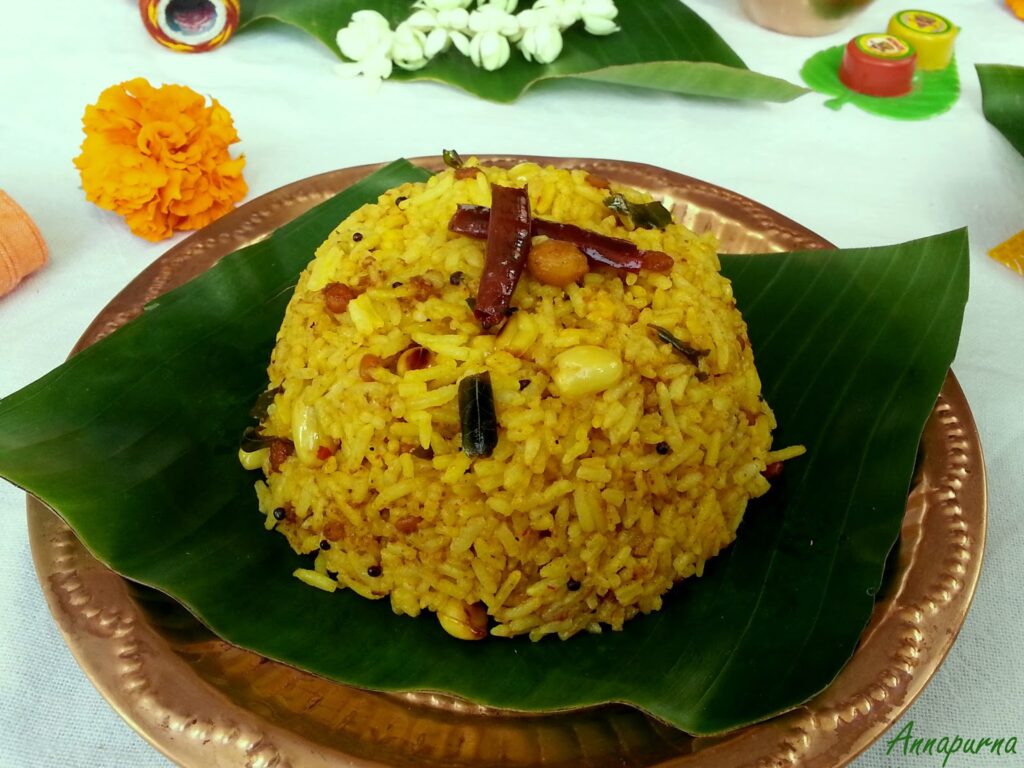
📖 Introduction
Puliyodarai, also known as Puliyodharai or Puliyogare, is a classic South Indian dish made with tamarind, spices, and rice. It’s tangy, slightly spicy, and deeply aromatic—a dish that awakens the taste buds instantly. Traditionally offered as prasadam (sacred food) in temples, Puliyodarai has a special place in Tamil Nadu’s food culture, celebrated for its simplicity and divine flavor.
🎭 Cultural Significance
In Tamil Nadu, Puliyodarai is closely tied to temple traditions and religious festivals. It is a staple prasadam in famous temples like Sri Ranganathaswamy Temple (Srirangam) and is considered both sacred and satisfying. Beyond temples, it’s also a travel-friendly dish—easy to carry, long-lasting, and loved during picnics or train journeys. Its humble yet bold flavor makes it an integral part of Tamil households, symbolizing purity, tradition, and community sharing.
🥦 Key Ingredients
-
Cooked Rice – fluffy and non-sticky
-
Tamarind Pulp – base for the tangy taste
-
Jaggery – balances the sourness
-
Dry Red Chilies – adds heat
-
Curry Leaves – signature South Indian aroma
-
Mustard Seeds, Fenugreek, Hing (Asafoetida) – for tempering
-
Sesame Seeds & Coriander Seeds – ground for earthy depth
-
Oil (preferably Gingelly / Sesame Oil) – enhances flavor
👩🍳 Preparation Method
-
Extract thick tamarind pulp and simmer with jaggery, salt, and spice powders until it thickens into a paste (Puliyodarai mix).
-
Temper mustard seeds, curry leaves, red chilies, and hing in sesame oil, then mix into the paste.
-
Add the tamarind paste to cooled rice and mix thoroughly.
-
Rest for a few minutes—the flavors deepen as the rice absorbs the tangy-spicy paste.
🍴 Serving Suggestions
-
Best served as a one-pot meal with papad, vadagam (sun-dried fryums), or curd on the side.
-
Often packed for lunchboxes, road trips, or pilgrimages.
-
Can also be served in banana leaves for a traditional touch.
❤️ Why Everyone Likes It
-
Explosion of Flavor – tangy, spicy, slightly sweet, and earthy.
-
Travel-Friendly – stays fresh for hours without refrigeration.
-
Temple Nostalgia – reminds people of divine prasadam.
-
Simple Yet Unique – uses minimal ingredients but creates a bold taste.
-
Comfort Food – every bite feels homely and satisfying.
🌟 Final Thought
Puliyodarai is not just a dish—it’s an experience of Tamil Nadu’s temple traditions, cultural heritage, and culinary wisdom. From temples to homes, from festivals to journeys, it continues to be a sacred comfort food that binds people together through its unforgettable tangy flavor.
🌿 Pesarattu (Andhra Pradesh) – The Green Gram Pancake of South India
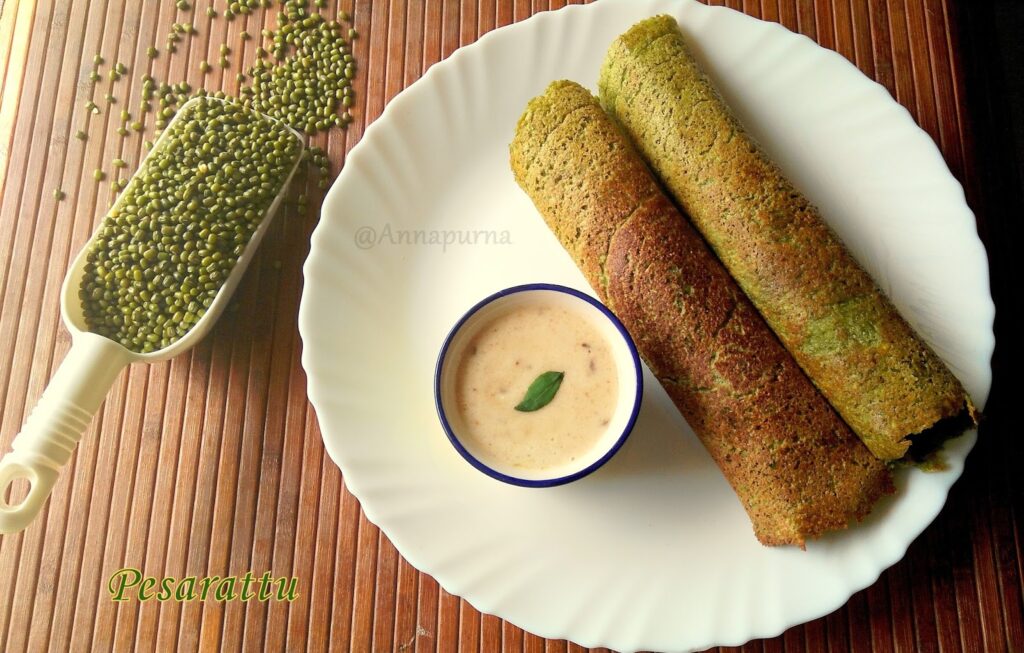
📖 Introduction
Pesarattu is a wholesome, protein-rich pancake made primarily from green gram (moong dal). Unlike the dosa, which is made with rice and urad dal, pesarattu is unique because it uses whole green gram, giving it a distinct green color, earthy taste, and high nutritional value. A breakfast staple in Andhra Pradesh, it is often served with upma inside (MLA Pesarattu), making it filling and indulgent.
🎭 Cultural Significance
In Andhra cuisine, pesarattu is more than a dish—it’s a symbol of health and tradition. It is popularly made during festivals, special occasions, and family gatherings, as it’s considered both nourishing and festive. The version known as MLA Pesarattu (stuffed with rava upma) is a specialty of Vijayawada and coastal Andhra, often served in tiffin centers. Pesarattu beautifully represents the balance of health and taste in Andhra cooking.
🥦 Key Ingredients
Whole Green Gram (Moong Dal) – soaked and ground into batter
Rice (optional) – for crispiness
Green Chilies & Ginger – for spice and flavor
Onions & Curry Leaves – finely chopped, sprinkled on top
Cumin Seeds & Coriander – earthy aroma
Oil / Ghee – for cooking
For MLA Pesarattu (special version):
Rava Upma – prepared separately with semolina, onions, and spices, stuffed inside the pesarattu.
👩🍳 Preparation Method
Soak whole green gram (and a little rice if desired) for a few hours.
Grind into a smooth batter with ginger, green chilies, and salt.
Heat a dosa tawa, pour a ladle of batter, and spread into a thin pancake.
Sprinkle chopped onions, green chilies, and cumin on top.
Drizzle oil or ghee, cook until golden and crisp.
For MLA Pesarattu – spread a spoonful of hot upma inside before folding.
🍴 Serving Suggestions
Traditionally served with ginger chutney (allam pachadi), which balances the earthy flavor with spicy tang.
Can also be paired with coconut chutney or sambar.
MLA Pesarattu makes a hearty breakfast or dinner meal on its own.
❤️ Why Everyone Likes It
Healthy & Nutritious – high in protein and fiber from green gram.
Light Yet Filling – great for both health-conscious eaters and food lovers.
Customizable – plain, with onions, or stuffed with upma.
Unique Flavor – earthy taste different from regular dosa.
Perfect Balance – crisp on the outside, soft inside.
🌟 Final Thought
Pesarattu reflects the essence of Andhra cuisine—nutritious, flavorful, and versatile. Whether eaten plain with chutney or as the indulgent MLA Pesarattu, this green gram pancake remains a beloved dish that bridges tradition and modern health trends. It’s not just food, it’s Andhra’s pride on a plate.
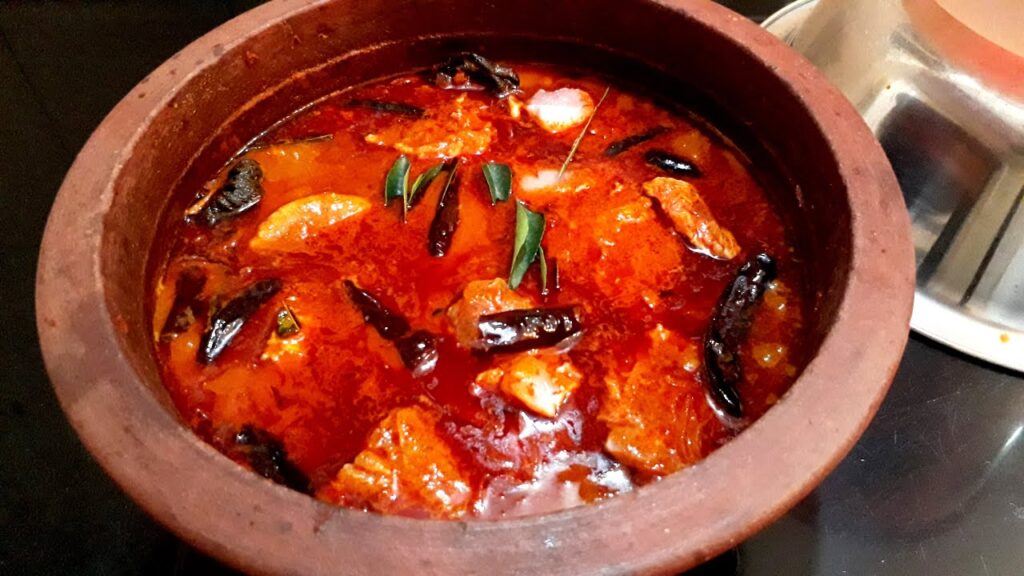
🐟 Meen Curry / Kerala Fish Curry (Kerala) – A Coastal Symphony of Flavors
📖 Introduction
Meen Curry, also known as Kerala Fish Curry, is one of the most iconic dishes from Kerala’s rich coastal cuisine. “Meen” means fish in Malayalam, and this curry beautifully captures the essence of the sea with its tangy, spicy, and aromatic flavors. Cooked with freshly ground spices, coconut (or sometimes without, depending on the region), and flavored with curry leaves and tamarind or kokum, this dish is a staple in Kerala households. Served hot with rice, it’s a perfect blend of traditional taste and nutritional richness.
🎭 Cultural Significance
Kerala, known as God’s Own Country, has a cuisine deeply tied to its geography—abundant coastlines and backwaters provide a wide variety of fish. Meen Curry is not just food, it’s a way of life for Malayalis. Every region in Kerala has its own variation:
Kottayam Style – fiery red curry with chili and kokum.
Malabar Style – often includes roasted coconut paste.
Trivandrum Style – uses coconut milk for a creamier texture.
It’s served daily in households and is a highlight in traditional Kerala Sadya (feast) when fish is included. Beyond being a dish, it’s a cultural connection to the land, sea, and heritage.
🥦 Key Ingredients
Fresh Fish – commonly seer fish, sardines, mackerel, or pearl spot (karimeen).
Coconut (grated or milk) – for creaminess (in some variations).
Tamarind / Kokum / Kudampuli (Malabar tamarind) – adds sourness.
Shallots & Garlic – base flavor.
Curry Leaves – quintessential to Kerala cuisine.
Mustard Seeds & Fenugreek Seeds – for tempering.
Spices – chili powder, turmeric, coriander, black pepper.
Coconut Oil – enhances authentic Kerala aroma.
👩🍳 Preparation Method
Clean and cut the fish into medium pieces.
Prepare a spice paste with chili, turmeric, coriander, and optionally coconut.
Heat coconut oil in a clay pot (manchatti), add mustard seeds, fenugreek, shallots, garlic, and curry leaves.
Add spice paste and tamarind/kokum for tanginess.
Pour water or coconut milk, bring to a boil, then gently add the fish pieces.
Simmer until the fish is tender and absorbs the flavors.
Rest the curry for a few hours before serving—it tastes even better after settling.
🍴 Serving Suggestions
Traditionally paired with steamed Kerala matta rice.
Also enjoyed with appam, puttu, or idiyappam.
A side of kappa (tapioca) with fish curry is another Kerala favorite.
❤️ Why Everyone Likes It
Authentic Coastal Flavor – combines spice, tang, and the freshness of fish.
Healthy & Nutritious – packed with protein, omega-3 fatty acids, and antioxidants.
Versatility – different regional versions suit every taste.
Clay Pot Magic – cooking in earthen pots enhances flavor.
Balanced Taste – spicy, sour, and savory in harmony.
🌟 Final Thought
Kerala Fish Curry is more than a dish—it’s heritage served in a bowl. Whether fiery red or mellow with coconut milk, it reflects Kerala’s love for the sea, spices, and soulful cooking. A meal of meen curry with rice is not just filling, but also a cultural journey into Kerala’s coastal kitchens.
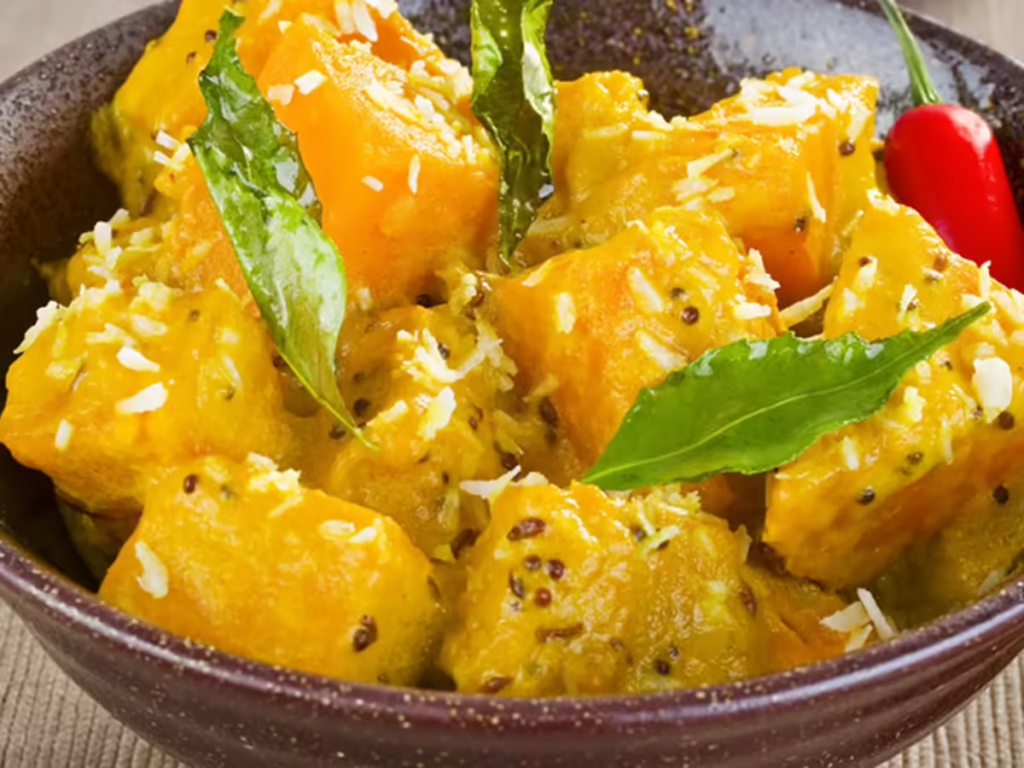
🍤 Erissery (Kerala) – A Festive Harmony of Flavor
📖 Introduction
Erissery is a wholesome and comforting dish from Kerala’s cuisine, often prepared during the grand feast called Onam Sadya. It is a mildly spiced curry made with pumpkin (mathanga) or yam, cooked with coconut paste and tempered with coconut oil, curry leaves, and mustard seeds. What makes it special is the roasted coconut garnish, giving the dish a nutty aroma and distinct texture. Erissery is not just food—it’s a dish that represents simplicity, tradition, and celebration in Kerala households.
🎭 Cultural Significance
Erissery holds a prominent place in Onam Sadya, the traditional vegetarian banquet of Kerala. It symbolizes prosperity and abundance, as it is prepared with locally grown vegetables and coconut, staples of Kerala farming communities. Beyond Onam, it is also made during family gatherings, temple offerings, and festive occasions. The dish is a culinary bridge between culture and spirituality, showcasing Kerala’s philosophy of food being both nourishment and celebration.
🥦 Key Ingredients
Pumpkin / Yam / Raw Plantain – main vegetable base
Grated Coconut – ground with spices and roasted for garnish
Cumin Seeds & Green Chilies – blended into the coconut paste
Turmeric Powder – adds color and earthiness
Curry Leaves – quintessential to Kerala cuisine
Mustard Seeds & Dried Red Chilies – for tempering
Coconut Oil – enhances flavor and authenticity
👩🍳 Preparation Method
Cook pumpkin (or yam/plantain) with turmeric, salt, and water until soft.
Grind grated coconut with green chilies and cumin into a coarse paste.
Add the paste to the cooked vegetables and simmer.
In a separate pan, heat coconut oil, add mustard seeds, curry leaves, red chilies, and grated coconut. Roast until golden.
Pour this tempering over the curry and mix well.
Serve warm, allowing the roasted coconut to enhance the aroma.
🍴 Serving Suggestions
Traditionally served as part of Onam Sadya, alongside sambar, avial, thoran, and payasam.
Pairs wonderfully with steamed Kerala matta rice.
Can also be eaten with chapati or dosa as a wholesome side dish.
❤️ Why Everyone Likes It
Nutritious & Light – packed with fiber, vitamins, and natural flavors.
Unique Taste – mild sweetness of pumpkin balanced with earthy coconut and spices.
Cultural Connection – eating Erissery is like reliving Kerala’s festive traditions.
Comfort Food – simple, homely, and soul-satisfying.
Vibrant & Aromatic – the roasted coconut garnish adds an unforgettable twist.
🌟 Final Thought
Erissery is a dish that brings together flavor, health, and heritage on one plate. It reflects the soul of Kerala’s vegetarian cooking—simple ingredients elevated by traditional methods. Whether enjoyed during Onam Sadya or as a daily comfort curry, Erissery captures the essence of Kerala’s cultural warmth and culinary wisdom.
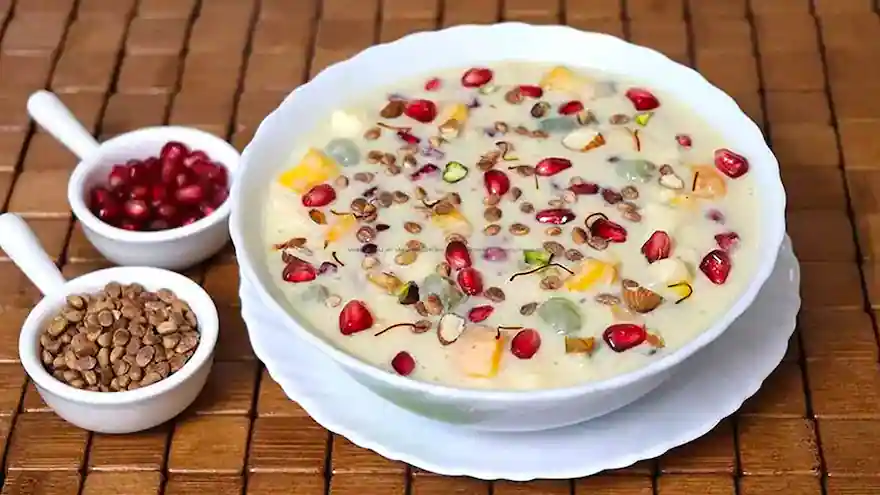
🍮 Payasam – The Sweet Soul of South India
📖 Introduction
Payasam, also known as Kheer in North India, is a beloved South Indian dessert that graces every festive occasion, temple feast, and celebration. It is a sweet dish made by simmering milk or coconut milk with rice, vermicelli, lentils, or millets, sweetened with jaggery or sugar, and flavored with cardamom, ghee, and dry fruits. The texture may range from creamy to slightly liquid, depending on the type. Payasam is not just a dessert—it is a symbol of joy, togetherness, and divine offering in South Indian culture.
🎭 Cultural Significance
In all South Indian states (Kerala, Tamil Nadu, Karnataka, Andhra Pradesh, and Telangana), Payasam is an inseparable part of festivals, weddings, and temple offerings.
During Onam Sadya (Kerala), Payasam is the grand finale of the elaborate feast.
In Tamil Nadu, it is prepared during Pongal, weddings, and special pujas.
Andhra and Telangana serve it during Ugadi (New Year) and other festive occasions.
In Karnataka, no festival or wedding meal is complete without Payasam.
It signifies prosperity, sweetness in life, and devotion, often offered as prasadam (sacred food) to deities.
🥦 Key Ingredients
Base – Rice, Vermicelli (Semiya), Moong Dal, Wheat, or Millets
Milk / Coconut Milk – provides creaminess and richness
Sweetener – Jaggery (traditional & healthy) or Sugar
Cardamom – for flavor
Ghee – enhances aroma
Cashews & Raisins – roasted in ghee for garnish
Optional Additions – saffron strands, grated coconut, or edible camphor for a festive touch
👩🍳 Preparation Method
Roast the base ingredient (rice/vermicelli/dal) lightly in ghee.
Cook it in milk or coconut milk until soft.
Add jaggery or sugar and stir until dissolved.
Flavor with cardamom powder (and saffron if used).
Roast cashews and raisins in ghee until golden, then add to the Payasam.
Serve warm or chilled depending on preference.
🍴 Serving Suggestions
On Banana Leaf – in feasts like Onam Sadya, Payasam is poured onto the banana leaf, symbolizing abundance.
In Silver or Brass Bowls – traditionally used in temples and weddings.
Can be served hot for comfort or chilled for refreshment.
❤️ Why Everyone Likes It
Sweet Comfort – rich, creamy, and soul-satisfying.
Versatile – many variations like Pal Payasam (milk-rice), Ada Pradhaman (Kerala, with rice ada & jaggery), Semiya Payasam (vermicelli), Paruppu Payasam (dal-based).
Festive & Divine – often associated with temple offerings and rituals.
Healthy Twist – jaggery-based versions add iron and minerals.
Brings People Together – shared as a symbol of happiness and community.
🌟 Final Thought
Payasam is more than just a dessert—it is a sweet thread that binds all South Indian states together. From weddings to festivals, no meal is truly complete without it. Each variation reflects the unique flavors of its region, yet the essence remains the same: celebrating life with sweetness, tradition, and love.
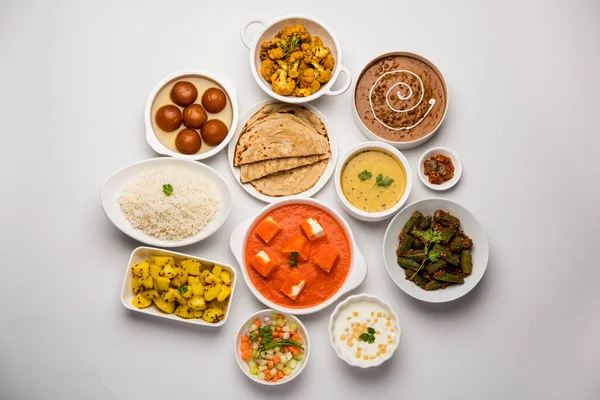
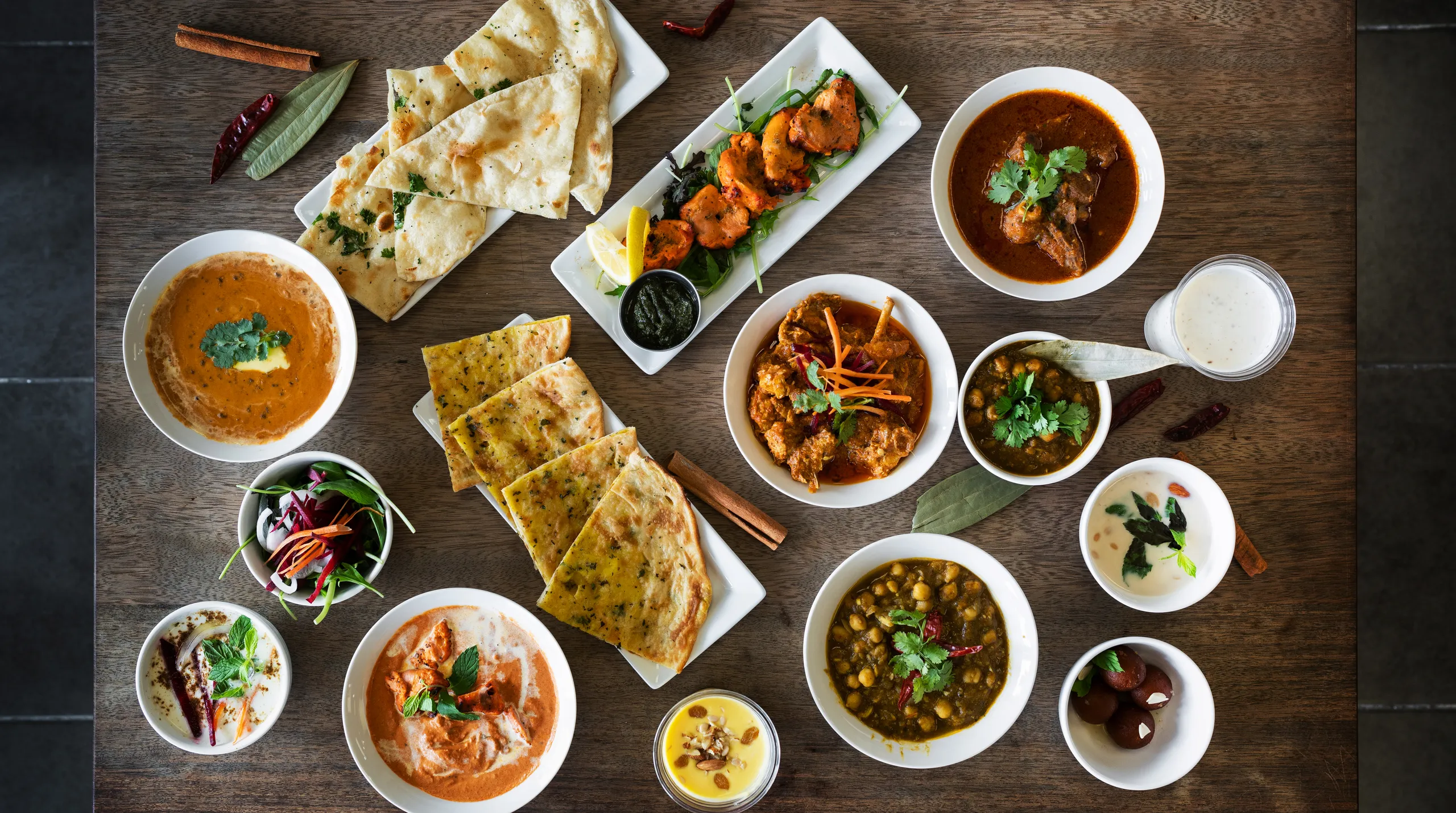
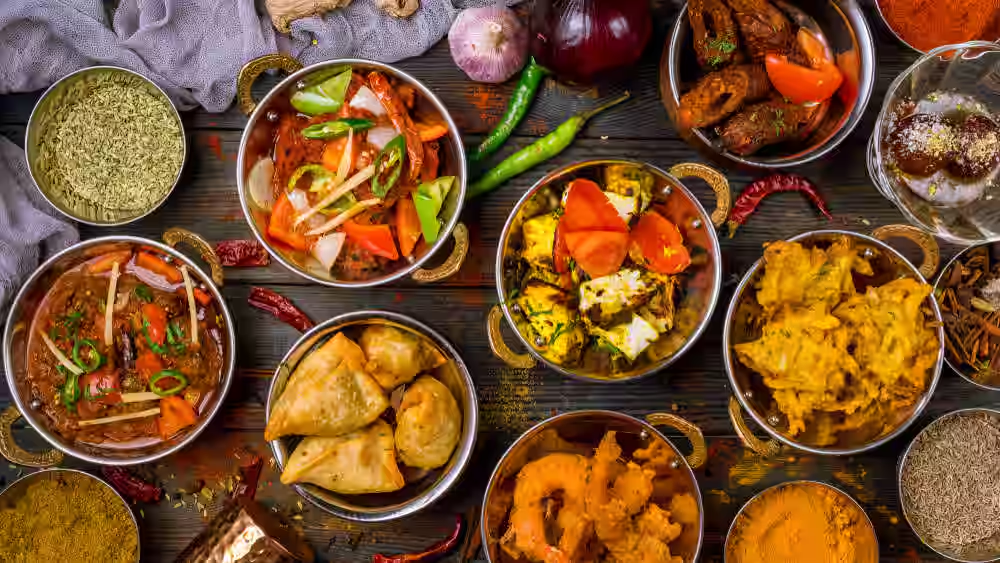
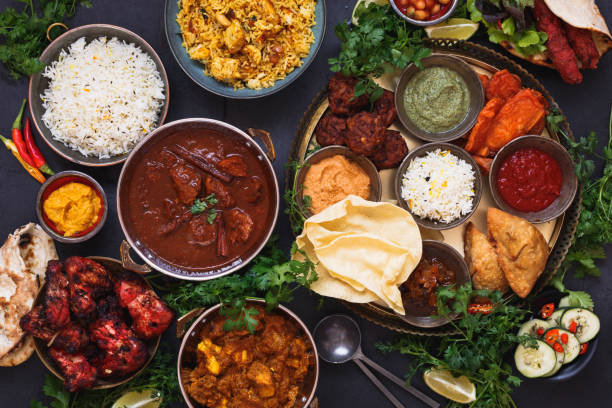
All-Time Favorite Food To Taste Across India
[…] South Indian Food […]